Citizens' assemblies and other democratic innovations are spreading globally, but how? In this paper, we examine the "scaling catalysts" – organisations that intentionally drive the expansion of deliberative and participatory practices in their regions.
How to cite this paper: Chwalisz, Claudia and Sammy McKinney (2026). “Scaling Democratic Innovation: Features of Effective Catalyst Organisations & Future Frontiers”, DemocracyNext.
Free to share under CC BY-NC-ND 4.0 - see our sharing policy.
Citizens' assemblies and other democratic innovations are spreading around the world. But they do not spread by themselves. Behind every successful scaling story sits a constellation of organisations doing the essential, often invisible work of building capacity, establishing networks, advocating with decision makers, and ensuring quality standards.
These are what we call scaling catalysts: organisations that intentionally drive the expansion of democratic innovations in their regions.
In this paper, we make three core contributions to the field:
1. We distil six features of effective scaling catalyst organisations, aiming to elevate the important role they play.
2. We examine critical tensions and trade-offs these organisations face, and how they can navigate these.
3. We identify five frontiers of future practice that can further accelerate the scaling of democratic innovations and promote more deliberative cultures beyond the work of individual catalyst organisations.
This paper is for three key audiences: We offer insights for practitioners building similar organisations, for funders seeking to support this vital work, and for researchers identifying knowledge gaps.
Tensions, critical considerations & limitations
Whilst the organisations we studied have achieved remarkable results, they face genuine dilemmas that reveal the gap between deliberative ideals and implementation realities. These include balancing quality with contextual adaptation, maintaining independence whilst influencing power, investing in both local rootedness and international connections, managing strong leadership alongside distributed influence, and choosing between direct delivery and ecosystem building. The most effective catalysts navigate these tensions thoughtfully rather than resolving them definitively, with context and strategic priorities shaping which trade-offs make sense.
Two additional challenges emerged as particularly critical. First, coordination within crowded ecosystems: as deliberative democracy gains traction, more actors get involved—government units, civil society groups, consulting firms, academic institutions. This creates confusion about roles and ownership, risks of duplication, and potential for catalysts to be seen as "swooping in" rather than building on existing local expertise. The most effective catalysts position themselves as bridge builders, connecting actors and strengthening the whole field rather than competing for territory.
Second, funding sustainability: most catalysts survive on short-term, project-based funding that's irregular and precarious, despite scaling work requiring patient, long-term investment in relationships and infrastructure. Exceptions like We Do Democracy and SoCentral have developed blended finance models — including revenue from physical spaces — but these remain difficult to replicate in most contexts. For funders serious about scaling democratic innovation, this suggests providing 5-10 year grants supporting ecosystem building, not just counting one-off assemblies.
Conclusion
Deliberative democracy is at an inflection point. After decades at the margins, it is entering the mainstream — with permanent citizens' assemblies being established and governments embedding sortition into decision-making. We did not arrive here by accident. We are here because dedicated organisations did the strategic, relational, capacity-building work that makes scaling possible. Understanding what makes these scaling catalysts effective is essential for anyone serious about democratic renewal.
Our research carries distinct implications for different actors:
— Philanthropists and funders should provide patient, flexible funding (5-10 years) that supports ecosystem building — the capacity building, convenings, relationships, physical spaces, and learning infrastructure — not just process delivery.
— Emerging catalyst organisations need clear theories of change, cross-partisan relationships, fierce commitment to quality, thoughtful positioning within existing ecosystems, and connection to international learning whilst remaining locally rooted.
— Established organisations should make their ecosystem-building work more visible, document and share learnings, and expand reach through training and mentorship.
— Government officials must invest in civic infrastructure that enables sustained practice, not just commission one-off assemblies.
— Researchers face significant gaps: we need comparative analysis of what works across contexts, better theories of how practices spread and institutionalise, and systematic study of communication strategies and ecosystem dynamics.
In an era of democratic backsliding, polarisation, and institutional distrust, deliberative processes demonstrate that people, given good conditions, can govern wisely and well. But realising this potential requires moving beyond leading organisations working in isolation to building robust civic infrastructure — the networks, norms, physical spaces, knowledge systems, legal frameworks, educational pathways, and communication channels that scale democratic innovations and sustain deliberative democracy as permanent governance features.
Now the question is whether we — practitioners, researchers, funders, officials, citizens — will invest in building the civic infrastructure that scaling democratic innovations requires. The future of democracy may well depend on the answer.
How to cite this paper
Chwalisz, Claudia and Sammy McKinney (2026). “Scaling Democratic Innovation: Features of Effective Catalyst Organisations & Future Frontiers”, DemocracyNext.
Citizens' assemblies and other democratic innovations are spreading globally, but how? In this paper, we examine the "scaling catalysts" – organisations that intentionally drive the expansion of deliberative and participatory practices in their regions.
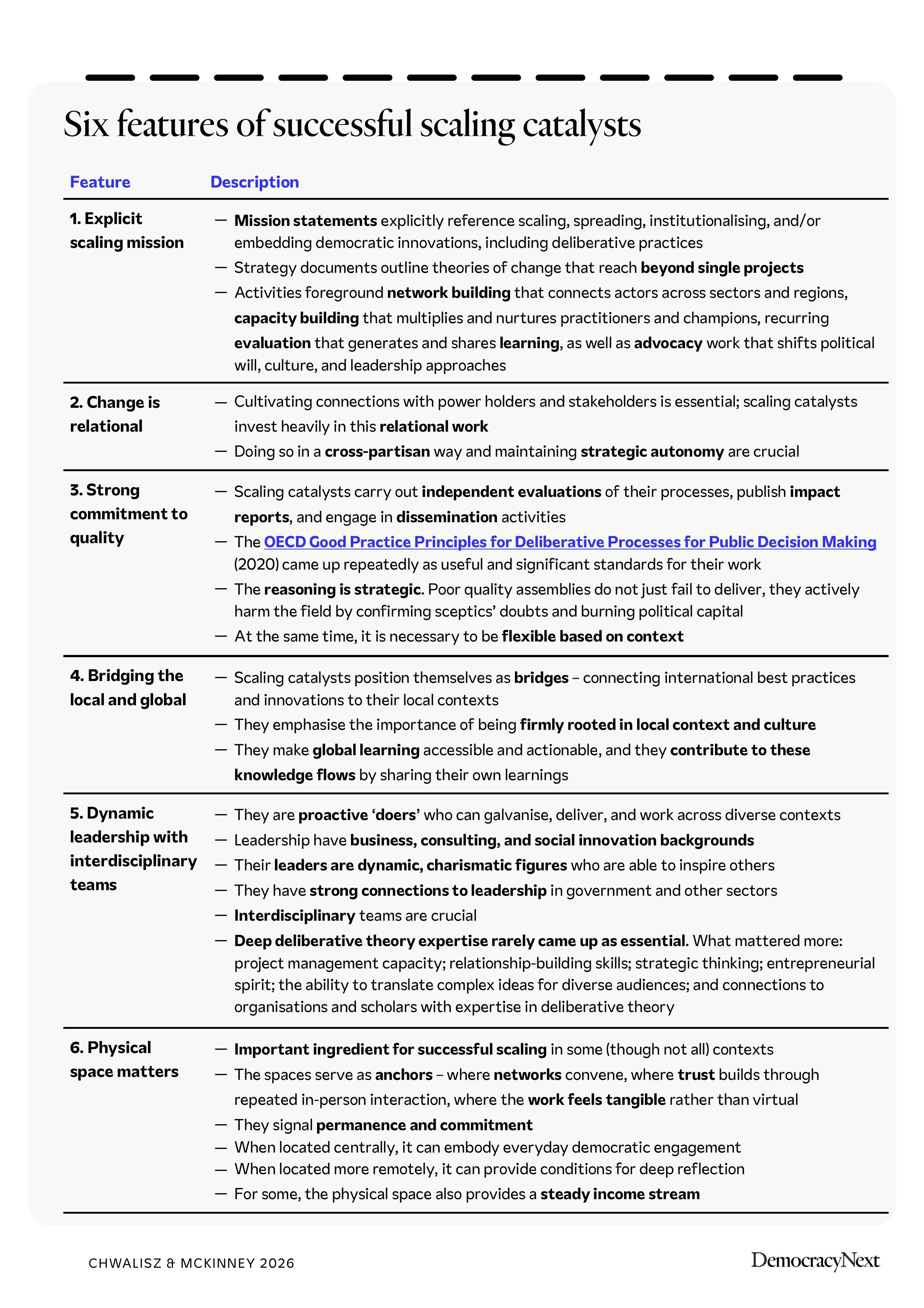
Through interviews with 22 leaders and ecosystem actors connected to nine leading deliberative democracy organisations across three continents, we identify six features of effective scaling catalysts: (1) explicit scaling strategy, (2) relational approach to change, (3) strong commitment to quality, (4) bridging the local and the global, (5) dynamic leadership with interdisciplinary teams, and (6) investment in physical space.
We also examine critical tensions these organisations face as they navigate various trade-offs, such as coordination and collaboration challenges, and maintaining autonomy amid funding pressures.
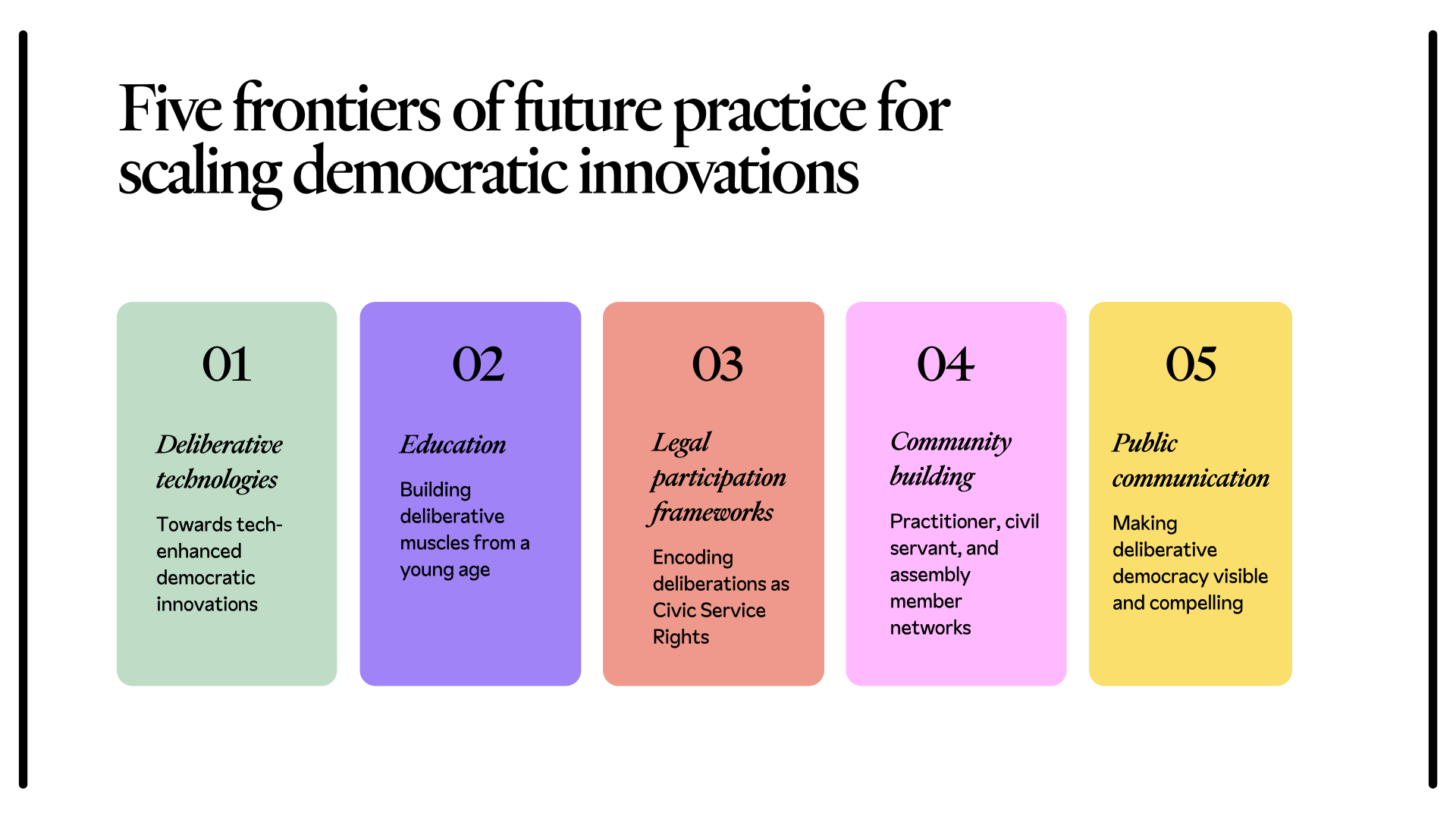
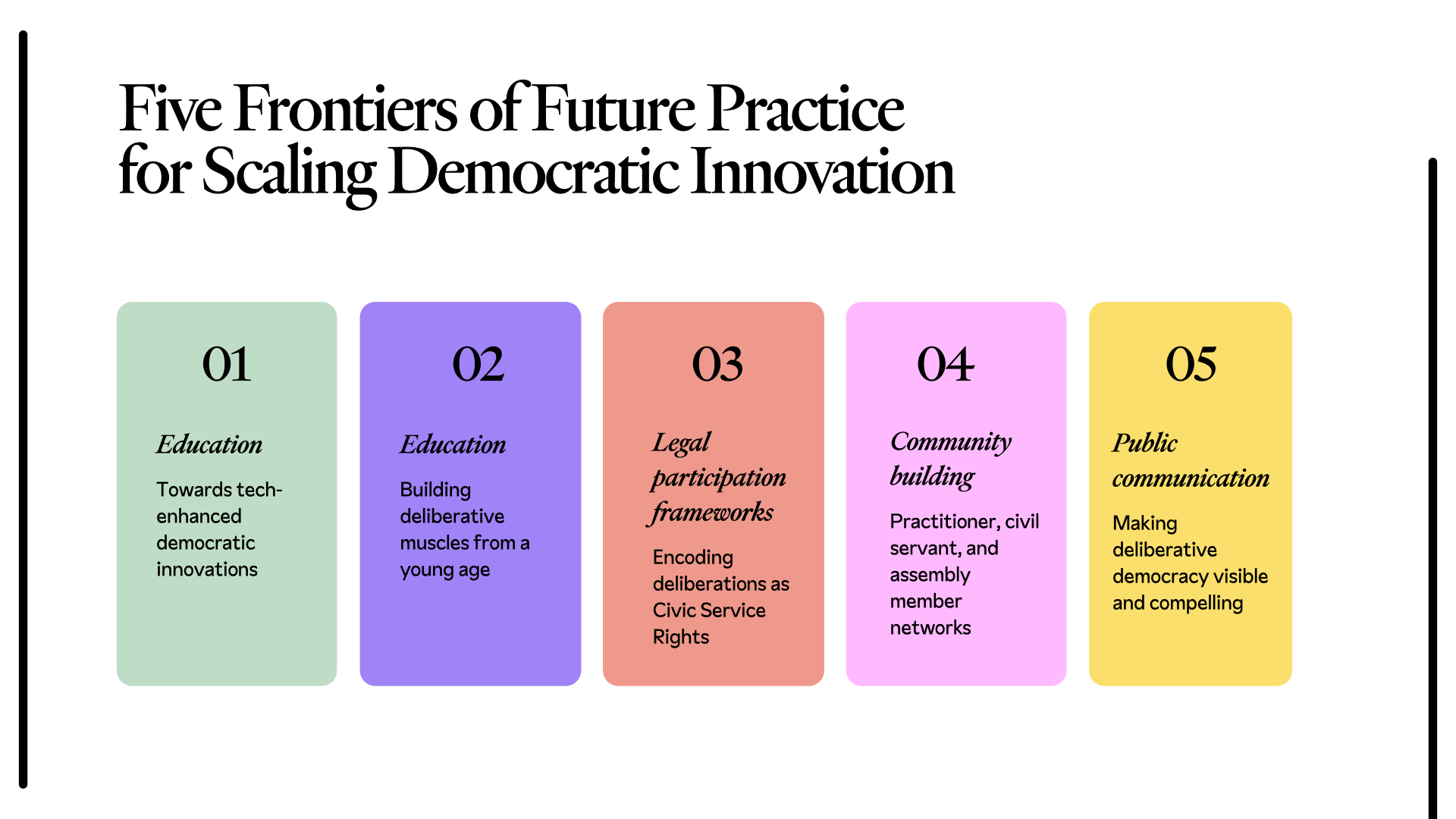
And we identify five frontiers for scaling democratic innovation beyond individual organisations: (1) deliberative technologies; (2) education; (3) legal frameworks; (4) community infrastructure, and (5) public communication.
In times when much of the focus around scaling deliberative and participatory practices revolves around deploying technology, especially AI, our findings emphasise the human, relational, social, and political dimensions that are essential for quality scaling, as well as some of the complex challenges that require navigation and attention.
Our findings emphasise that scaling democratic innovations requires investing in the civic infrastructure that is necessary to grow the field’s salience and impact in times of increasing democratic decline. For funders, this means supporting holistic ecosystem development, not just individual processes or tech innovation. For practitioners, it entails moving beyond individual efforts toward collaborative infrastructure that thoughtfully combines technology with democracy’s necessary relational dimensions. For researchers, it foregrounds important pathways for future research and reveals gaps in understanding how democratic innovations spread and institutionalise.
I. Introduction
Citizens' assemblies and other democratic innovations are spreading around the world. But they do not spread by themselves. Behind every successful scaling story sits a constellation of organisations doing the essential, often invisible work of building capacity, establishing networks, advocating with decision makers, and ensuring quality standards. These are what we call scaling catalysts: organisations that intentionally drive the expansion of democratic innovations in their regions.
Yet despite their outsized impact, these catalysts remain poorly understood. What makes them effective? What attributes underpin their success? And crucially for founders and funders alike: what does it take to build or support such an organisation?
In this paper, we put a spotlight on these essential actors. Through 22 in-depth interviews with individuals acrossnine leading deliberative democracy organisationsspanning three continents, we identify six key features that underpin successful scaling catalysts.
Our research emphasises that scaling democratic innovations demands intentional infrastructure building – the kind of relational, strategic, and capacity-building work that transforms one-off experiments into embedded democratic practice.
This research builds on our previous paper on the five dimensions of scaling democratic deliberation. There, we introduced a holistic scaling framework, highlighting five ways in which democratic innovations can scale: scaling out (more people), scaling up (higher governance levels), scaling across (more processes), scaling deep (greater impact) and scaling in (higher quality). Scaling is not the normative goal in itself: it is through a holistic approach across these five dimensions that we can advance the legitimacy of democratic innovations, as well as their capacity to promote change in the world.
We argued that scaling democratic innovations across these dimensions is not a technological challenge alone, but one that requires deliberative technologies to be combined with broader processes of civic infrastructure building. Here, we zoom in on that "beyond AI" part: the human organisations, relationships, and strategic work at the heart of democratic practice that no technology can or should replace.
Foregrounding these relational dynamics matters now more than ever. As authoritarian forces gain ground globally and trust in institutions weakens, we need resilient civic infrastructure that can anchor and spread high-quality democratic innovations that enhance democratic legitimacy and bolster our collective capacity to act. The organisations profiled here show what is possible when we invest not just in processes, but in the ecosystems that sustain them.
We have three goals and three main audiences for this research:
First, to recognise and elevate the critical role these organisationsplay in expanding democratic innovations – work that is often underappreciated.
Second, to distill the characteristics that make them successful, as well as the critical tensions they must navigate. We offer insights for practitioners building similar organisations, for funders seeking to support this vital work, and for researchers identifying knowledge gaps.
Third, to explore thefrontiers of future practice that can further accelerate the scaling of democratic innovations and promote more deliberative cultures beyond the work of individual catalyst organisations.
There are two important caveats before we dive into the paper. First, it is important to clarify the focus of our analysis. Democratic innovations refer to a broad family of processes that promote citizen participation, deliberation, and influence in decision-making contexts. Democratic innovations come in many forms, including citizens’ assemblies, participatory budgeting, and co-governance initiatives, and each may serve different ends for promoting democratic governance and renewal. In this paper, we focus predominantly on deliberative forms of democratic innovations, especially citizens’ assemblies, due their current prominence in practice and scholarship. However, the organisations we interviewed deliver and advocate for a wide repertoire of participatory and deliberative practices, not just citizens’ assemblies, which we suggest is a core feature of their success. Whilst much of our analysis is geared towards citizens’ assemblies, the findings are not limited to them, but are also relevant to the promotion of deliberative and participatory cultures more broadly.
Second, in this paper, we aim to present high-level findings and reflections around the core attributes of scaling catalysts, the critical tensions they face, and future frontiers that require attention to scale democratic innovations. Every dimension that we explore is rich enough to warrant a full research project in itself, and we cannot do justice here to the extensive nuance that these debates require. Instead, our goal is to provide sufficiently nuanced insights that can direct future research, practice, and funding towards significant ecosystem needs and gaps.
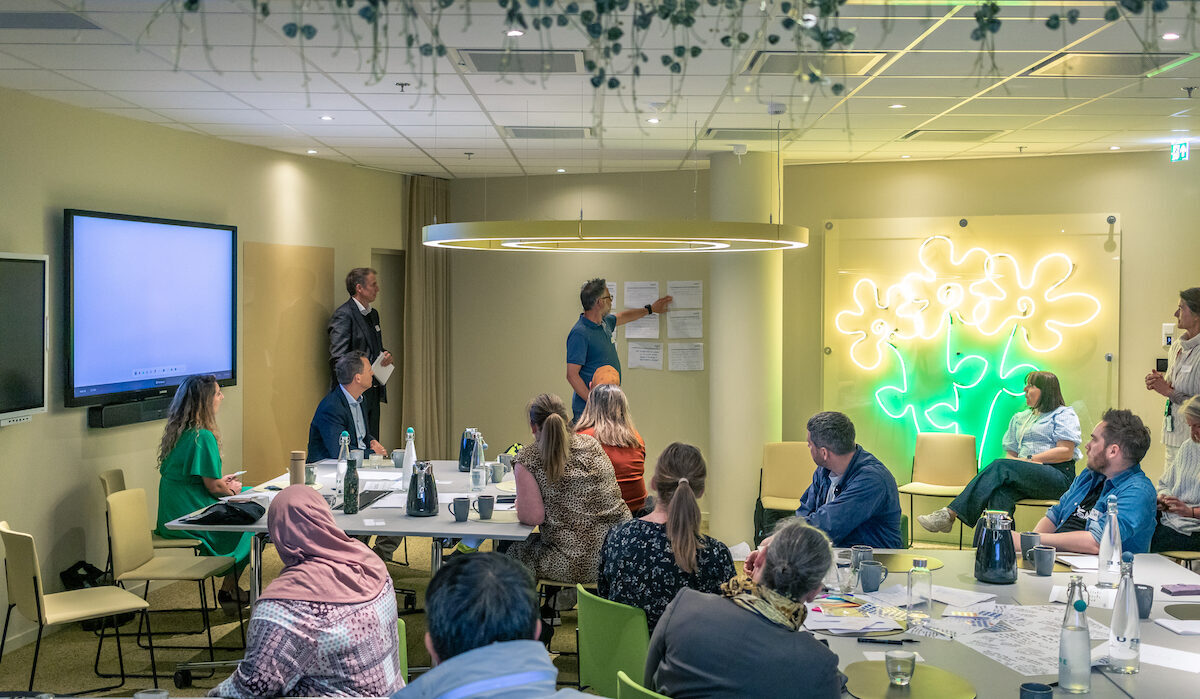
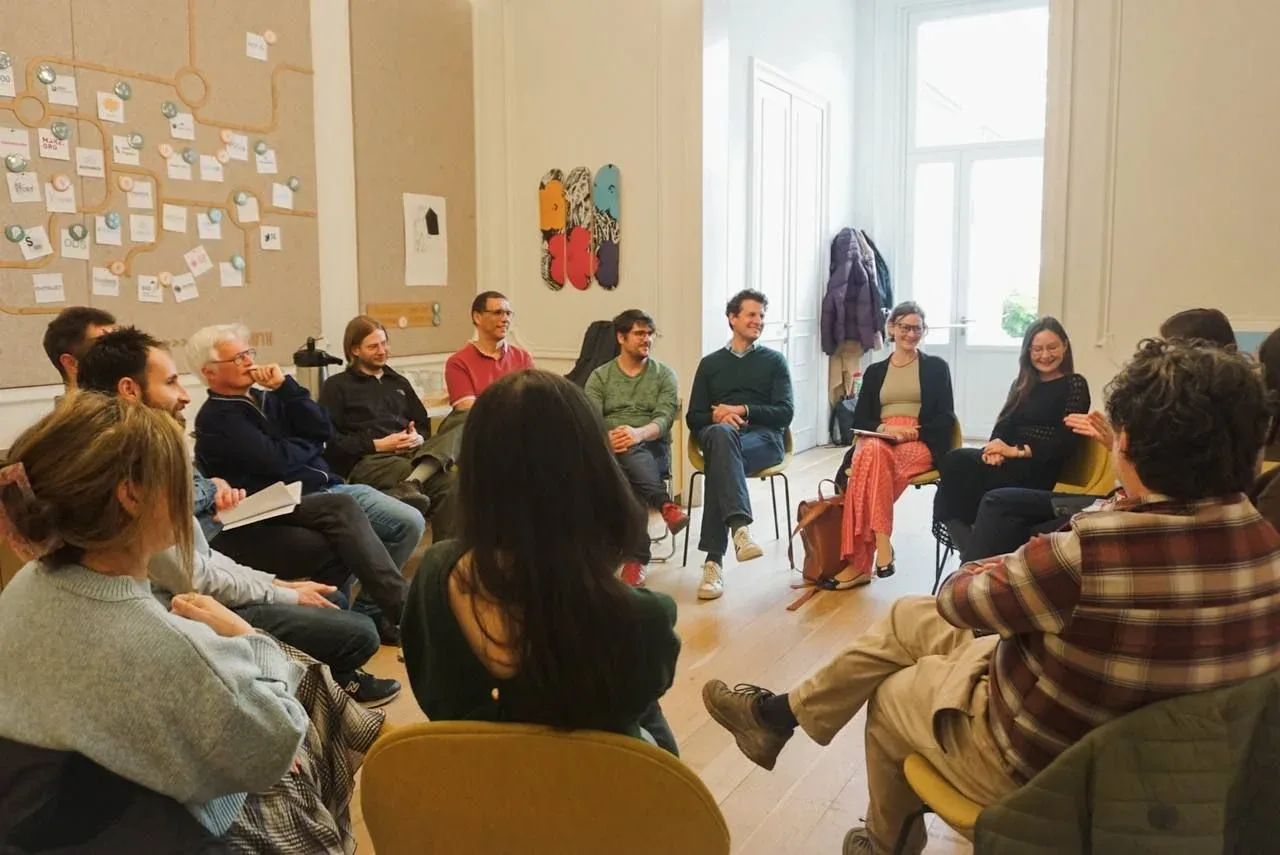
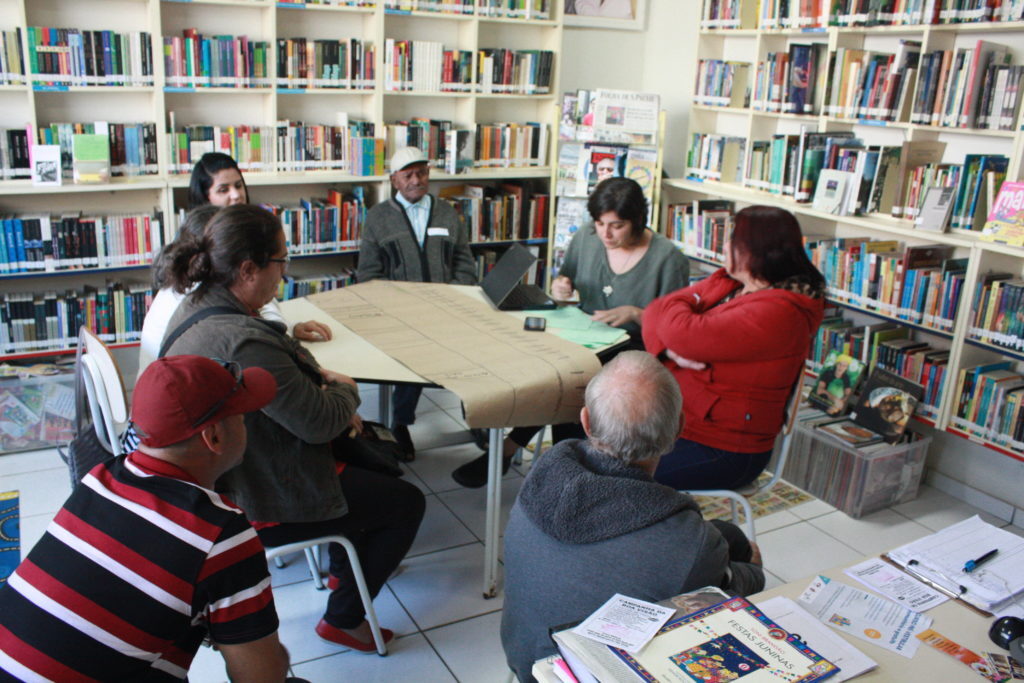
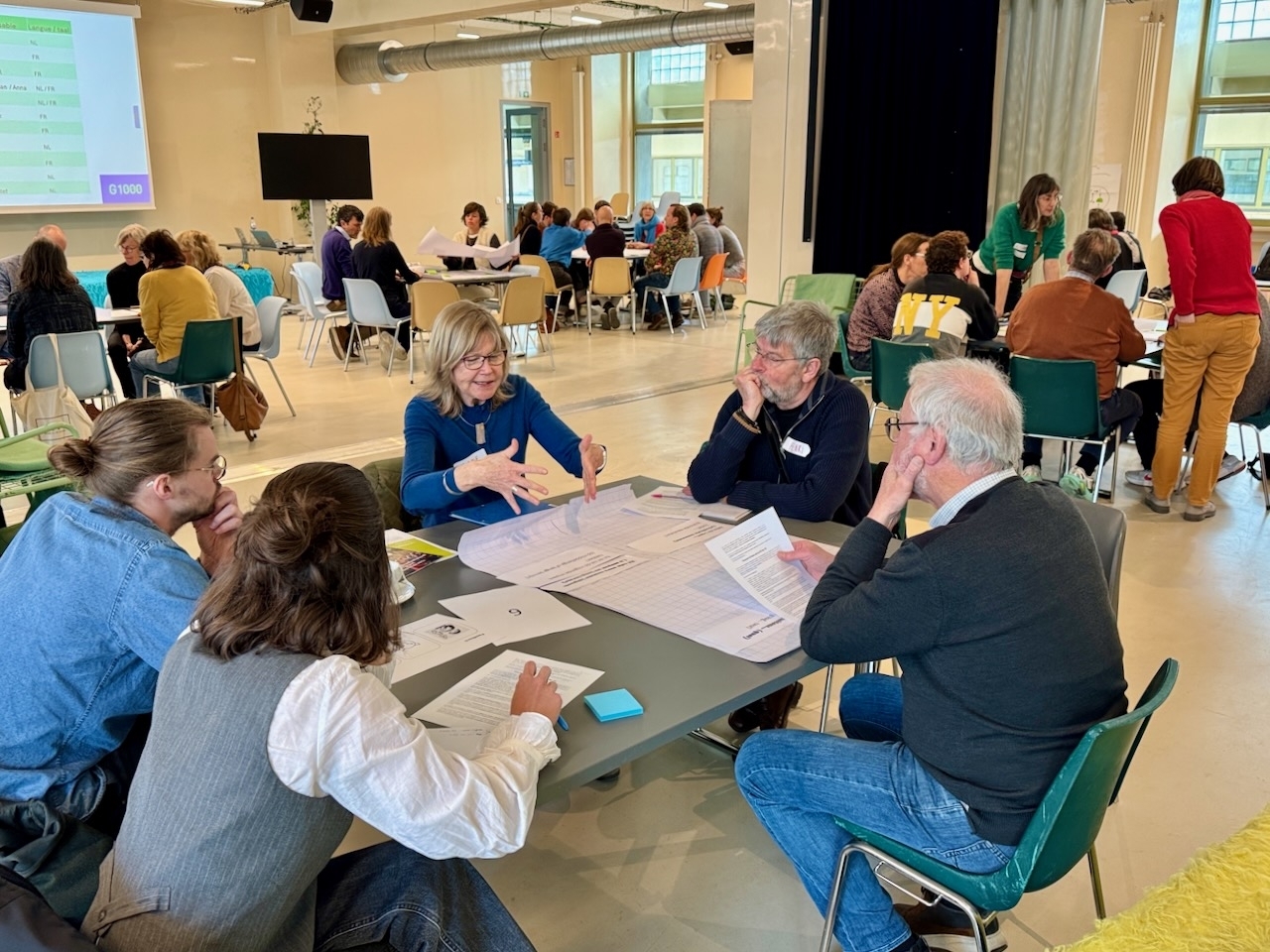
National Norwegian People’s Panel, Norway. Source: https://www.socentral.no/news/ socentral-leder-sekretariatet-for-norges-forste-nasjonale-folkepanel.Impact House Brussels (G1000 location). Source: https://impacthouse.be/offer/event-space/
II. Research design
To answer our research questions and identify what makes scaling catalysts effective, we conducted 22 interviews with leaders and ecosystem actors connected to nine leading deliberative democracy organisations across three continents over a three month period. Our two primary cases were We Do Democracy (Denmark) and Arantzazulab (Basque Country, Spain), where we interviewed numerous stakeholders in each of their respective ecosystems. The remaining interviews were with leaders or relevant staff in the following organisations: newDemocracy Foundation (Australia); G1000 (Belgium); Delibera (Brazil); Extituto (Colombia); Sitra (Finland); EMMA (The Netherlands), and SoCentral (Norway).
The interview questions were semi-structured and adapted to the interviewees. With organisational leaders, we were most interested in understanding the organisation’s internal structure, public-facing work, and their own theories of success. With individuals in their wider ecosystem – academic evaluators, civil servants, practitioners, and government officials – we sought external perspectives on both successes and shortcomings. From everyone, we asked: what else could help deliberative democracy and democratic innovations scale in your context? In addition to the interviews, we analysed organisational documents – annual reports, process evaluations, and impact assessments.
In November 2025, we convened a virtual workshop to gather feedback on the first draft of our paper with Ione Ardaiz (Arantzazulab, Spain), Josh Burgess (DemocracyNext and COCAP, USA), Antonio Casado da Rocha (EHU, Spain), Ieva Cesnulaityte (DemocracyNext, The Netherlands), Zakia Elvang (We Do Democracy, Denmark), Naiara Goia (Arantzazulab, Spain), James MacDonald-Nelson (DemocracyNext, Germany), Arantxa Mendiharat (deliberativa, Spain), Lex Paulson (School for Collective Intelligence, UM6P, Morocco), Hannu Pekka-Ikaheimo (Sitra, Finland), Lucy Reid (DemocracyNext, UK), Silvia Remolina Diaz (Extituto, Colombia), Felipe Rey (iDeemos, Colombia), Sahib Singh (Demos, Finland), Andrew Sorota (Office of Eric Schmidt, USA), and Ali Stoddart (Scottish Parliament, UK). We also thank Nicole Curato (University of Birmingham, UK), Garikoitz Lekuona (Tolosa Council, Spain), Kyle Redman (FIDE Europe and AI & Democracy Foundation, Belgium), and Iain Walker (newDemocracy Foundation, Australia) for written feedback on the first draft. We are grateful to all participants for their constructive inputs that enriched the final paper draft.
Selecting the organisations
Hundreds of groups around the world focus on democratic innovations, so one challenge we faced in developing this research design was identifying which organisations to study. We developed three selection criteria:
Organisations that focus on more than delivering deliberative assemblies; their work includes advocacy, network weaving, and/or capacity building;
Track record of playing a key role in spreading democratic innovations in their context in a relatively short period of time; and
Geographic diversity: organisations that operate in different parts of the world to enable reflection across contexts and cultures.
Our second challenge for a robust research design was to balance breadth with depth: how to gain both granular insight and cross-context learning. On one hand, it is essential to understand the workings of scaling catalysts across various cultures and contexts; on the other hand, we need a detailed enough understanding of particular cases for deep analysis that sheds light on the issue from various angles. If we went too narrow, the findings might not transfer. But if we went too broad, we risked missing the nuance that reveals how change actually happens.
For depth, we selected two organisations for ‘deep dives’: We Do Democracy (WDD) in Denmark and Arantzazulab in the Basque Country in Spain. We chose these two in particular as we had noticed that they had both been set up at relatively similar moments in time (6-8 years ago), they have both been incredibly successful in spreading democratic innovations in this short time period, and both have physical spaces that seemed to be important (we had a hypothesis about the importance of this, but were not sure how critical it was vis à vis other factors, which is why we also spoke with organisations elsewhere that are successful but do not have a physical space). The two organisations share some similarities, but also have differences in how they were set up, are governed, their activity focus, and other factors. We felt that it would make for an interesting comparison to understand the underpinning features that could be operationalised differently, and that could be separated from contextual factors.
For WDD and Arantzazulab, we did not just interview their leaders, we also spoke with actors in their wider ecosystem – academic evaluators, civil servants, deliberation practitioners, and government officials. This wider view surfaced a variety of perspectives, such as the perceptions of important stakeholders on the enablers of their success, and more critical voices that highlight limitations in their approaches.
For breadth,we interviewed leaders or project managers of nine other organisations spanning two other continents and nine countries. These conversations served as checks about the patterns from Denmark and the Basque Country across contexts. They helped us to identify which elements were culturally specific, and which principles emerged despite vastly different operating environments.
Limitations in research design
We recognise that the list of organisations interviewed is not exhaustive or comprehensive. In line with the balance of breadth and depth sought, we decided at which point we had ‘enough’ qualitative data from various contexts to enable us to identify patterns and general lessons. Future research can use these initial insights for even more systematic mapping of scaling catalysts, and the features that enable and hinder their success, across the globe.
III. Six features of successful scaling catalysts
What characterises organisations that successfully catalyse democratic innovations, especially of a deliberative kind? Through our research, we identify six key features that effective scaling catalysts share. These are not rigid rules; organisations operationalise them differently based on context, capacity, and goals.
Rather than prescribing a single model, these features offer a framework for reflection: What makes sense in your context? What trade-offs are you willing to make? What contextual challenges will you need to navigate? We also acknowledge and discuss the challenges and limitations that scaling catalysts face.
1. Scaling deliberation is an explicit goal – Theories of change centre capacity building, learning and evaluation, and network building
Scaling catalysts do not accidentally stumble into systems change; they pursue it deliberately. This intentionality distinguishes them from organisations that primarily focus on delivering individual processes well.
When we look at how these organisations describe themselves, their mission statements explicitly reference scaling, spreading, institutionalising, and/or embedding democratic innovations, including deliberative practices. Theirstrategy documents outline theories of change that reach beyond single projects. Single projects are, of course, relevant, as they provide the means through which the mission is tested or implemented. However, they are not the core focus.
For Arantzazulab, for example, attention is directed towards outcomes, and as they learn from the implementation of their initiatives or projects, they continuously iterate, adapt, and refine them, as well as their overall theory of change. Their funding strategy also reflects this approach, where funding is not merely allocated to cover the costs of a specific project. Instead, institutional funding for the lab is directed towards supporting the mission as a whole. Specific projects or initiatives can then be jointly envisioned and shaped in collaboration with the organisations that support the lab.
For We Do Democracy, capacity building has consistently been a key element in their theory of change. They run training sessions both in Denmark and Norway - for civil servants, process consultants, activists, and students. They host conferences and learning sessions (often at Demokrati Garage, the physical space detailed in Feature 6). They onboard 2-3 interns every six months whom they train in deliberative democracy practices. Their founders and directors - Zakia Elvang and Johan Galster - give keynotes at big national conferences and learning-oriented training sessions. They spend substantial time every month being interviewed by researchers and students from Denmark and other Nordic and Baltic countries to share and spread their knowledge and expertise.
We found similar patterns in the other organisations interviewed internationally. Capacity building, training, network building, and advocacy through conferences and events featured as part of the core focus in all organisations interviewed.
Catalysts’ activities thereby foreground the following: network building that connects actors across sectors and regions, capacity building that multiplies and nurtures practitioners and champions, recurring evaluation that generates and shares learning, as well as advocacy work that shifts political will, culture, and leadership approaches. The goal is to ultimately create the conditions for a broader paradigm shift towards more collaborative, deliberative, and participatory governance.
Yet, “scaling” also means different things to different organisations, reflecting the ‘five dimensions of scaling’ framework that we outlined in our previous paper. For instance, Arantzazulab (2024, p.88) focuses on three scaling dimensions, especially scaling up, out and deep: increasing the number of people participating in processes whilst enhancing impact across governance levels. We Do Democracy and Delibera Brasil focus more on scaling across – expanding the sheer number of deliberative assemblies happening in government and other institutions. Sitra have supported experiments in public governance aimed at spreading deliberative democracy into wider use, while at the same time emphasising in their funding conditions a close link between citizens’ panels and impact on policy issues. Their activities cover the dimensions of scaling out, across, and deep.
Scaling catalysts therefore operationalise their missions in various ways, but what unites them is that they all act beyond their own organisational boundaries. Success is not only measured by the number and quality of processes they deliver (which do matter), but by the democratic innovations and deliberative democracy fields they help catalyse. Indeed, many organisations mentioned that they would love to see more ‘competition’ – more actors who have the skills and competencies to design and deliver deliberative processes and other democratic innovations. In the eyes of some, this would be a sign of a growing and healthy ecosystem, but a proliferation of organisations also raises challenges relating to coordination and collaboration as we discuss below.
Deliberation process in Brazil, facilitated by Delibera Brasil. Source: https://deliberabrasil.org/projetos/rua-principal-dobairro-lapenna/
2. Change is relational – Proximity to power, with autonomy
Quality democratic innovations cannot scale through good design or technology integration alone. One of the key drivers behind scaling is relationships. Cultivating connections with power holders and stakeholders, such as politicians, civil servants, and civil society organisations who can commission processes, implement recommendations, and embed deliberations in institutions and wider public debate is essential. Doing so in across-partisan way – not just with the party in power at the moment – is also crucial for long-term sustainability.
Scaling catalysts invest heavily in this relational work. They transform hearts and minds from the inside to build more democratic cultures. They build trust with politicians across party lines. They support civil servants in navigating internal resistance. They partner with civil society organisations that can mobilise participation and share knowledge – although some also noted critical self-reflection that they could and should be doing a better job at building stronger civil society partnerships.
Arantzazulab, for example, maintains strong connections with government officials, as well as organisations like Mondragon Corporation, a significant federation of cooperatives in the Basque Country. They draw on these relationships to advocate for and inform power holders about the value of democratic innovations within and beyond government.
We Do Democracy has also established strong links with leaders in government and in other political parties, as well as other organisations like universities and trade unions. In both contexts, these relationships have been crucial for spreading democratic innovations across different sectors. While many democracy organisations have a narrower focus on government and politics, this approach to catalyse democratic innovations across diverse contexts is intentional and part of the successful impact of these scaling catalysts.
A similar pattern emerged from the interviews we carried out in other countries, though which type of power holders mattered most depends on context. For some, this means close relationships with civil servants, for others, politicians or civil society organisations matter more. For example, for Sitra in Finland, most of the citizens’ assemblies they have supported have been in places where they have close connections with key politicians in regions or municipalities. At a federal level, they work very closely with government institutions and ministries as well – both ministers and civil servants – and are working hard to connect more with political parties in a cross-partisan way. The newDemocracy Foundation in Australia views strong relationships with politicians as essential, more so than with parliamentary clerks or department heads. Their focus has been on relationship-building with premiers and ministers from a variety of political parties. In Norway, SoCentral emphasised their close connections with civil servants at all levels of government as crucial for the impact of their work.
However, although connections to power holders is essential,proximity to power also comes with risks. Getting too close risks co-optation and partisanship, limiting the capacity of these organisations to work across the political spectrum as independent champions of democratic innovation. Aligning too closely with one political faction can mean losing the ability to work across partisan divides, limiting an organisation’s reach and longevity.
According to our interviewees, it is essential for these organisations to maintain strategic autonomy, preserving the ability to critique as well as collaborate, and accepting that full impartiality is unrealistic. There is a need to work constantly to balance pragmatic proximity with critical distance. This balancing act – close enough to influence, distant enough to maintain integrity – is part of effective catalyst work. Future research should seek to map out the variety of risks that come with proximity to power, and the mitigation strategies that scaling catalysts adopt to maintain strategic autonomy in light of them.
3. A strong commitment to quality
To scale effectively, there must be a strong commitment to upholding quality. Every organisation we studied emphasised this, regardless of which scaling dimension mattered most to them. All organisations engage in evaluation activities, typically partnering with arms’ lengths academics to carry out independent evaluations of their processes. Many have also published impact reports that combine data from many of their processes, and engage in dissemination activities to share these findings in their regional contexts and internationally when relevant. They share a strong commitment to evaluation and learning.
The OECD Good Practice Principles for Deliberative Processes for Public Decision Making(2020) came up again and again as useful and significant standards for their work. Organisations cite these principles often in conversations with decision makers to ensure the quality bar gets raised high. They use the OECD Principles as a metric to evaluate partnership opportunities, and treat them as the minimum, rather than the ceiling, for delivering legitimate and trustworthy processes.
Both Arantzazulab and We Do Democracy translated the OECD Good Practice Principles into Basque and Danish respectively. Arantzazulab additionally supported the translation of the DemocracyNext Assembling an Assembly Guide - heavily based on the OECD’s principles - into Basque. These are strategic choices to ensure quality standards spread within their contexts alongside the processes themselves.
The reasoning for upholding quality is strategic. Poor quality assemblies do not just fail to deliver, they actively harm the field by confirming sceptics’ doubts and burning political capital. One tokenistic process can poison the well for years. Conversely, high quality processes create their own momentum: impressed citizens become advocates, sceptical officials become champions, and success stories can help generate greater demand for democratic innovations. Scaling catalysts’ commitment to quality means that they play an active role in disseminating best practices and say no to collaborating on projects that do not meet the quality bar.
However, some interviewees noted tensions. Rigid adherence to OECD principles can sometimes feel limiting, especially when local contexts demand adaptation or innovation. The challenge is maintaining quality without stifling context sensitivity or experimental learning. Some interviewees also noted that legal restrictions, such as not being allowed to pay assembly members for their time, meant that the OECD good practice principles stood in tension to what was feasible in their context, leading to logistical complications in process set-up. It is therefore necessary to be flexible based on context, while also pushing for legal changes that can make it easier to set up and organise high-quality assemblies in the future. It also speaks to why these six features are not offered as prescriptive ‘rules': there are numerous ways to ensure inclusive and high quality participation, and scaling catalysts are faced with the challenge of ensuring quality whilst adapting to their particular context.
4. Bridging the local and global
Effective scaling catalysts position themselves as bridges – connecting international best practices and innovations to their local contexts. Within the field of deliberative and participatory practice, community learning is essential – across different parts of the world and domains, such as academia and civil society, best practices become established and innovations are trialled. Knowing about these developments is necessary for scaling robust practices.
Organisations embedded in international networks can access and contribute to this knowledge flow. Practically, this means attending global conferences, participating in cross-national networks, engaging with academic research, and maintaining relationships with peers in other regions. At the same time, scaling catalysts emphasise the importance of being firmly rooted in local context and culture. They see this as essential to ensuring that deliberation is meaningful for diverse communities living within different realities.
In this way, several interviewees described Arantzazulab and We Do Democracy as ‘bridge builders’ between the international community and their local context. For example, Arantzazulab translated the DemocracyNext Assembling an Assembly Guide into Basque. They also have proposed and are facilitating a space for sharing lessons learned from deliberative processes across the Basque Country sparking informed discussions around citizens’ assemblies in their context. Translation is not just linguistic, however. It is also cultural and political. Taking an idea that worked in one context and thoughtfully adapting it to different political cultures, institutional structures, and civic traditions requires deep understanding and careful work.
Many catalysts also mentioned the importance of regional and international networks. We Do Democracy played a galvanising role in building the Nordic Deliberation Network, which was co-founded with Sitra in Finland, SoCentral in Norway, Analysis & Numbers in Denmark and Norway, and DigiDem Lab in Sweden. The newDemocracy Foundation invested in founding the global Democracy R&D Network of deliberation practitioners, advocates, and scholars. Delibera Brasil emphasised the importance of this international network as one of the key enablers of its success; the connections they made through it helped them to attain new grants and collaborations they felt would not have been possible otherwise. Some interviewees also mentioned DemocracyNext’s bridge-building role as well, through the networks and events it regularly convenes, and comparative research it publishes.
This bridging function helps explain how best practices spread. Without organisations actively translating and championing international innovations locally and local innovations internationally, knowledge remains siloed in academic journals and international convenings. Scaling catalysts make global learning accessible and actionable, and they contribute to these knowledge flows by sharing their own learnings. In line with the first two principles – an explicit mission to scale and commitment to maintaining quality standards – they have an interest in understanding the latest good practices, and in building the wider field beyond their own organisations.
5. Dynamic leadership with interdisciplinary teams
Scaling catalysts rely on the skills, knowledge, adaptability, resilience, and coordination of team members to effectively deliver their work – from hosting and facilitating convenings with diverse audiences, to developing rigorous resources that advance the wider community. Having the skills and capacity to do this is no mean feat, and it is important to spotlight these dynamics around agency and team-building.
A recurring theme in our deep dive interviews was an emphasis on the dynamic leadership and interdisciplinary teams that We Do Democracy and Arantzazulab bring to their practice. As one interviewee put it: these people are simply good at what they do. They are proactive ‘doers’ who can galvanise audiences, deliver results, and work across diverse contexts.
Such qualities do not develop in a vacuum; the skills and connections that individuals bring to their work are especially crucial. We Do Democracy and Arantzazulab’s leadership have business, consulting, and social innovation backgrounds, meaning they have established networks and an entrepreneurial spirit that energises their work. They approach the scaling of democratic innovations with the same rigour and results-orientation they would bring to any strategic challenge.
Their leaders are also dynamic, charismatic figures who are able to inspire and bring others along with them. This is a strength, but also a potential limitation for others looking to emulate the success of these organisations, if involving such a leader is not possible. Having the gravitas of “a Zakia” or “a Naiara” (in reference to Zakia Elvang, Co-founder of We Do Democracy, and Naiara Goia, Managing Director of Arantzazulab) is crucial.
In both cases, their leadership also has strong connections to leadership in government and other sectors, a strength when relationality matters heavily for influencing change. These were patterns in various other contexts - newDemocracy Foundation in Australia, Delibera Brasil, Sitra in Finland, and SoCentral in Norway share these features. In the context of the G1000 in Belgium, David Van Reybrouck - a well-known author and public intellectual - played a crucial role in the organisation’s founding and influence, and continues to be an important public figure for the field.
Beyond the organisations’ leadership, scaling catalysts also have strong interdisciplinary teams. What makes these teams effective is how they combine different expertise: process design; strategic communications; facilitation skills; policy knowledge; academic rigour; political savviness; local rootedness, as well as connection with international networks.
Interestingly, deep deliberative theory expertise rarely came up as essential. What mattered more: project management capacity; relationship-building skills; strategic thinking; entrepreneurial spirit; and the ability to translate complex ideas for diverse audiences. Many learned more about the theory once in the job, with added nuance and understanding developed from practice. Ione Ardaiz from Arantzazulab emphasised that what matters most for scaling catalysts is building close collaborations with experts in the field who can enrich the processes and support the team in designing robust deliberation,rather than necessarily having this in-house. In their case, organisations such as Deliberativa and DemocracyNext play this role; their deep knowledge of deliberation theory has been and still is essential in enabling them to develop their practice with rigour. Ultimately, delivery is critical to success, as expertise can be brought in and developed over time.
6. Physical space matters – Physical infrastructure serves as an anchor for community, builds identity, and signals commitment to long-term capacity building
For some, scale conjures images of online deliberation. Yet, in our age of digital connection where algorithms all too often divide instead of unite us, physical space came up as an important ingredient for successful scaling in some (though not all) of the contexts we examined.
Across our deep dive interviews, a recurring theme that emerged about Arantzazulab and We Do Democracy was the importance of their physical spaces – “special” places that are essential infrastructure for their work. These spaces provide material grounding for something otherwise abstract: collective reflection on democratic practice, relationship building across sectors, and the patient work of democratic culture change. Having a physical space helps connect conversations on democratic innovation with a more diverse audience, and it brings these reflections closer to people’s everyday routines.
Location and design matter enormously and need careful thought (see Gustav Kjaer Nielsen and James MacDonald-Nelson’s DemocracyNext paper on Spaces for Deliberation, 2025, for further details). As one interviewee remarked in the Basque Country context: too often physical spaces for these sorts of activities get hidden in basements – literally, and symbolically.
In contrast, Arantzazulab offers a remote and reflective space set against the beautiful hills of the Basque Country, with spacious, adaptable facilities to support and energise democratic practice.
In Copenhagen, the Demokrati Garage serves as a welcoming venue, embedded into the dense neighbourhood of Nordvest, where citizens and community members can casually explore democratic questions and flex their democratic muscles, while enjoying a coffee and cinnamon bun. The Garage also hosts one of Copenhagen’s best bakeries, a co-working space, outdoor picnic tables, and a bar. It embodies the kind of everyday democratic engagement that Habermasian theory suggests is essential for deliberative democracy’s flourishing.
There are pros and cons to these two different types of physical spaces. Having a space that is easily accessible within the city, like in Copenhagen, makes it easier for everyday citizens to drop in and discuss the political matters of the day. On the other hand, having a remote space, as is the case with Arantzazulab, offers valuable conditions for deep and meaningful reflection. However, it makes it more challenging for people to engage there regularly, as gatherings need to be planned in advance and transport must be arranged.
For SoCentral in Norway, their physical space is also really important to their work, though the reason for this has evolved over time. Their location hosts a significant co-working space for people working on social impact more broadly. In the beginning, twelve years ago, it mattered for giving them visibility and legitimacy for the work they were doing. Over time, it has also provided a steady income stream that gives them the freedom and space to plan and deliver innovative processes and drive their own agenda. It is also a convening venue for hosting events and conferences, nurturing the network-building part of their work.
G1000 in Belgium and EMMA in The Netherlands also noted the importance of their physical spaces in Brussels and The Hague respectively, which they use for capacity building, networking, and advocacy events. For the G1000, their space sits inside the Impact Hub, which hosts other organisations working on social issues. EMMA is located in the same building as The Hague Humanity Hub - a network of around 150 organisations working on democracy, peace, and justice (where DemocracyNext is headquartered as well). In both cases, this proximity also serves as a connection to other relevant organisations – an amplifier of their impact.
Despite these differences, these physical spaces serve as anchors – places where networks convene, where trust builds through repeated in-person interaction, where the work feels tangible rather than virtual. Theysignal permanence and commitment in ways that rented conference rooms do not.
Of course, physical spaces come with a natural limitation in their geographic reach. One interviewee noted in the Danish context that whilst the Demokrati Garage is important for community building in Copenhagen, its influence on the rest of Denmark is limited.
For this reason, the importance of physical space was one of the only features that did not come up consistently across all organisations. Some of them, like newDemocracy Foundation in Australia and Delibera Brasil, are playing a key role in building the field across countries with such large geographic scales that having one physical space as a main convening venue does not seem like a strategic advantage. Others, like Sitra, wished that they had the equivalent of a Demokrati Garage in Helsinki, noting the value of the space.
Nonetheless, at a local or regional scale, thoughtfully-curated physical spaces are an important consideration for catalysing democratic innovations. Yet this remains an under-examined dimension in research and an under-funded one in practice. Researchers have not yet attended to the design trade-offs that different kinds of physical spaces present. Funders readily support process delivery, but rarely invest in the critical physical infrastructure that makes sustained work possible and symbolically embodies new institution building. This should change.
IV. Tensions, critical considerations, and limitations
In the discussion above, we have articulated six features that contribute to the success of scaling catalysts. Below we also explore some of the limitations and critical tensions that they face across and beyond these features. Our findings highlight that these organisations face genuine dilemmas:
Quality vs. context: Maintaining high standards takes more time and demands adaptability based on context
Independence vs. influence: Distance from power limits impact; proximity risks capture and co-optation
Local rootedness vs. international connection: Both matter but require different investments
Physical space vs. geographic scale: Material infrastructure matters, but is limited in its geographic reach
Strong leadership vs. distributed influence: Influential leaders can turbocharge change whilst concentrating power in a way that misaligns with democratic ideals
Practitioner delivery vs. ecosystem building: Doing the work yourself can raise an organisation’s visibility, but it may not contribute most effectively to building the ecosystem as a whole
Experimentation vs. institutionalisation: Experimentation with new techniques and methodologies is essential to advance the field, but it needs to be balanced with aspirations for institutionalisation that may benefit from well-established best practices
The organisations we studied have achieved remarkable results. But they face trade-offs and challenges, due to the gap between deliberative ideals and messy implementation realities. The most effective catalysts navigate these tensions thoughtfully rather than ‘solving’ them definitively. Context, stage of development, and strategic priorities all shape which trade-offs make sense.
Beyond these seven dilemmas, our ecosystem interviews gave rise to two additional critical considerations that these organisations need to navigate: ecosystem coordination and funding sustainability. We include these not to undermine the organisations’ achievements, but to sharpen future practice and research. Anyone building or supporting scaling catalysts needs to grapple with these challenges.
4.1 Coordination and collaboration challenges
Success creates a paradox. As democratic innovations gain traction in a region, more actors get involved – government units, civil society groups, consulting firms, academic institutions. This proliferation is healthy, but it also creates coordination challenges.
In the Basque Country, for example, some interviewees noted confusion about roles and ownership. When a local authority runs a citizens’ assembly, is it an “Arantzazulab process” or a “local government process”? Who gets credit? Who bears responsibility if it goes poorly? Where does one organisation’s work end and another’s begin?
This matters as unclear boundaries can create unhealthy competition, confusion for decision makers about who to approach or trust, and accountability deficits when outcomes cannot be traced back to specific actors.
The underlying challenge is that deliberative and participatory ecosystems are complex. Any given context has existing actors with established relationships, territorial sensitivities, and legitimate stakes. A new scaling catalyst cannot simply impose its vision – it must find its niche within a wider landscape, and recognise that there are often already existing and locally embedded participatory practices. This means that there are also leaders within local government and civil society who have expertise that should be acknowledged and tapped. One risk is that scaling catalysts might be viewed as ‘swooping in’ or imposing ideas top-down in a way that clashes with or ignores existing practice and knowledge.
Catalysts can navigate this well by positioning themselves as bridge builders rather than sole providers – connecting actors, building shared infrastructure, and working to strengthen the whole field. The goal is to avoid introducing controlling or competitive dynamics that could ultimately hinder scaling potential.
This tension will likely always be present, as deliberative ecosystems involve multiple actors with overlapping interests embedded in a complex political economy. But greater intentionality about acknowledging the foundations of local expertise, clarity in division and recognition of roles, and more explicit ecosystem mapping could help reduce friction and increase collective impact.
A different aspect of actors multiplying relates to potential effort duplication. For example, in the Basque Country, there have now been multiple assemblies related to overlapping themes that are already underway, or have been announced at various levels of governance. Sometimes these have been in tension with one another, regarding the governments’ respective competencies as well as timing. Considering how to best coordinate assembly issues in a multi-level governance setting is a new type of dilemma to emerge in settings where scaling is happening. To address this, Arantzazulab and the Basque Government are kicking off a reflection on multi-level governance, co-facilitated by Orkestra (The Basque Institute of Competitiveness) and Arantzazulab.
4.2 Funding sustainability and independence
The scaling catalysts we interviewed tend to have one of two legal set-ups and funding models. Some are social enterprises, and some are non-profit organisations. Each comes with its own trade-offs. Two of the organisations were initially set up as for-profit companies and transitioned over time to becoming social enterprises.
For most of the scaling catalysts established as non-profit organisations, funding comes up as one of their biggest challenges. Not just insufficient funding, but the mismatch between the nature of scaling work and how it gets funded. Scaling democratic innovation, much like other systems change work, is long-term, relationship-intensive, ecosystem-building work. It requires patient investment over many years, sometimes decades, to shift political culture, build capacity, and institutionalise new practices. Yet most catalysts survive on short-term, project-based funding that is irregular, unreliable, and often precarious.
We Do Democracy (WDD) and SoCentral, established as social enterprises, both have a more sustainable and blended finance model. In Denmark, WDD is able to rely on consistent income from governments and other organisations that often have the funding to be able to invest in deliberative democracy practices. As a social enterprise, they are also able to apply for grants that might complement income for some of their other activities, like capacity building. However, many contexts are not adapted for a social enterprise to get off the ground and be profitable in the same way that WDD can be in Denmark. This context is rare to replicate.
Both WDD and SoCentral also have physical spaces that play into their mixed finance model. At SoCentral, for instance, the steady income stream from their coworking space has enabled them to not only build a thriving community of people connected to one another working on similar themes, but has also given them the freedom and space to develop and do new things. One consideration for scaling catalysts elsewhere is to think about how physical spaces might fit in not just to their strategic work and activities, but also their funding models. At the same time, there are operational challenges and practicalities of managing a physical space that are not to be taken lightly either.
For most catalysts globally, however, the reality is grant dependency, meaning they need to bring together foundation funding, occasional government contracts, and other irregular revenue to survive. It creates certain incentives, such as supporting more process delivery, even if capacity building would deliver more long-term impact. Many funders are seeking short-term outcomes, whereas the slower, relationship-intensive work bears fruit in the longer term. That being said, some of the scaling catalysts, like Delibera Brasil, which have largely relied on project-driven funding, have also decided to invest extra time and efforts into network-building and capacity-building activities that are not directly funded as they understand the benefits of building the field. However, it is not sustainable to continue in this way.
The other drawback with a reliance on grant funding is that it often supports projects rather than core funding, making it harder to support organisational development. Hiring for positions that would make an impact towards scaling, such as a communications role to ensure greater public visibility or a researcher to undertake documentation and learning activities to inform future practice, is difficult to do when you do not have sustainable funding. Funders who are serious in wanting to see deliberative democracy take root would be wise to provide 5-10 year grants that would make it possible for organisations to invest in the less visible, but essential work dedicated to relationship-building, convening, research and evaluation, advocacy, and public communications. We also encourage funders to recognise and prioritise ecosystem building as a legitimate and desirable outcome, over and above counting the number of one-off assemblies that have taken place.
4.3 Learning from these limitations
These challenges do not invalidate the catalyst model; they reveal inevitable tensions given the complicated terrain these organisations inhabit. Catalyst organisations can acknowledge these tensions openly and experiment with addressing them. They can:
Invest time in ecosystem mapping and relationship-building with adjacent actors
Create clear public documentation about their roles and boundaries
Convene ecosystem-wide gatherings to discuss coordination and strategy
Practise transparent communication about both successes and failures
Ensure they have prior (local) government experience in-house
For funders, these considerations suggest the importance of supporting not just individual organisations, but ecosystem health, by:
Funding coordination mechanisms
Funding and supporting learning networks
Paying explicit attention to how actors can complement rather than compete with each other
For researchers, these tensions open crucial questions:
What governance and coordination models work best in different contexts?
How can organisations maintain healthy boundaries while remaining collaborative?
What distinguishes productive ecosystem diversity from fragmentation?
For emerging catalysts, a takeaway is that:
Building a successful organisation is not enough. It is important to thoughtfully position yourself within the wider ecosystem, attending to relationships and roles with as much care as you attend to process quality
V. Beyond catalyst organisations: Five frontiers for future practice
Scaling catalysts are essential – but they cannot successfully scale deliberative practices and other forms of democratic innovations on their own. Even the most effective organisations operate within broader social, political, and cultural contexts that either enable or constrain the spread of democratic innovations. We asked our interviewees what practices and interventions would accelerate scaling in their contexts. Combining these findings with our own reflections on the topic, we identify fiveinterventions that reach beyond individual organisations to transform the wider ecosystem. These five frontiers are: technology integration; education; legal participation frameworks; community building, and public communication. By spotlighting these five frontiers, we aim to identify blind spots in the field, draw attention to promising developments, and foreground high potential directions for future research and practice.
1. Deliberative technologies and AI - Towards tech-enhanced democratic innovations
When it comes to the future of democratic innovations, discussions around emerging technologies and AI are never far away. Much has been said about the ways that AI could be used within democratic innovations and the risks and opportunities that emerge therein (see Landemore, 2023; McKinney, 2024; Oleart and Palomo Hernández, 2025). Deliberative technologies offer new possibilities and challenges across all five dimensions of scaling democratic deliberation, making them a frontier for the future practice of democratic innovations (McKinney and Chwalisz, 2025).
However, what is meant by ‘deliberative technologies’ is still poorly defined. In a future DemocracyNext paper, Claudia Chwalisz, Sammy McKinney, Jorim Theuns, and Eugene Yi will unpack this term and explore the characteristics of technologies that are valuable and in alignment with the normative goals of quality deliberation. We will also explore the trade-offs of using technology to support deliberation, including how we should or might be thinking about cutting out the embodied forms of interaction, and the impact this has on attaining normative deliberation goals.
Here, we would like to draw attention to three aspects of the essential political, economic, social, cultural and relational work that is necessary to realise the promise and mitigate the risks related to increasing AI integration into democratic innovations – practitioner learning; coordination among deliberative technologies and technologists; and cross-pollination and co-design.
1.1. Practitioner learning
With a growing number of deliberative technologies designed to support deliberation and participation, practitioners (as well as commissioning bodies) need clarity on what exists, what each tool can and cannot do, and which are fit for specific purposes. The abundance of options can hinder uptake or lead to problematic process design decisions. Future research should seek to address this gap through developing a shared, interactive database of deliberative technologies that would help practitioners learn from others’ experiences and choose tools effectively.
AI integration also raises new process design questions for practitioners – for example, acoustic needs for accurate transcription, effective communication about data permissions and use, and how facilitation practices shift with AI support. Establishing best practices and practical guidance is essential. DemocracyNext will be developing a practical how-to-guide for practitioners, that will evolve over time, to help encourage and simplify uptake of new technologies and ensure that this is done with appropriate design considerations.
1.2. Coordination among deliberative technologies and technologists
As more organisations develop and market deliberative technologies, the field must navigate challenges of interoperability, competition, and ecosystem coordination. Practitioners often struggle to combine different tools seamlessly across stages of a process due to fragmented technological infrastructure. Initiatives like MetaGov’s work on the interoperability of deliberative technologies (Hughes et al., 2025) are promising, but coordination is not only technical – it also requires collaboration among deliberative technology providers and thereby attention to the political economy underpinning these tools. Competition dynamics could hinder transparency, shared standards, and responsible data governance, highlighting the importance of working towards shared digital public infrastructures. For example, DemocracyNext and NYU GovLab are exploring the options for an initiative to incubate a Deliberative Data Commons to make data from deliberative processes securely available to researchers, technologists, and the public.
1.3. Cross-pollination and co-design
Addressing these challenges requires continual knowledge exchange. Technologists, practitioners, scholars, and citizens must work together throughout the development and deployment of deliberative technologies. Through co-design and shared learning, the field can harness collective intelligence and develop new tools in ways that better align with democratic values.
Work in this vein is already starting to emerge. At DemocracyNext, we have launched the Deliberation & Technology (DelibTech) Network in collaboration with the AI & Democracy Foundation. One of the network’s core goals is to create a space for deliberation practitioners and civic technologists to interact and cross-pollinate expertise. Isabella Roberts founded the SAAFE incubator to enable collaboration between deliberation practitioners and technologists in the development of deliberative technologies. Much more work that combines such technological expertise with diverse forms of knowledge is necessary if we are to move towards realising the potential of technology for the future of democratic innovation.
2. Education - Building deliberative muscles from a young age
When asked what would most help scale deliberation, the answer that came up more than anything else was: start in schools and universities. A crucial and largely untapped area for the field of deliberative democracy relates to education.
Often, many people encounter the idea of deliberative democracy or democratic innovation for the first time when randomly selected for an assembly – if they encounter it at all. Awareness levels amongst the general public are still extremely low.
Education systems provide a unique lever for scaling democratic innovations. If young people learn about citizens’ assemblies in schools, experience deliberative practices in student councils, and develop skills in perspective-taking and collaborative decision making throughout their schooling, the ground can shift. Young citizens become adult citizens who know these processes exist, have flexed their deliberation muscles, and are already equipped with the skills to participate in various fora.
This should not just be viewed through the lens of preparing young people to become ‘future citizens’ (Nishiyama, 2017). Instead, young people should be viewed as existing citizens who have a right to voice their perspective on issues that affect them, contributing to system wide deliberation and advancing collective intelligence. Embedding deliberation in education would change the baseline: instead of constantly introducing novel concepts, we would be activating already familiar democratic muscles.
Universities and colleges are also important. More courses on democratic innovation and deliberative practice (including in other subject areas outside of public policy - for example, on climate assemblies in environmental studies or about deliberation in museum studies), more research centres, and more career pathways for aspiring practitioners – all of this builds the professional infrastructure the field needs to scale sustainably and contribute to democratic renewal.
Additionally, there is a benefit to spreading deliberative practices in schools, as parents also gain exposure through their children. Utilising and scaling deliberative processes within existing pupil bodies like student councils, and the bodies that govern schools, could offer an additional entry point.
3. Legal participation frameworks - Encoding participation in deliberations as Civic Service Rights
It is common to draw a connection between citizens’ assemblies and jury service, pointing to their shared use of random selection and deliberation. But legally and practically, they are different.
In many countries, if you are called for jury duty, it is (a) mandatory to participate unless there are permitted mitigating circumstances, and (b) there are legal rights to protect citizens to participate. For example, you can get financial reimbursement for lost earnings and other expenses and it is illegal to be fired on the grounds of partaking in jury duty. However, participating in processes like citizens’ assemblies is voluntary, financial support varies widely, and there is no formal protection if participation conflicts with work or other duties. As a result, participation gaps remain. We end up with processes that, despite random selection and inclusivity measures, still significantly skew towards those with more time flexibility and economic security.
Whilst such inequalities are impossible to fully mitigate, multiple interviewees emphasised legal participation frameworks as a critical intervention point for maintaining quality as processes become more widespread. Participating in empowered deliberative processes should come with legal protections – Civic Service Rights – that inscribe mandatory paid leave; protection from employment consequences; and formal caring support.Such frameworks would do more than just make participation easier, they would signal that democratic participation is a civic duty and right deserving structural support.
This is particularly crucial as democratic innovations institutionalise and become more widespread. Ad-hoc workarounds might suffice for occasional processes, but permanent deliberative institutions require permanent participation infrastructure. These recommendations are also in line with proposals in the OECD policy paper on “Eight ways to institutionalise deliberative democracy” (Chwalisz, 2021).
4. Community building - Practitioner, civil servant, and assembly member networks
Scaling requires people – not just in the room, but building the movement. We propose three types of community-building activities that are crucial:
4.1 Practitioner mentorship programs: The field attracts talented, passionate people who sometimes struggle to find entry points. Young practitioners want to learn facilitation, process design, and advocacy, but formal training pathways are rare. Mentorship programs, where emerging practitioners shadow experienced ones to learn the craft's subtleties and build professional networks are essential for long-term capacity building. Without these pipelines, we risk bottlenecking at precisely the moment demand for democratic innovations is growing.
4.2 Civil servant networks: Public officials commissioning and championing deliberative processes often feel isolated in their organisations. Creating global (and regional) Communities of Practice would allow them to share strategies, troubleshoot challenges, learn from each other's experiments, and feel less alone in pushing institutional change from the inside. These networks could be regionally coordinated by catalyst organisations or exist as independent infrastructure. In Europe, the Federation for Innovation in Democracy (FIDE) is convening a network of people involved in institutionalised citizens’ assemblies, for instance.
4.3 Networks of former assembly members: Assembly members often emerge transformed by the experience, are energised to stay engaged, and equipped with new democratic skills. Yet we rarely create structures to channel this energy. Alumni networks could mobilise former deliberators as advocates, ambassadors, and peer educators – multiplying each assembly's impact far beyond its formal recommendations. These exist in some places at a regional scale. For instance, there is an informal network in Denmark. Some former assembly members have been trained by We Do Democracy as facilitators, facilitating future assembly processes. Enabling researchers to reach assembly members more easily would also have research benefits, enriching our collective understanding about the longer-term impacts on assembly members after they go home, as well as the ‘halo effects’ of their participation on their families, friends, colleagues, and close circles. At an international scale, DemocracyNext is intending to launch an Assembly Voices Network that begins connecting the existing regional networks with one another.
5. Public communication - Making democratic innovation visible and compelling
Deliberative democratic practices and other forms of democratic innovation have a visibility problem. For example, despite decades of practice and hundreds of successful assemblies worldwide, most citizens have never heard of citizens' assemblies, and are often unfamiliar with the key principles that underpin them – sortition, deliberation, and rotation. Most journalists do not know how to cover them. Most politicians cannot explain them to constituents.
This invisibility constrains scaling in multiple ways. Our interviewees identified public communication as critical infrastructure that remains significantly underdeveloped. The challenge operates at several levels, which we exemplify through a discussion of citizens’ assemblies:
5.1 Translating outputs for wider publics
Assembly reports are often dense, technical documents written for decision makers. They are not necessarily designed to inspire, mobilise, or persuade wider publics – yet scaling necessitates this. Effective public communication means translating assembly outputs into multiple formats: accessible summaries, compelling video testimonials from assembly members, visual infographics showing recommendations, opinion pieces that connect findings to current debates.
AI tools may help here – several interviewees mentioned experimenting with technology to convert assembly deliberations into more accessible narratives that preserve assembly members' authentic voices while making complex policy discussions engaging. But technology alone will not solve the underlying challenge: we need communicators who understand both deliberative values and public engagement.
5.2 Storytelling that builds demand
Some catalysts invest significantly in narrative work – filming processes, interviewing assembly members, crafting stories that convey both emotional resonance and institutional legitimacy. Others lack the capacity, expertise, or budget. Yet these stories are essential for building public demand and awareness. Decision makers commission assemblies partly because they sense public appetite for new democratic approaches. Visible, compelling stories are necessary for inspiring more decision makers to see the value, and more citizens to demand more assemblies.
5.3 Building communication infrastructure
Individual organisations cannot solve these challenges alone. The field needs shared communication infrastructure:
Media education: Training journalists to cover deliberative processes accurately and compellingly, providing them story angles that go beyond "random citizens given power"
Template and toolkit sharing: Organisations that develop effective communication approaches should make them available to others rather than treating them as competitive advantage
Citizen storytelling networks: This links to the idea of an Assembly Voices Network in the previous section, platforms where former assembly members can share experiences in their own words
Cross-organisation campaigns: Coordinating major moments – like International Day of Democracy – to amplify visibility through collective action rather than fragmented individual efforts
5.4 The gap between importance and investment
Our interviewees acknowledged that public communication matters enormously for scaling. Yet most organisations spend minimal time and resources on it. While the scaling catalysts profiled in this paper are better at this than many other organisations, generally, this is not a top priority. It typically gets squeezed out by urgent operational demands such as the next process to deliver.
This reflects funding realities. Philanthropists readily fund process delivery (tangible, measurable) but rarely fund communication capacity (harder to measure, feels less direct, or a ‘nice to have’). Yet without effective public communication, even the most successful democratic innovation will remain isolated rather than catalytic.
VI. Conclusion
Deliberative democracy as a political movement, and the practice of democratic innovation, is at an inflection point. After decades operating at the margins with interesting experiments, occasional bright spots, and academic curiosity, it is entering the mainstream. Permanent citizens' assemblies are being established with legal underpinnings. Governments are embedding sortition into decision making. The question is no longer whether deliberative processes and other forms of democratic innovation can work, but how to make them more widespread, impactful and visible all whilst maintaining high democratic quality.
In this paper, we argue that we have not arrived at this inflection point by accident. We are here because dedicated organisations did the strategic, relational, and capacity-building work that makes scaling possible. Answering the "how" question therefore requires looking beyond individual processes, and looking beyond technology as a driver of scaling, to the organisations that catalyse their spread. Scaling catalysts – the regional and national organisations doing the patient, relational, strategic work of building ecosystems – are the hidden infrastructure of the deliberative democracy movement. Understanding what makes them effective is essential for anyone serious about democratic renewal.
6.1. Key findings
Through deep investigation of leading catalyst organisations, we identified six features that distinguish effective scaling work:
Explicit scaling strategy that drives initiatives beyond individual project delivery
Relational approach to change that balances proximity to power with autonomy and integrity
Strong commitment to quality as the foundation for sustainable growth
Embedding in international networks that enables translation of global learning to local contexts
Dynamic leadership and interdisciplinary teams that combine multiple forms of expertise
Investment in physical space as physical infrastructure for culture change
These features are not prescriptive templates. Organisations operationalise them differently based on context, stage of development, and strategic choices. But they provide a framework for reflection and action.
We also identified critical tensions these organisations navigate: fitting within crowded participatory ecosystems, balancing multiple roles and relationships, maintaining independence while influencing power, and managing success without compromising quality. These challenges do not undermine the importance of these organisations – they reveal the complex tensions they inevitably face and point toward areas needing continued attention and innovation.
6.2. Beyond catalyst organisations: Five frontiers
Yet even the most effective catalysts cannot scale democratic innovations alone. Our research identified five critical frontiers that extend beyond individual organisations into broader systems change:
Tech integration: Enabling practitioner learning, technological interoperability, and co-design of deliberative technologies
Education systems that build deliberative capacities and democratic knowledge from childhood
Legal participation frameworks that provide rights and protections making participation genuinely accessible across society
Community infrastructure: Practitioner mentorship, civil servant networks, and assembly member connections that sustain and multiply the work
Public communication strategies that make deliberation visible and compelling
These frontiers require collaboration among catalysts, educators, legal reformers, researchers, and communicators. They represent the next wave of scaling work: moving from building individual organisations to transforming the broader civic infrastructure that enables deliberative democracy, and democratic innovations more broadly, to flourish.
6.3. Takeaways for different audiences
This research carries distinct implications for different actors in the ecosystem:
For philanthropists and funders: Scaling democratic innovations requires patient, flexible funding that supports not just process delivery but ecosystem building: network building, capacity development, strategic communication, and learning infrastructure. The most impactful investments are not always the most visible: the convenings that build relationships, the translations that spread knowledge, the physical spaces that anchor communities of practice. We suggest it is crucial to fund the infrastructure, not just the events. Support organisations over multiple years so they can build deep relationships and long-term strategies rather than chasing project-by-project funding.
For emerging catalyst organisations: Success requires more than running excellent individual processes. Having a clear theory of change about how deliberation scales in your context, investing in relationships across the political spectrum, maintaining fierce commitment to quality as your foundation, positioning yourself thoughtfully within existing participatory ecosystems, and connecting to international learning communities while remaining deeply rooted locally are all helpful activities that enable scaling. We recommend building for the long term, evaluating success systemically, and transparently acknowledging tensions and trade-offs.
For established organisations: The field-building role you play is critical. For different organisations, different parts of these suggestions may be more relevant than others, as you are already doing impactful and effective work. Some possible ideas could be: to make the ecosystem-building part of your work more visible through strategic communication; advocate for educational and legal changes to support your work in the long-term; invest in documenting and sharing what you learn so others do not have to reinvent wheels; create more explicit strategies for navigating tensions, and consider how to expand beyond your organisation's direct reach through training, mentorship, and enabling others' success.
For government officials and policymakers: The most important recommendation is to not just commission one-off processes. For systemic democratic change, there is a need to invest in the civic infrastructure that makes sustained deliberative practice possible. This means supporting catalyst organisations that can build local capacity, facilitating legal frameworks that protect participation rights, investing in education that develops deliberative capabilities, and creating enabling conditions for the ecosystem as a whole rather than focusing narrowly on individual process procurement.
For researchers: Significant gaps remain in our understanding. While this paper is a first comparative attempt to draw some more general lessons, we need more rigorous comparative analysis of what makes catalyst organisations effective across different contexts. We need better theories and evidence about how deliberative practices spread and institutionalise. We need systematic study of communication strategies, ecosystem dynamics, and the various frontiers we identified. And we need ongoing evaluation of catalyst organisations themselves – what works, what does not work, and how the field evolves as it matures.
6.4. The democratic imperative ahead
We opened this paper noting that citizens' assemblies and other democratic innovations do not spread by themselves. This means that democracy does not sustain itself automatically. It requires infrastructure, investment, innovation, re-imagination and intentional cultivation – precisely what scaling catalysts provide.
In an era of democratic backsliding, polarisation, and institutional distrust, deliberative processes and other forms of democratic innovations offer a powerful response: they demonstrate that people, given good conditions, can govern wisely and well. They rebuild trust and awaken agency through direct experience. They make democracy tangible rather than abstract. They show promise in helping address deep polarisation.
But the work is far from complete. As democratic innovations proliferate, maintaining quality becomes more challenging. As more actors enter the space, coordination demands intensify. As political opposition mobilises, communication and legitimacy battles sharpen. As the field professionalises, questions about equity, access, and whose knowledge counts become more urgent.
The next phase of scaling requires moving beyond leading organisations doing individual work in isolation. It requires building robust civic infrastructure – the networks, norms, physical spaces, knowledge systems, legal frameworks, educational pathways, and communication channels that can sustain deliberative democratic processes as a permanent feature of governance, not a temporary innovation.
Now the question is whether we – practitioners, researchers, funders, officials, citizens – will invest in building the civic infrastructure that scaling democratic innovations requires. The future of democracy may well depend on the answer.
Hughes, M., E. DeSota, M. Victor, S. Lynn, J.M. Stormonth-Darling, and L. Barr (2025) “Towards Interoperability: Pursuing an ontology for data exchange between deliberative democratic platforms”, in ‘Adjunct Proceedings of the Sixth Decennial Aarhus Conference: Computing X Crisis’ (pp. 1-5).
Landemore, H (2024) "Can artificial intelligence bring deliberation to the masses”, ‘Conversations in philosophy, law, and politics’ (pp.39-69).
McKinney, S. And C. Chwalisz, C. (2025) “Five dimensions of scaling democratic deliberation: With and beyond AI”, DemocracyNext.
McKinney, S. (2024) “Integrating artificial intelligence into citizens’ assemblies: Benefits, concerns and future pathways”, Journal of Deliberative Democracy, 20(1).
Nielsen, G.K.V. and J MacDonald-Nelson (2025) “Spaces for deliberation: Eight spatial qualities for designing deliberative assemblies”, DemocracyNext.
Nishiyama, K. (2017) “Deliberators, not future citizens: Children in democracy”. Journal of Deliberative Democracy, 13(1).
OECD (2020) “Innovative Citizen Participation and New Democratic Institutions: Catching the Deliberative Wave”, OECD Publishing, Paris, https://doi.org/10.1787/339306da-en.
Oleart, A., N. Palomo, and N.P. Hernández (2025) “Why AI Technosolutionism Harms Democracy and Deliberation”, Journal of Deliberative Democracy.