How to cite this paper: Nielsen, Gustav Kjær Vad and McDonald-Nelson, James (2025). “Spaces for deliberation: Eight spatial qualities for designing deliberative assemblies”, DemocracyNext.
Free to share under CC BY-NC-ND 4.0 - see our sharing policy.
Rather than universal prescriptions, we need a plurality of possible alternative spatial designs for our political spaces in addition to existing ones.
As citizens’ assemblies and other forms of citizen deliberation are increasingly implemented in many parts of the world, it is becoming more relevant to explore and question the role of the physical spaces in which these processes take place.
This paper builds on existing literature that considers the relationships between space and democracy. In the literature, this relationship has been studied with a focus on the architecture of parliament buildings, and on the role of urban public spaces and architecture for political culture, both largely within the context of representative democracy and with little or no attention given to spaces for facilitated citizen deliberation. With very limited considerations of the spaces for deliberative assemblies in the literature, in this paper, we argue that the spatial qualities for citizen deliberation demand more critical attention.
Through a series of interviews with leading practitioners of citizens’ assemblies fromsix different countries, we explore what spatial qualities are typically considered in the planning and implementation of these assemblies, what are the recurring challenges related to the physical spaces where they take place, and the opportunities and limitations for a more intentional spatial design. In this paper, we synthesise our findings and formulate a series of considerations for the spatial qualities of citizens’ assemblies aimed at informing future practice and further research.
Key findings
This preliminary study of the spatial qualities of citizens’ assemblies reveals three main findings derived from interviews and collected image documentation of discussed assemblies:
The spatial qualities of citizens' assemblies are carefully considered by conveners and facilitators when planning and designing the assembly.
Practical requirements are often prioritised over considerations for qualities such as atmosphere and symbolic value when both cannot be achieved.
Common challenges to choosing spaces with suitable spatial qualities for deliberative assemblies are high rental costs or the cost of temporary adaptations, inaccessible locations, and general availability.
With over 700 citizens’ assemblies having taken place around the world (and more happening each year), there are numerous examples of physical spaces that have been adapted and used to host and facilitate deliberative processes. In the literature, however, limited attention has been given to the role that space plays in a deliberative process and how we might design this more intentionally. We take preliminary steps towards understanding the importance of spaces for deliberation in this paper through a closer look at a handful of cases. From conversations with researchers, conveners, and facilitators in Australia, Belgium, Canada, Colombia, Denmark, and the USA we’ve had the opportunity to gain insights on the kinds of physical conditions that citizens’ assemblies take place in today.
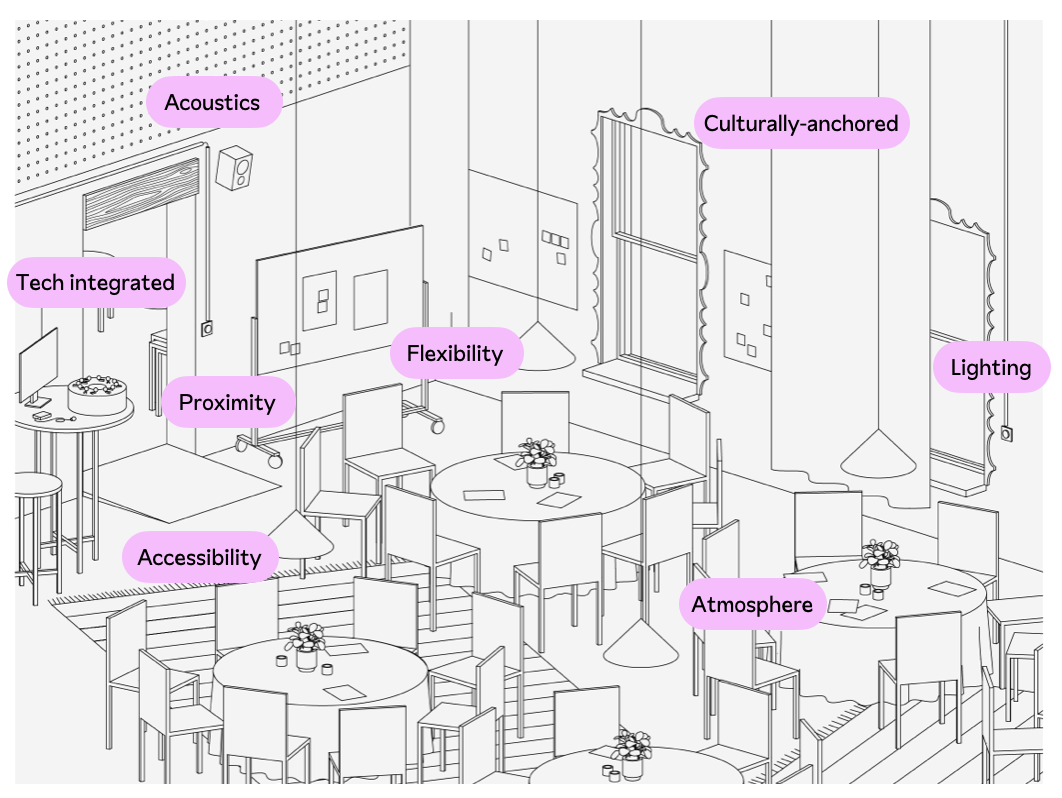
Based on our research and analysis, we have identified eight spatial qualities that are important to take into account with intention when designing deliberative assemblies: lighting; acoustics; connectivity; symbolic value; flexibility; atmosphere; access, and technology. These form an initial list of considerations in current practice:
Include a combination of artificial and natural light sources with both cold and warm tones as well as elements to easily adjust natural light throughout the assembly process, such as manoeuvrable or fixed screens or curtains.
Incorporate specific materials or acoustic products, such as porous surfaces, carpets, or, curtains in large deliberation spaces in combination with adjacent smaller breakout rooms for group discussion to ensure a variety of suitable acoustic conditions for different scales of conversation. Consider the acoustic conditions needed to ensure high-quality recordings for tech-enhanced deliberative assemblies (i.e. separate spaces for each breakout discussion).
Ensure that spaces used throughout the assembly process are in close proximity to each other to accommodate the various phases and activities of deliberations and the logistical organisation of the process.
Consider the socio-cultural context of the space, who might identify with the place, and who may not. Weigh the trade-offs of using a space that possesses a strong symbolic value and poor acoustics, lighting and flexibility versus a space with less symbolic value but optimal acoustics, lighting, and flexibility.
Consider how furniture and technical equipment can be placed and re-arranged in a space to ensure that the space remains flexible and adaptable depending on the specific activities of the assembly process
Consider how material choices and decorative items play a role in creating an atmosphere that is formal, yet welcoming, for various activities throughout the assembly process. Designing a space for diverse sensorial and emotional experiences allows for both casual and relaxed conversations/activities during some parts of the process, and the serious work of drafting and voting on recommendations.
Spaces for deliberation must be accessible to reach by assembly members and accessible to enter and navigate within. This includes places that are accessible by public transportation and spaces that are equipped with ramps, handrails, elevators, and barrier free rooms.
Consider how the integration of technology in a deliberative process can be made visible and accessible to the assembly members. This can help foster trust as it becomes part of the process—visible, approachable, and easier to engage with.
Conclusions, considerations, and further research
Understanding the spatial qualities that enable both facilitators and assembly members to engage in successful citizen deliberation can help us begin sketching principles for how we might more intentionally approach how we design and create spaces for deliberation. This is especially important as we begin to see more examples of ongoing, institutionalised citizens’ assemblies taking shape. While the considerations above are practically-oriented and derived from empirical observations and interviews, they encourage further speculation on how materialities, embodied experiences, and specific spatial configurations play a role for citizen deliberation, participation, and representation in a citizens’ assembly.
As we continue to experiment and explore how different forms of democracy can take shape, the spatial conditions must also adapt. We have a unique opportunity to create spaces that are intentionally designed for citizen deliberation while also enabling and connecting to other broader civic and community activities.
How to cite this paper
Nielsen, Gustav Kjær Vad and McDonald-Nelson, James (2025). “Spaces for deliberation: Eight spatial qualities for designing deliberative assemblies”, DemocracyNext.
Many of our current democratic institutions fail to reflect society’s diversity, creating divisions and binaries, while concentrating power in the hands of a few. As a result, democratic governments and democratic systems are failing to address some of society’s most pressing issues, while trust between people and political leadership is faltering. This can arguably be attributed to current democratic systems failing to meaningfully involve citizens beyond voting every few years. These systems are designed for debate rather than deliberation, which would encourage us to weigh trade-offs and make difficult decisions together. Moreover, existing systems rarely consider non-humans and future generations. As a result, public decision making is typically anchored in the short-termism of electoral cycles and the often inward-looking and oligarchic logics of party politics.
In 2016, Amsterdam-based architecture studio XML published a book called Parliament which compiles drawings of the plenary halls of parliaments in all 193 United Nation member states. This extensive research project expands and complements earlier works on spaces of modern democratic politics, such as the study of democratic architecture by Deyan Sudjic and Helen Jones in Architecture and Democracy (2001) and the architecture of national parliaments in Plenum. Places of Power (2014), and reveals an almost universal approach to the design of formal political spaces in a strict adherence to formal semi-circles, opposing benches, horseshoe, and a classroom style organisation of parliaments around the world. More recently, in Parliament Buildings: The Architecture of Politics in Europe (2023), the editors take on a related task specifically focusing on European democracies.
Many democratic parliaments today include spatial references to the amphitheatres of Ancient Athens or other Western institutions. However, most of the present day typologies were designed at the time of the French and American revolutions in the late 18th century.
Here, modern representative democracy was founded on a mixture of ancient models of democracy — not classical Athenian — which deliberately sought to limit the direct participation of the people.
Danish classical philologist Mogens Herman Hansen reminds us how the inspiration of European Enlightenment thinkers came in turn from Rome, Sparta, or Solonic Athens, which idealised and practised mixed constitutional forms with only partial democratic rule7. Consequently, contemporary parliamentary legislative chambers have been designed to host and encourage a specific set of political practices (usually in the form of debate and opposition) among a political “elite”.
Beyond parliaments, the relationship between architecture and politics has been discussed by Duncan Bell and Bernardo Zacka in their anthology Political Theory and Architecture (2020), where they explore the political agency of architecture and its relationship with political theory. The relationship between urban spaces and democracy is discussed by American sociologist Richard Sennett in the book Democracy and Urban Form (2024) as well as by political scientist John Parkinson in Democracy and Public Space: The Physical Sites of Democratic Politics (2012), however, largely within the context of representative democracy and with little or no attention given to spaces for facilitated civic deliberation.
Today, citizens’ assemblies are becoming more commonplace around the world, and there is a growing number of examples of permanent, rotating assemblies (some with a legal basis for institutional integration) in cities and regions in Belgium, Colombia, Denmark, France, Germany, and, Italy.
We now have an opportunity to reconsider how we design spaces to enable deliberation9, evidence-weighing, and consensus-building among groups of citizens. In Deliberative Mini-publics: Core Design Features (2021), political scientists David Farrell and Nicole Curato discuss the physical spaces of deliberative assemblies, although in limited detail. We propose that the physical design of citizens’ assemblies are given more critical attention through empirical study and grounded theory.
In this paper, we draw upon interviews with practitioners (organisers and facilitators of citizens’ assemblies) in six different countries to understand the intentional design choices they make as they implement a deliberative process. We take lessons from their experiences to understand the current spatial qualities perceived to be needed if we are to build new institutions for deliberative democracy through permanent, rotating citizens’ assemblies.
Our findings not only provoke us to think about what we mean by democracy, how it is embodied, and practised, but also how we can create the spatial conditions that support and facilitate new forms of democracy—rooted in citizen participation and deliberation.
We recommend eight spatial considerations for designing and adapting civic spaces for citizens’ assemblies and other deliberative processes. These include: natural and adjustable lighting; good acoustics; close proximities; culturally and socially anchored places; flexible equipment arrangement; formal and welcoming atmosphere; accessible location and navigation. We discuss critical limitations of general models and spatial qualities themselves in facilitating deliberative democracy by considering the importance of specific and situated approaches to design, as well as the empowerment of social practices and cultures.
2. Learning from citizens’ assembly practitioners in six countries
With over 700 citizens’ assemblies having taken place around the world (and more happening each year), there are numerous examples of physical spaces that have been adapted and used to host and facilitate deliberative processes. In the literature, however, limited attention has been given to the role that space plays in a deliberative process and how we might design this more intentionally. We take preliminary steps towards understanding the importance of spaces for deliberation in this paper through a closer look at a handful of cases. From conversations with researchers, conveners, and facilitators in Australia, Belgium, Canada, Colombia, Denmark, and the USA we’ve had the opportunity to gain insights on the kinds of physical conditions that citizens’ assemblies take place in today.
In Belgium, we spoke to Ana Adzersen, who is a facilitator with Agora, a Belgian political party that ran on a platform of using assemblies to inform its policy positions. Until 2024, Agora held one elected seat in the Parliament of the Brussels-Capital Region but only voted on legislation that had been deliberated on in a citizens’ assembly. Having designed and led the facilitation of three of these assemblies, Ana has experienced first hand how varying physical conditions can impact a deliberative process.
The examples Ana shared with us were assemblies that took place in both the regional parliament’s legislative chambers, where final recommendations were delivered, and a more “politically-neutral” historic building, where most of the assembly sessions took place—both of which were large enough to host the 89 citizens who took part in the process. While the grandeur and political significance of the legislative chamber lends a feeling of significance and legitimacy to the process, the space was not always practical as it lacked the flexibility to adapt the space for deliberation.
The historic building, on the other hand, was described by the conveners as a more neutral space and conducive for assembly members from very different backgrounds to feel equally welcome and take the process seriously without excessive partisanship. However, lighting conditions were sometimes hard to control, and the acoustic conditions meant that when many people were speaking in small groups, it was difficult to hear the person next to you or the interpreter, in cases where deliberations were multilingual. For this reason, small groups retreated into the hallways and lobby of the building, but were often interrupted by people passing by.
The furniture in such spaces is often large and fixed, which does not allow for flexibility or makes it difficult to organise smaller groups to deliberate. One positive quality was its location adjacent to a public green space, which allowed for the assembly members to take breaks and casually discuss amongst themselves in a setting that allowed for reflection and connection.
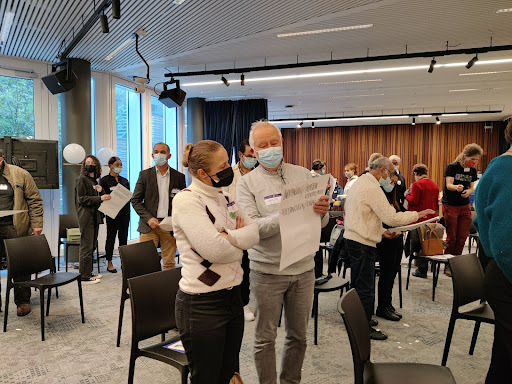
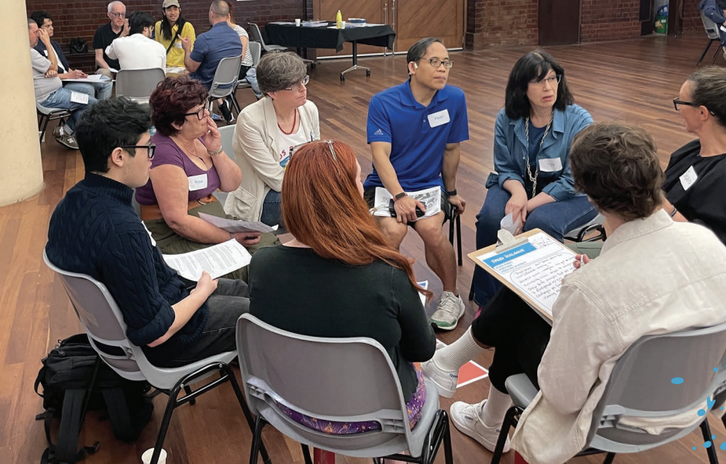
City of Melbourne Affordable Housing Panel, MosaicLab (Kimbra White)
In speaking with Kimbra White, co-founder and director of MosaicLab in Australia, about the typical spaces in which they organise citizens’ assemblies, we discussed a different kind of challenge. Since spatial flexibility is a central consideration for MosaicLab, they tend to select locations that can be reimagined and rearranged throughout the deliberation, depending on whether the session is with the whole group, smaller groups, or with local experts, stakeholders, and observers. White explained that it is equally important to find a location with secondary spaces that allow for smaller groups to sit or stand together. Even though they seek spaces that have good natural light, access to outside space, and that are relevant to the subject matter, finding venues with these attributes can prove difficult. They sometimes take place in conference centres without windows or in hotels, universities, and local government buildings with available conference rooms. However, conference rooms lack a sense of place and identity, and because of their universal functionality, they can sometimes feel placeless and unrelated to the important work of the assembly.
Another important design choice MosaicLab makes is to avoid the use of tables for deliberations amongst assembly members. Tables are sometimes used when absolutely necessary, but otherwise discussions take place as photographed below, in circle formation sitting in chairs.
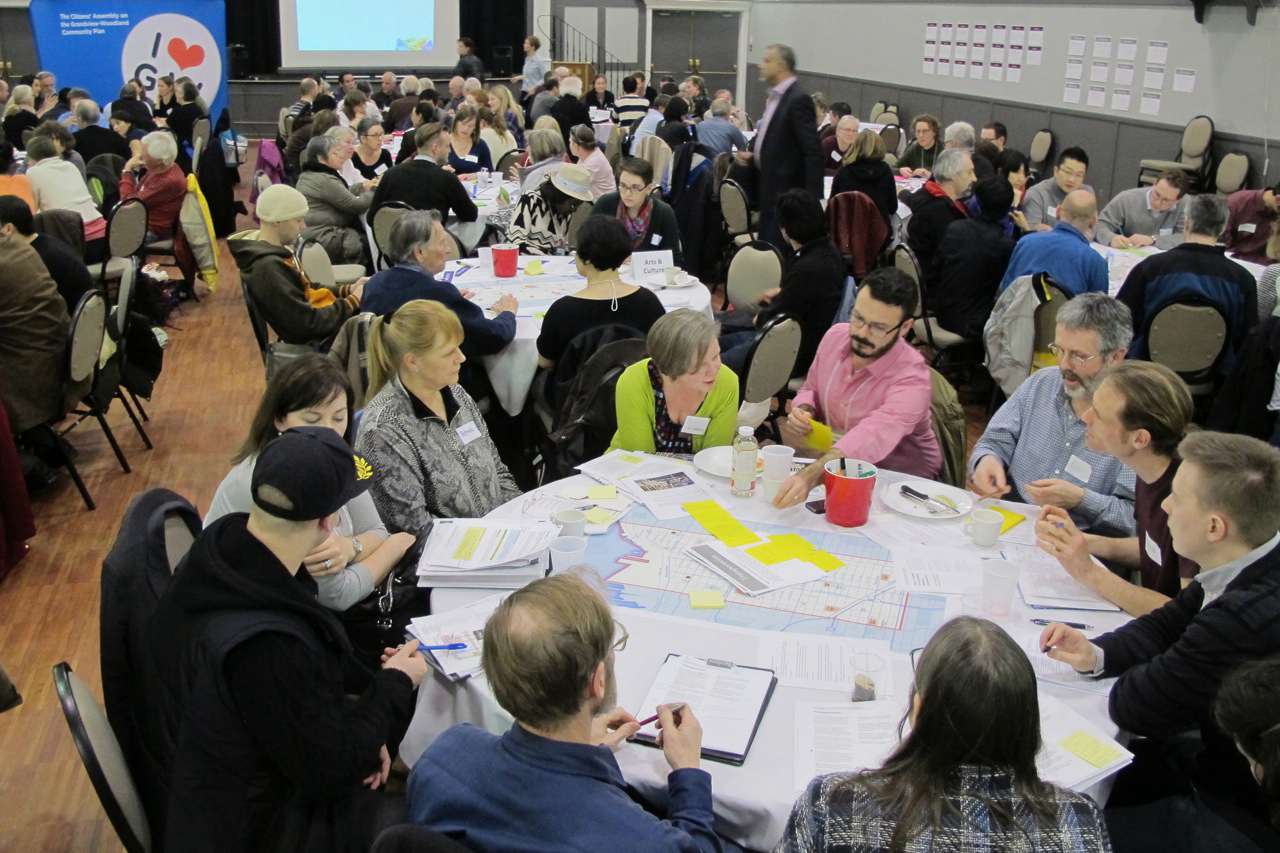
Grandview-Woodland Citizens’ Assembly, Canada, MASS LBP (Sarah Yaffe)
In Canada, seasonal weather can have an impact on where and when citizens’ assemblies take place. Sarah Yaffe of MASS LBP, a deliberative democracy practitioner organisation, shared with us how assemblies are sometimes organised in the autumn, winter, and spring months so that the sessions do not overlap with summer holidays.This helps to ensure that the maximum number of people can join. But with Canada’s often harsh winters, it is essential to choose an indoor location that is flexible, with plenty of natural light, and enough space to breakout from the plenary room. Access to green space is not necessarily a priority in this case, but finding a location in close proximity to public transportation, parking, and a hotel for out-of-town members, is important.
In the German-speaking region of Ostbelgien in the eastern border region of Belgium, citizens’ assemblies are organised on an ongoing basis, and consist of two kinds of citizen bodies. The permanent Citizens’ Council includes 24 rotating citizens who are responsible for organising and following up on recommendations produced by regularly organised, one-off citizens’ assemblies organised to address a specific topic. This assembly usually consists of around 30 members.
Citizens’ Councils take place once per month, while citizens’ assemblies meet on several Saturdays over a fixed time period of three to four months. In such a context, where citizens’ assemblies convene multiple times per year, one might imagine that a dedicated space has been created for them, but this is not the case. We spoke with Myriam Pelzer, who, at the time, worked in the administration of the parliament as Director of Communication and Public Relations.
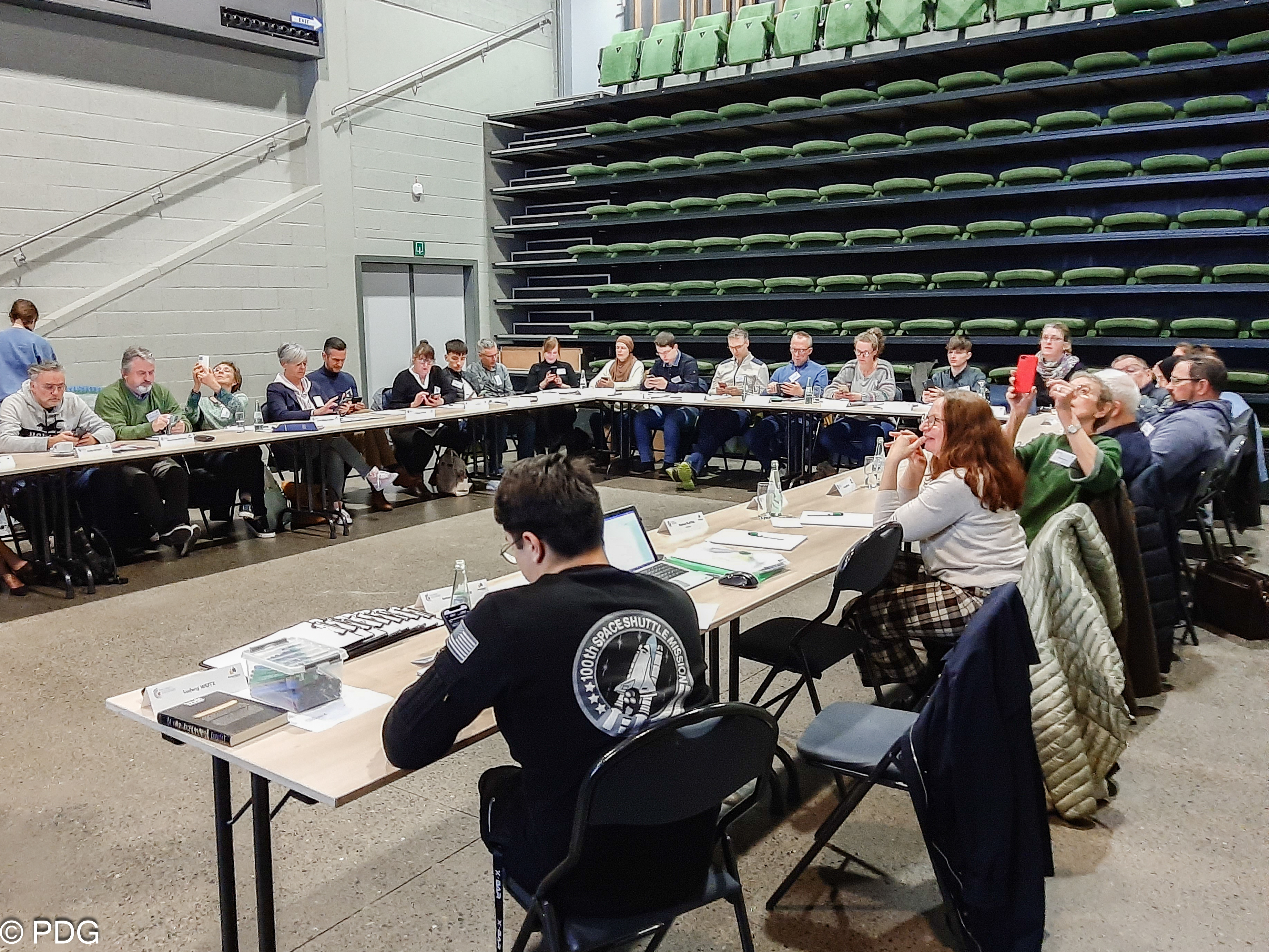
Myriam explained that sessions with the citizens take place in two locations within the region of Ostbelgien: in the regional parliament building in Eupen and in a cultural centre in the southern part of the region, such as Triangel in St. Vith. In the parliament, plenary sessions with citizens take place in the primary legislative room, while small breakout groups of five people take place in large conference rooms with tables meant for 20 people. In the plenary sessions, citizens sit at fixed desks in a semicircle, facing one direction. One of the main reasons for maintaining the plenary sessions in this space is due to its higher quality acoustics.
However, when sessions are organised in the cultural centre, there is a lot more flexibility as the space is open and furniture is not fixed. Here, tables can be arranged and rearranged depending on the kind of session taking place. Myriam suggests that a space devoted entirely for the citizens’ assembly would be excessive as assemblies do not happen every day, but such spaces could, instead, be envisioned to host a myriad of other civic and community activities.
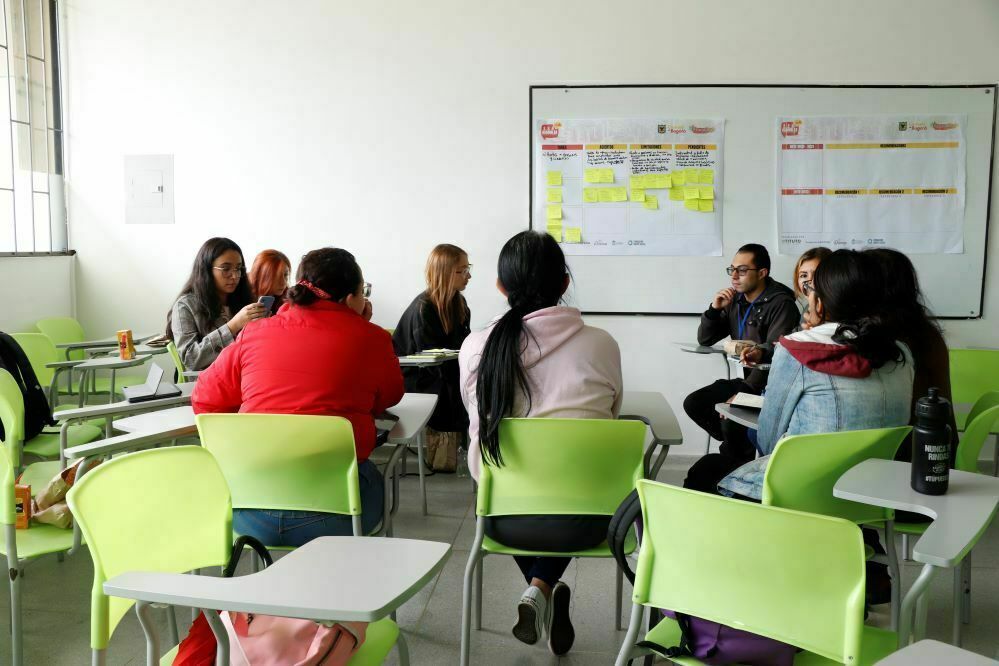
We spoke to Felipe Rey, co-founder of iDeemos, a Colombian non-profit that designs citizens’ assemblies, about the itinerant citizens’ assembly in Bogotá. Since 2020, it has been organised by DemoLab, which is a part of the Bogotá City Council, and, according to the OECD, is the first institutionalised citizens’ assembly in Latin America. Felipe has been part of designing the assembly, which has so far met three times—twice virtually and once in-person in the Department of Medicine at the Universidad Nacional de Colombia (National University of Colombia) in Bogotá.
He emphasises the qualities of assembling in a public university. It is a place of learning, it is public, impressive, and aspirational. During the in-person parts of the assembly, they used a combination of classrooms, an auditorium and outdoor green spaces. Furniture was re-arranged in clusters and circles while the spaces themselves were not altered. Felipe notes that they could have been more careful with the selection of spaces.
He suggests that, in general, spaces for deliberation could be more directly linked to the issue at hand, while there are certain trade-offs related to this as deliberation might be difficult in a hospital or outdoors. As an alternative, he points out that trips and site-visits are part of the deliberation process, and these spatially link deliberations to the topic of the assembly.
We also discussed the relationship between the assembly and the wider population. Felipe emphasised that it is important to consider how we spatially enable and facilitate interactions between the wider population and the assembly. Is deliberation taken to the street or are people temporarily invited “inside” the assembly space? If spaces for deliberation could also include spaces for the sortition process or the handover of recommendations, can these be public events? Is public access to the process, such as in the Germany’s Bundestag, an example to draw inspiration from, or might we think of it in terms of an interactive exhibition like an “Assembly Museum”?
Lynetteholm Citizens’ Assembly, Copenhagen, We Do Democracy (Johan Galster)
We spoke to Johan Galster from We Do Democracy in Denmark. We Do Democracy is an organisation that advocates for, organises, and facilitates citizens’ assemblies all over Denmark and Scandinavia. They have facilitated 25+ assemblies over the last five years. Johan explained that basic criteria, such as capacity and access, must be considered first, including sufficient spaces for administrative work and access by public transportation. Accessibility issues can be solved by covering travel costs, or with the establishment of a temporary shuttle service.
The physical and social atmosphere are important elements to consider and should convey a sense of order, comfort, and lend a feeling of importance to the assembly process. Spaces should be bright, inviting, designed for people and not simply a gym with some chairs arranged in a circle. We Do Democracy always visits the spaces in advance and performs a quality check prior to deliberations.
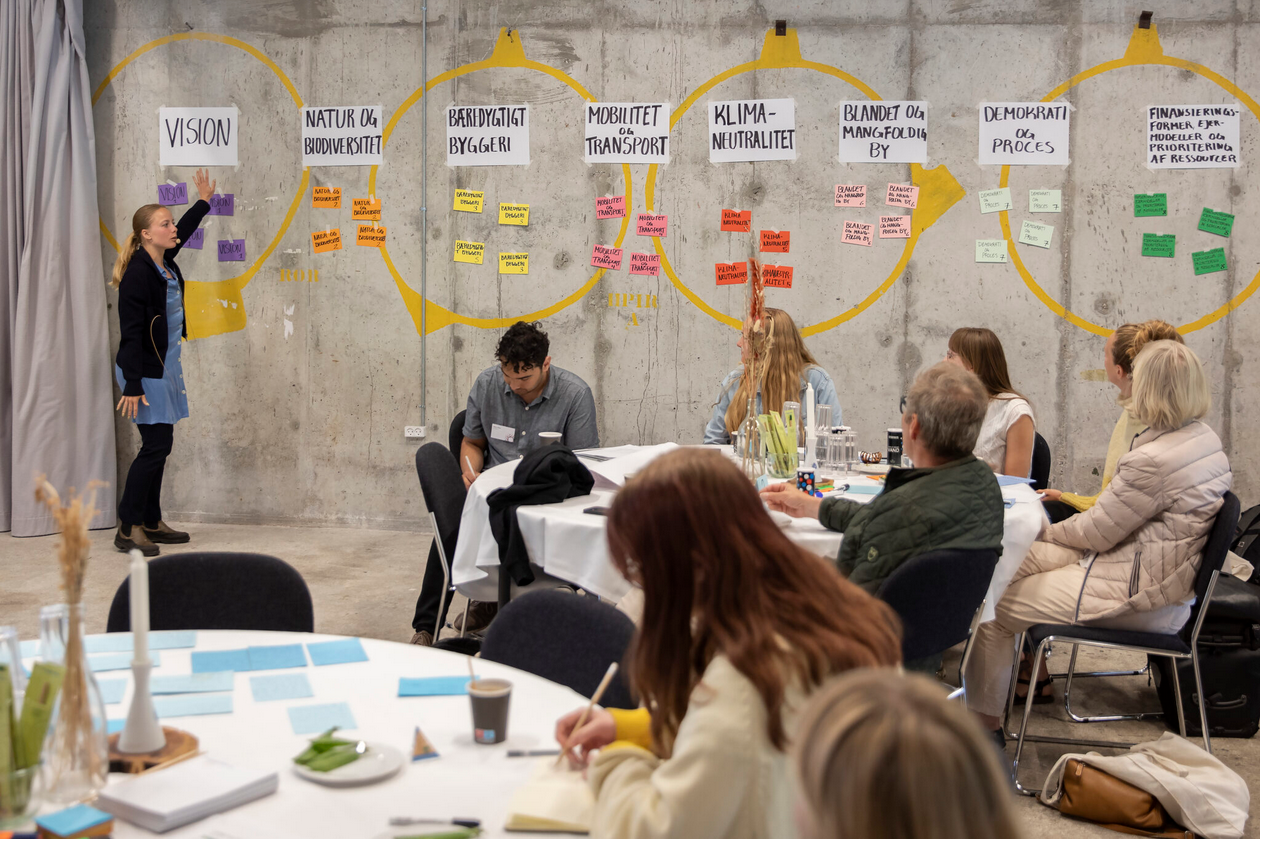
We Do Democracy is based in the Northern part of Copenhagen and is part of the Demokrati Garage (Democracy Garage)—a small cluster of abandoned garages transformed into co-working spaces, a bakery, a café, a restaurant and offices around a small courtyard.
At Demokrati Garage they have succeeded in creating an atmosphere for deliberation and exercising democracy. Central to this is the Folkestuen (the Peoples’ Living Room). This comprises a 160 square metre space transformed from a former mechanics garage, with vaulted ceilings and exposed timber beams, combining the rustic character of a workshop with a homely domestic interior. It has been furnished with a small bar, technical equipment, and moveable furniture, including round tables and chairs. The smell of freshly baked bread seeps into the space from the bakery next door, flowers are on the tables, and large curtains are hung to manage the acoustics and mediate daylight entering from a mix of old and new windows. Johan emphasises that cosiness is just as important as creating a professional atmosphere with a high level of hospitality and careful hosting. The Folkestuen also serves other organisations as it can be rented and is used for all kinds of events throughout the year when not used for assemblies.
Johan reminds us of the dramaturgy of deliberation and the multitude of potential uses for new democratic spaces in cities. In his experience, it is valuable to begin deliberations by being given a task in a space of symbolic importance and political power such as in the city or town hall. Afterwards, deliberative activities can move to a space with a workshop-like quality and conclude with a return to a space of power for the presentation of recommendations. As such, he suggests that, across the dramaturgic arc, deliberations can benefit both from being situated in the power-ful and power-free space. In conclusion, Johan shares some thoughts on what might constitute other democratic spaces in the city. Historically libraries have been such spaces and this tradition is carried on in some new libraries and culture centres like the Deichman Bjørvika in Oslo, Oodi in Helsinki, and DOKK1 in Aarhus, which all have become new multicultural flexible places which can host important conversations about society and democracy.
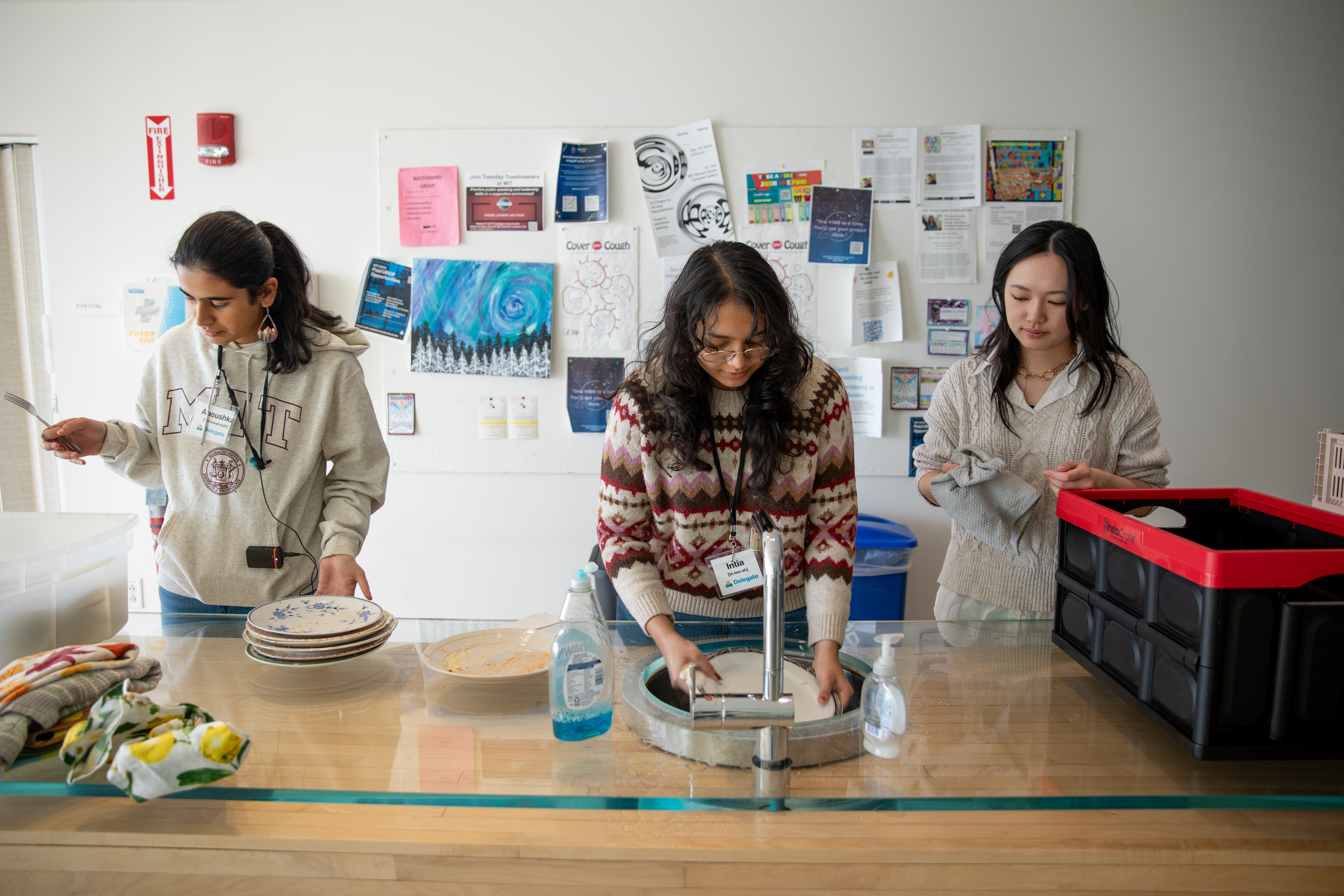
MIT CCC. Photo: Artemisia Luk
In the United States, the Massachusetts Institute for Technology’s Center for Constructive Communication (CCC) has been experimenting with tech-enhanced student assemblies in collaboration with DemocracyNext. We spoke to Dimitra Dimitrakopoulou, Head of Translational Research and Practice, about the MIT Student Assembly the team implemented in January 2025. This process introduced intentional spatial design and tech interventions to address the question: what if technology could do more than capture conversation—what if it could actively help groups listen better, reflect deeper, and make more inclusive, thoughtful decisions?
The CCC team is exploring how AI and data-driven tools can be designed not to replace human deliberation, but to enhance it—amplifying overlooked voices, surfacing insights in real time, while visualising dialogue to help assembly members understand how their ideas evolved over the course of the assembly. After the assembly, audio medleys, visualisations, and prototype tools help make the outcomes of participation tangible, showing how individual contributions can shape deliberations and group decisions over time.
In the Student Assembly, the design of the physical space played a crucial role in fostering trust, transparency, and participant engagement. Rather than treating technology as a hidden layer, the process begins with engaging onboarding sessions. When assembly members enter the space for the first time, they encounter a ‘data bar’ where they can grab a coffee, select their microphone, and interact directly with the researchers, learn how to control their own recordings, understand how their data will be used, and are shown how to delete anything they find too personal or sensitive.
This intentional approach to space design helps take the mystery out of the technology. When people understand what is happening and why, they are more likely to participate openly and feel that their voices matter. Instead of tech being something hidden or intimidating, it becomes part of the process—visible, approachable, and easier to engage with. In a setting like this, the room itself helps build trust. It sends the message that everyone’s input counts, and that this is a shared effort to listen, reflect, and make decisions together.
What makes this approach distinctive is its emphasis on making the use of technology in participation visible, intentional, and meaningful. Thoughtfully designed elements—like colourful, personalised microphones and data consent comics—transformed passive processes into opportunities for agency and engagement. Assembly members could trace how their contributions were clustered, echoed, or reintroduced into final recommendations, reinforcing that their voices shaped the outcome.
3. Eight spatial qualities for deliberation
Drawing upon the learnings from the cases above, we have identified a non-exhaustive list of eight spatial considerations for citizens’ assemblies.
These are synthesised and presented below. Besides contributing to the existing literature on democratic spaces this synthesis also aims to contribute to the further development of the Spatial Considerations Checklist in the DemocracyNext Assembling an Assembly Guide.
1. Natural and adjustable lighting
Include a combination of artificial and natural light sources with both cold and warm tones as well as elements to easily adjust natural light throughout the assembly session, such as manoeuvrable or fixed screens or curtains.
From our conversations, we learned that poor lighting quality and limited options for adjusting light sources are recurring challenges. Practitioners look for venues that offer a mix of lighting scenarios to enable visual accessibility and a comfortable atmosphere – a space which is professional and cosy at once. A lack of sunlight affects visibility and often lowers people’s energy levels, while excessive artificial lighting can feel sterile and cold. Moreover, the ability to adjust light conditions is critical to create a comfortable environment throughout the day and to facilitate digital presentations or other situations where light must be dimmed.
2. Good acoustics
Incorporate specific materials or acoustic products, such as porous surfaces, carpets, or, curtains in large deliberation spaces in combination with adjacent smaller breakout rooms for group discussion to ensure a variety of suitable acoustic conditions for different scales of conversation. Consider the acoustic conditions needed to ensure high-quality recordings for tech-enhanced deliberative assemblies (i.e. separate spaces for each breakout discussion).
Acoustics are important for enabling effective processes of learning and deliberation in a citizens’ assembly. As we have learned from our conversations, poor acoustic control is often an issue. Particularly in larger assemblies, acoustics become a challenge as the scale of the space must be bigger to host a larger number of members. As Myriam from Belgium explained, the acoustic quality of the legislative chamber of the Ostbelgien regional parliament is the main reason why they still use this space, although other desired qualities (like flexibility) are compromised. In this case, good acoustic spaces for plenary sessions are often missing. Quiet breakout spaces are important as well, as they provide adjacent, connected spaces for more intimate discussions to take place. These, however, are not as difficult in terms of acoustics, which suggests that the plenary space must be given priority when designing or looking for a place for deliberative sessions. Additionally, when designing tech-enhanced deliberative assemblies, paying attention to the acoustics matters for ensuring that high-quality recordings are possible.
3. Close proximity between spaces
Ensure that spaces used throughout the assembly process are in close proximity to each other to accommodate the various phases and activities of deliberations and the logistical organisation of the process.
From our findings, adjacent spaces are important for several reasons: to offer alternative spaces for assembly members to gather and seek fresh air during breaks; for breaking out into smaller groups in-between plenary sessions; and for the logistics of catering and facilitation preparation. Spaces for different session activities can be achieved by sub-dividing larger spaces or having separate smaller rooms. Ensuring close proximity between each space is important to enable quick transitions from one activity to another, to allow for short breaks, and to maintain a connection between activities throughout the deliberative process.
4. Culturally and socially-anchored place
Consider the socio-cultural context of the space, who might identify with the place, and who may not. Weigh the trade-offs of using a space that possesses a strong symbolic value and poor acoustics, lighting and flexibility, versus a space with less symbolic value but optimal acoustics, lighting, and flexibility.
Culturally and socially-anchored spatial qualities were found to be an important consideration. As Ana pointed out, the historic grandeur of a parliament hall lends a sense of importance to the assembly process even if the inflexibility of the space might be less ideal for deliberation. Kimbra explained that their search for flexibility typically forces them to choose conference centres which are generic and generally void of specific cultural, historical, or symbolic character. In the case of Folkestuen in Copenhagen, the historic character shines through in the space. Unfortunately, it is not very big and cannot host a larger assembly of 100+ members. Spaces with a unique historical and/or architectural character matter, but sometimes come at the cost of other qualities such as scale, acoustics, or flexibility. Consider whether it is possible for the space to be co-created with community members. This can infuse a greater sense of ownership and empowerment in the process. Adjacent and overlapping activities happening in the space (such as the bakery, cafe, and various professionals in the co-working space at the Folkestuen in Copenhagen) also creates a welcoming atmosphere. Consider the possibility that the space could also be relevant to the topic deliberated on during the assembly and how this might build empathy and understanding of the issues at hand.
5. Accessible location and navigation
Spaces for deliberation must be accessible to reach by assembly members and accessible to enter and navigate within. This includes places that are accessible by public transportation and spaces that are equipped with ramps, handrails, elevators, and barrier free rooms.
It is fundamental to consider the accessibility of the spaces selected for citizens’ assemblies so that all members can move around in these spaces, especially people with limited mobility. A second consideration regarding accessibility is the physical location of the assembly within a city or a region. The location of the venue in relation to where members move in their everyday lives, particularly for marginalised communities, should be a priority when selecting where the assembly will take place. In this regard, accessibility by public transport is often fundamental.
6. Formal and welcoming atmosphere
Consider how material choices and decorative items play a role in creating an atmosphere that is formal, yet welcoming, for various activities throughout the assembly process. Designing a space for diverse sensorial and emotional experiences allows for both casual and relaxed conversations/activities during some parts of the process, and the serious work of drafting and voting on recommendations.
We should carefully consider material choices and decorative items used in an assembly. The bodily and sensorial experiences of assembly members, particularly in relation to comfort, posture, and interaction are all impacted by the overall atmosphere of the room. This consideration was expressed by Ana and Kimbra as a concern about the hardness and stiffness of existing legislative chambers and conference rooms compared to the softness of outdoor breakout spaces and flexible seating arrangements in more informal spaces. Soft surfaces (like couches or armchairs) may also invite a more casual and intimate environment where people can sit comfortably, slouch, or even lie down. Hard surfaces can be used for activities that might demand greater attention during the learning phase, or as sturdy work surfaces. Johan spoke to the importance of flowers on the tables, the scent of freshly baked bread, combined with a workshop-like environment with a cosy and homely atmosphere in Folkestuen. Material choices are also linked to considerations for identity of deliberative spaces discussed by the practitioners both as concern for atmosphere and symbolic meaning attached to spaces.
7. Flexible furniture and equipment arrangement
Consider how furniture and technical equipment can be placed and re-arranged in a space to ensure that the space remains flexible and adaptable depending on the specific activities of the assembly process.
Various types of furniture are used during deliberative processes and typically include chairs and tables of different kinds, but can also include moveable partitioning walls, drawing boards, and podiums or stages. However, in some contexts, tables are intentionally not used for small groups. As Kimbra pointed out, this is the case for Mosaic Lab in Australia, who consciously use only chairs arranged in a circle for small group deliberations. While the arrangement of furniture, podiums, and tools needed for a deliberative session are consciously arranged, there usually remain inflexible spatial limits that inhibit an optimised design of the space. This is the case in the plenary space in Ostbelgien, for example. Other limitations include immovable, poorly-arranged furniture—as is the case of most legislative chambers—where assembly members are unable to sit together in a circle or around a table. A lack of wall space also makes it difficult to display essential information about the assembly topic or draft recommendations. In addition, technical infrastructure such as WiFi, electrical outlets, speakers, and microphones should be considered for their flexibility to enable easy access and use.
8. Thoughtful integration of technology
Consider how the integration of technology in a deliberative process can be made visible and accessible to the assembly members. This can help foster trust as it becomes part of the process—visible, approachable, and easier to engage with.
As demonstrated by MIT's Centre for Constructive Communication, incorporating features like an interactive "data bar" where participants can select personalised microphones while learning about data usage creates a welcoming entry point that demystifies the technical aspects of deliberation. This intentional spatial design acknowledges that trust begins with the environment—when participants can physically engage with the tools recording their contributions and understand how their voices will be processed, they participate more openly and authentically. The space itself should communicate that technology exists not to monitor, but to amplify, overlooked voices and make collective wisdom visible, turning what could be intimidating digital processes into tangible, approachable elements of a shared democratic experience.
4. Conclusion
Understanding the spatial qualities that enable both facilitators and assembly members to engage in successful citizen deliberation can help us begin sketching principles for how we might more intentionally approach how we design and create spaces for deliberation. This is especially important as we begin to see more examples of ongoing, institutionalised citizens’ assemblies taking shape. While the considerations above are practically-oriented and derived from empirical observations and interviews, they encourage further speculation on how materialities, embodied experiences, and specific spatial configurations play a role for citizen deliberation, participation, and representation in a citizens’ assembly.
The ‘deliberative wave’ of assemblies around the world is introducing a new form of democracy rooted in sortition and deliberation. Currently, citizens’ assemblies are often hosted in spaces used for electoral democracy or ad-hoc spaces temporarily configured for the assembly process. As we continue to experiment and explore how different forms of democracy can take shape, the spatial conditions must also adapt. We have a unique opportunity to create spaces that are intentionally designed for citizen deliberation while also enabling and connecting to other broader civic and community activities.
Spaces for deliberation can derive their form from a specific cultural context and in some cases, the topics of the assembly process itself. They can connect to other spaces and make visible the relationships between social worlds, cultural, and natural phenomena. More than universal prescriptions, we need a plethora of possible alternative designs for our political spaces in addition to existing ones. Considered in relation to some of the key principles of deliberative democracy such as integrity, accountability, inclusiveness, and representativeness, new design principles can work to ensure the widening of our current spatial imaginaries for deliberative practices and contribute to usher in a new paradigm of democracy.
Ana Adzersen - Brussels Citizens’ Assembly, Brussels, Agora
Ana Adzersen is a facilitator of citizens’ assemblies and until 2024 was working with Agora.Brussels. Agora.Brussels was active during the 2019-2024 legislature but did not stand in the 2024 elections. Agora was a citizens' political movement launched in 2018 by a handful of volunteers and by 2024 included seven employees and around thirty volunteers. Inspired by the idea of sociocracy, Agora was organised into working groups, each with legitimacy to act on its topic, using places and tools to help share information and, where necessary, make joint decisions.
Dimitra Dimitrakopoulou - Head of Translational Research & Practice, MIT Center for Constructive Communication
As the Head of Translational Research & Practice at the MIT Center for Constructive Communication, Dimitra leads socio-technical research at the intersection of dialogue, technology, and design. By bringing deep expertise in participatory methods, qualitative analysis, and design research, she focuses on the design, prototyping, and advancement of social dialogue technologies and oversees the transfer of research methods, tools, and systems to practice and deployment.
Johan Galster - We Do Democracy
Johan Galster is a Director and founding partner of We Do Democracy, where he is an expert advisor on deliberative democracy, innovation and participation. He is one of the co-founders of Demokrati Garage, Denmark’s independent development platform for democratic innovation. Johan is a leading expert consultant in designing and implementing citizens’ assemblies that comply with the OECD’s international principles. Johan has designed and led more than 10 citizens’ assemblies as lead facilitator at municipal and regional level in the Nordic region. Johan has over 20 years of experience as a counsellor in inclusion and as a facilitator of change processes across various societal players with a focus on urban development, mobility, climate adaptation, renewable energy and green transition.
Myriam Pelzer - Ostbelgien, “Bürgerdialogue”
Myriam Pelzer has worked in various roles for the German-speaking community since 1988. From 2011 to 2024, she headed the public relations department in the parliament, which also includes the citizens' dialogue. In this context, she has supported the development of the process and was involved in its implementation.
Felipe Rey - iDeemos
Felipe Rey is an assistant professor in the Department of Public Law at the Pontificia Universidad Javeriana in Bogotá, Colombia. He holds a PhD in Law (2019) and a Master's degree in Law (2013) from Pompeu Fabra University in Barcelona, Spain. He has also been a visiting researcher at the Center for Human Values at Princeton University and the Institution for Social and Policy Studies at Yale University. As co-lead of Democracy R&D, the leading global network dedicated to deliberative democracy and democratic innovation, Felipe collaborates with over 300 academics, professionals, officials, and journalists from 55 countries. He is also the founder of the democratic innovation laboratory ideemos.org, recognised by the Apolitical Foundation as one of the two democratic innovation organizations to watch in Latin America. Through ideemos.org, Felipe has coordinated some of the first deliberations in Latin America using random selection of citizens.
Kimbra White - MosaicLab
Kimbra White is one of the founding directors of MosaicLab, a Melbourne (Australia) based community and stakeholder engagement consultancy that specialises in designing and facilitating public deliberations. She is a highly experienced facilitator having worked across a wide range of projects, some with high levels of outrage and emotion, as well as many deliberations. She is the past President of the International Association for Public Participation (IAP2) Australasia and represented Australasia on IAP2’s international board. Kimbra co-authored the popular Facilitating Deliberation, a Practical Guide with her fellow MosaicLab directors.
Sarah Yaffe - MASS LBP
Sarah is a Director at MASS LBP in Toronto, Canada, where she oversees deliberative and strategic initiatives aimed at empowering people to meaningfully influence the policies that affect their lives. During her time at MASS, Sarah has championed major projects such as the Capstone Citizens' Assembly on Democratic Expression and the Youth Assembly on Digital Rights and Safety. Sarah has directed numerous engagement efforts and crafted inclusive strategies for clients across diverse sectors, including health care, arts and culture, disability rights, urban development, and education. She is the co-lead of MASS's Deliberative Strategies training program, working across North America to mentor and coach teams delivering deliberative projects.