Deliberative Democracy in Africa: Learning from Past Citizens' Assemblies & Guidance for Future Action

In this paper, we explore how citizens’ assemblies can be adapted to Africa’s diverse contexts by drawing on real-world experiences across the continent.

Executive Summary

Africa faces a paradox. Most people continue to support democratic institutions, even though their satisfaction is declining with institutions’ ability to deliver inclusive economic prosperity and accountable, responsive governance. Citizens’ assemblies offer a way forward by offering the opportunity to draw on indigenous traditions of sustained deliberation and consensus-building to tackle complex policy problems.

In this paper, we explore how citizens’ assemblies can be adapted to Africa’s diverse contexts by drawing on real-world experiences across the continent. We begin by outlining the civic strengths and cultural traditions that underpin deliberative democracy in Africa, before reviewing emerging deliberative experiments – including citizens’ assemblies – that illustrate their potential. We introduce an analytical framework to assess the strengths and limitations of citizens’ assemblies and apply it to case studies from Mali, Malawi, and The Gambia. Finally, we highlight insights from an upcoming citizens’ assembly in South Africa.

The paper serves two purposes: advancing theoretical frameworks for evaluating deliberative processes in the Global South, and offering practical guidance to foster experimentation and collaboration in democratic innovation across these contexts. Rather than proposing a single model, we identify context-sensitive strategies that help citizens’ assemblies bridge Africa’s democratic delivery gap, while building on longstanding traditions of collective decision making.

Deliberation and democracy in Africa

‘Deliberation’ refers to structured discussion where people consider evidence, listen to different perspectives, and work together to understand complex issues before reaching a shared decision. Unlike other forms of political participation (e.g., voting, lobbying, protesting), deliberation involves genuine openness to changing one’s mind based on new information and insights from a range of different arguments and opinions (DemocracyNext, 2025; OECD, 2020).

Deliberative democracy puts thorough and constructive discussion about complex issues at the centre of decision making. Rather than simply aggregating citizens’ preferences through voting, deliberative democracy creates spaces where assembly members can learn about issues, hear from experts and affected communities, discuss trade-offs with their peers, and develop informed recommendations through facilitated deliberation. As a result, these processes often lead to more nuanced, creative, and widely acceptable solutions than traditional forms of political participation – especially when addressing complex, contentious, or divisive issues (Bächtiger et al., 2018).

Africa has unique advantages for deliberative democracy that remain largely untapped. For generations, indigenous consensus-building traditions have provided platforms for community debate and collective decision making.

Deliberative democracy is therefore not a foreign import, but builds on deeply rooted principles and practices in many parts of the continent.
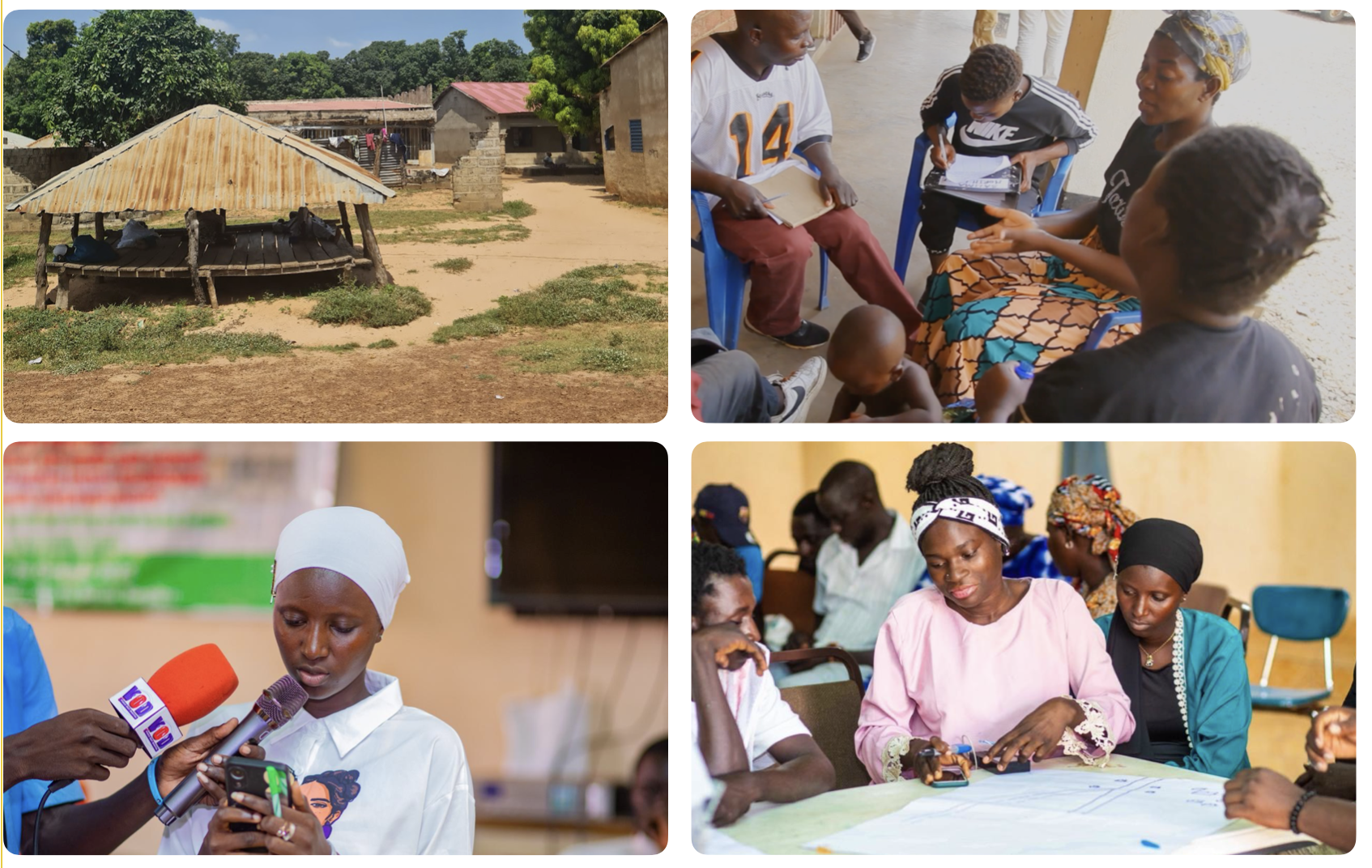
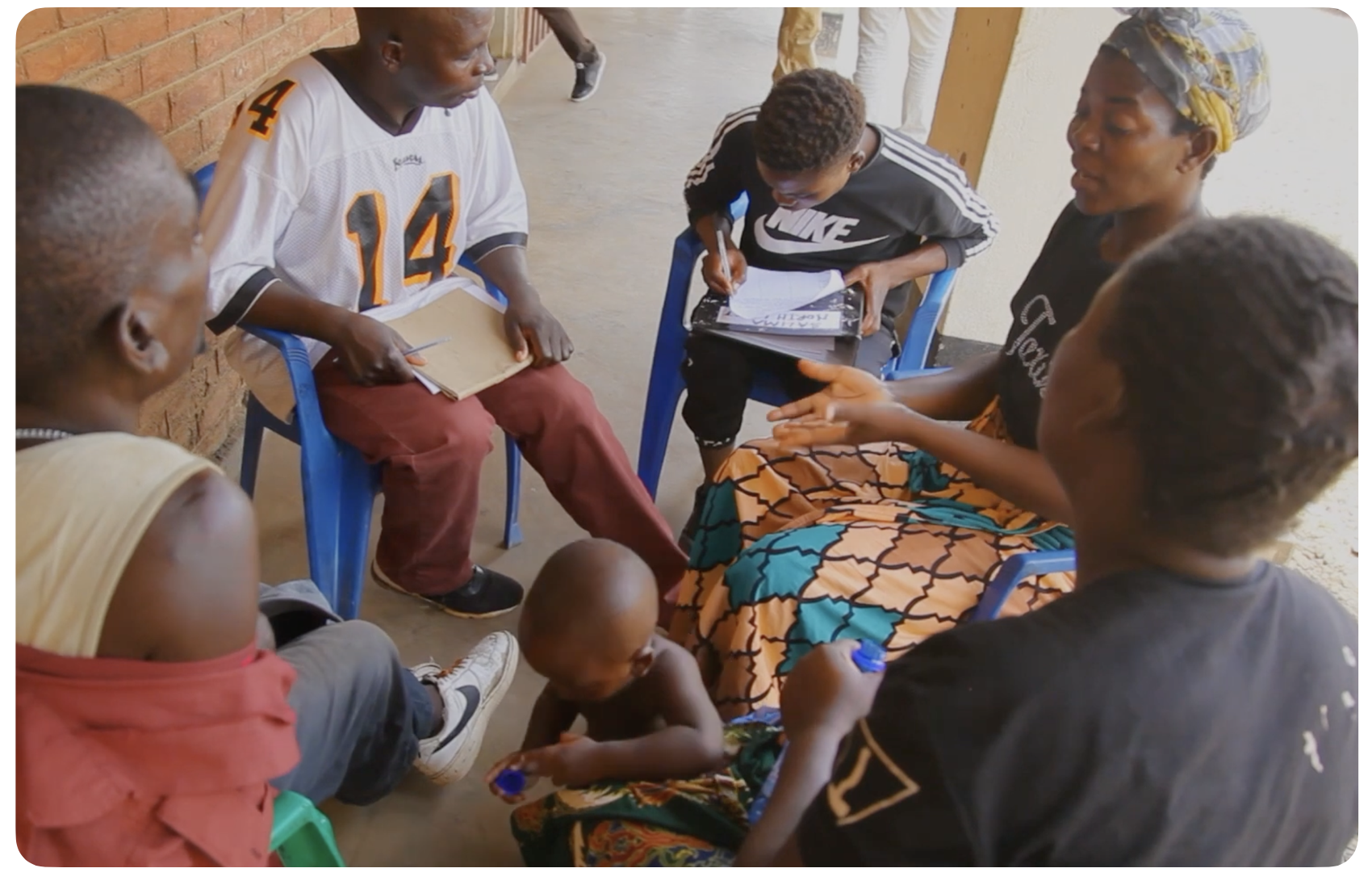
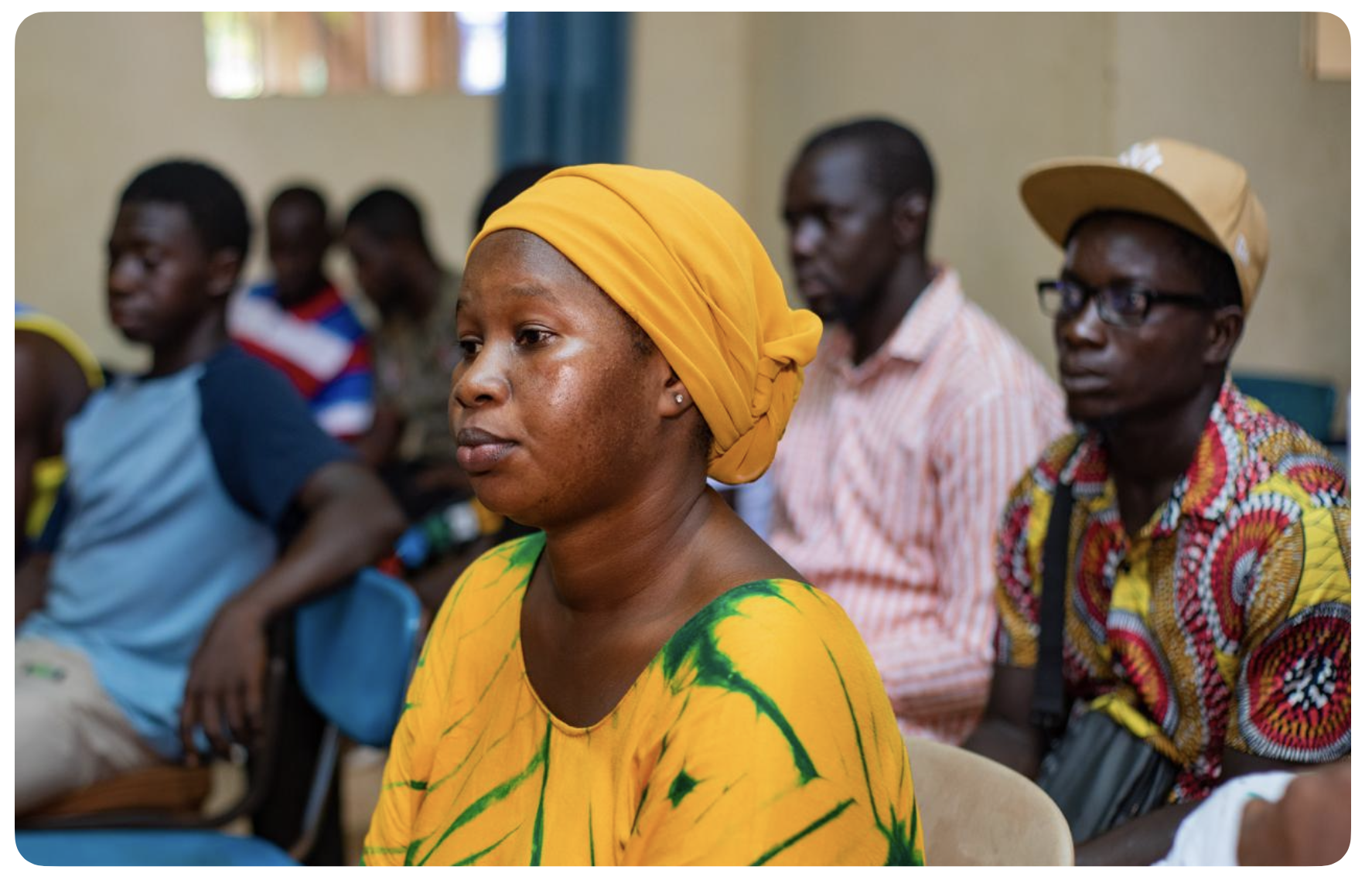
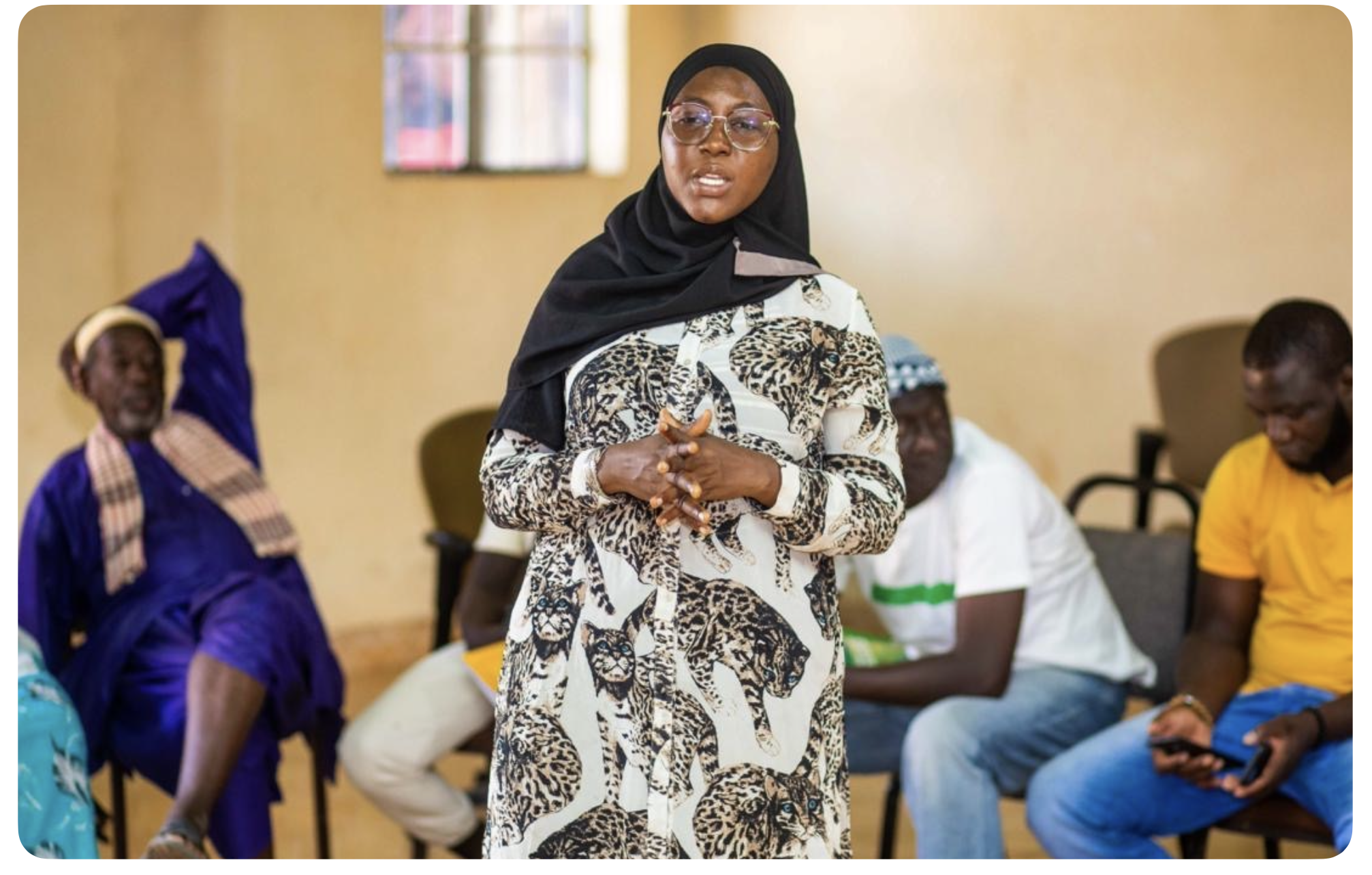
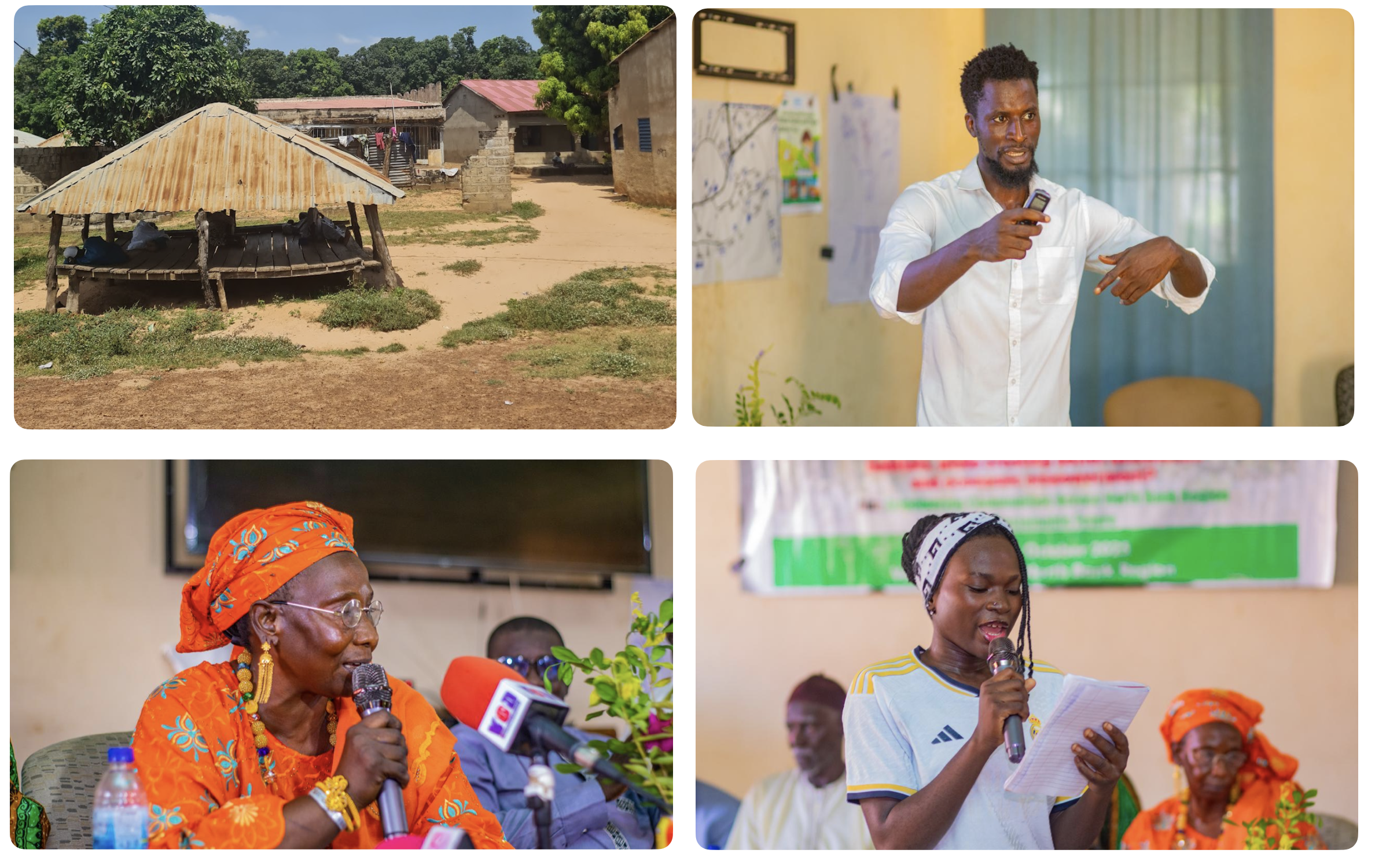
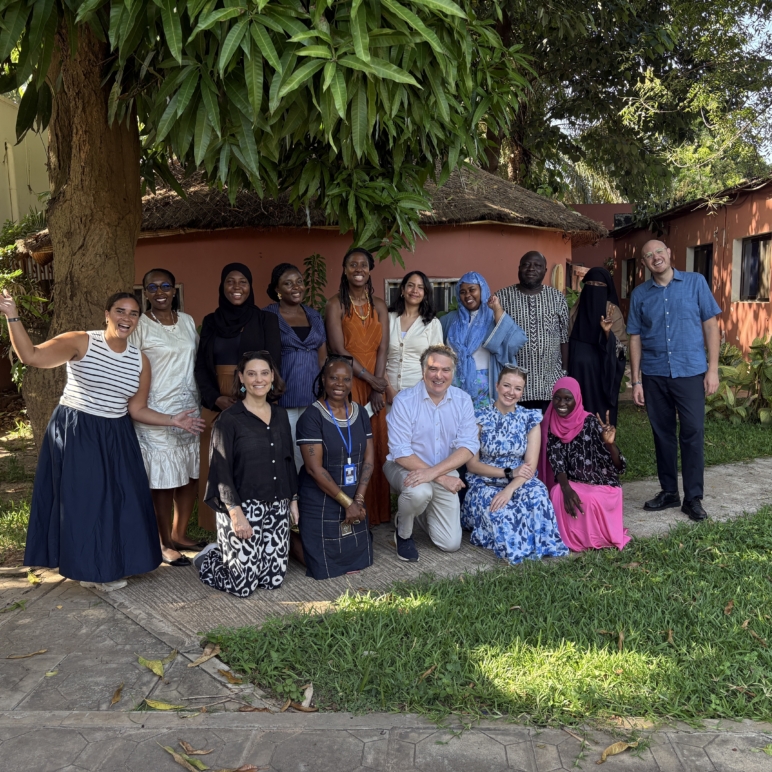
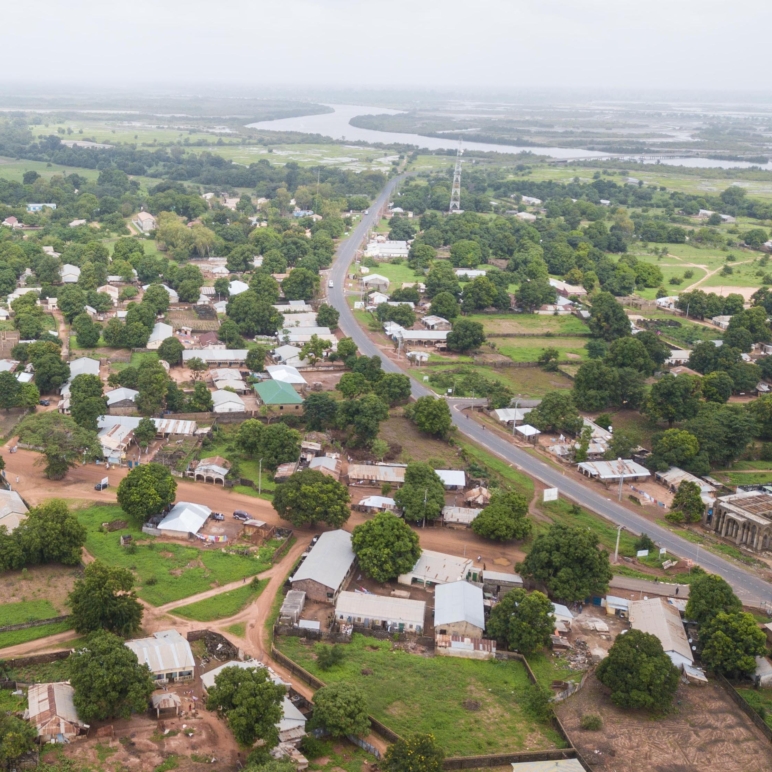
Top left: A bantaba is a traditional community meeting place in The Gambia (and across West Africa) Top right: Salima citizen assembly members. Bottom left and right: North Bank Region Citizens’ Assembly, The Gambia.

Analysis framework

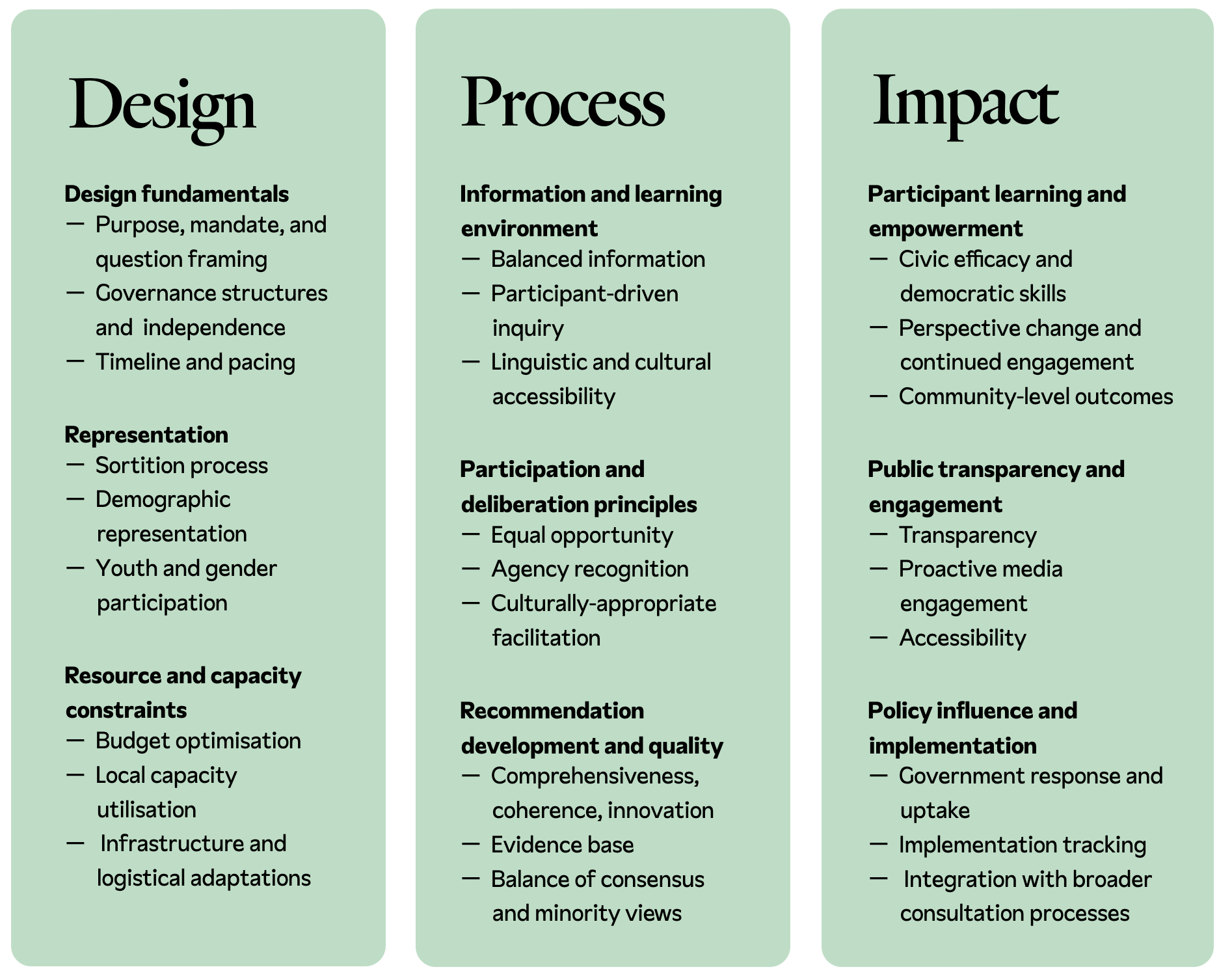
The analysis framework organises our assessment criteria into three interconnected phases that capture the complete lifecycle of a citizens’ assembly:

  1. Phase 1: Designing the structural foundations for inclusive deliberation;
  2. Phase 2: Process implementation quality and outputs; and
  3. Phase 3: Impact of broader democratic effects and long-term consequences.

Each phase addresses distinct but complementary dimensions of assembly effectiveness. Together, they create a systematic approach to understanding both assembly member experiences and wider democratic outcomes.
Case studies

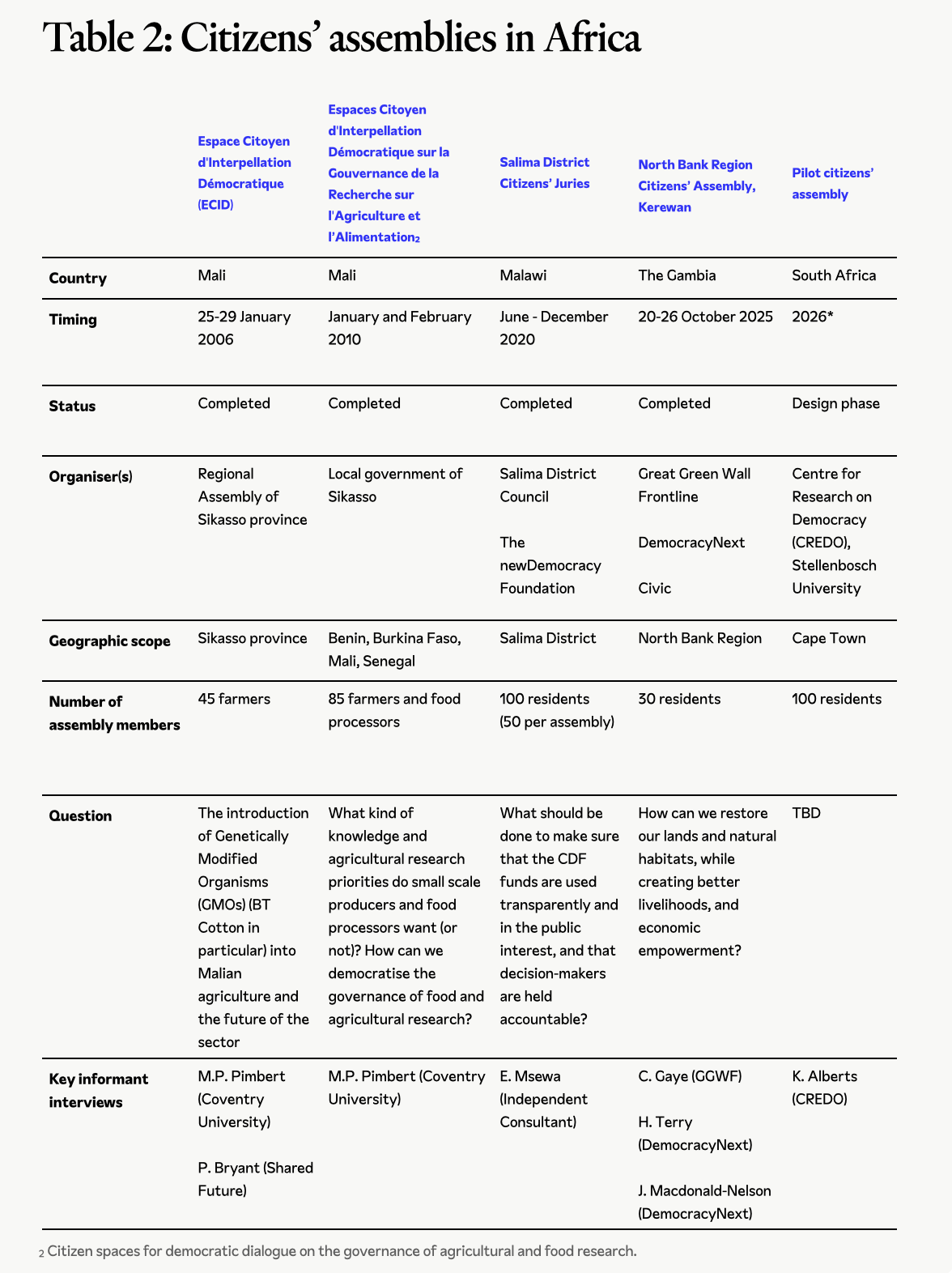
We apply our analytical framework to three case studies that span different African contexts and deliberative approaches. The first, Mali’s Espace Citoyen d'Interpellation Démocratique (Citizen's Space for Democratic Deliberation, or ECID), convened local farmers in 2006 to deliberate on the proposed introduction of genetically modified organisms (GMOs) into Malian agriculture. The second case, the Citizens’ Juries held in Salima District in 2020, addressed citizen preferences on local resource allocation (constituency development funds) in Malawi. Lastly, the 2025 North Bank Region Citizens’ Assembly in Kerewan, The Gambia illustrates the use of community-based deliberation to address sustainable natural resource governance in the face of climate change.

These cases vary in geography (West and Southern Africa), political systems (Mali’s democratic pre-coup democratic period, Malawi’s consolidated multiparty democracy, and The Gambia’s post-authoritarian transition), issue areas (agriculture, public finance, climate resilience), and scale (district-level to regional). The time span from 2006 to 2025 also allows us to examine how deliberative processes have evolved. The contextual variation enables comparative analysis that can yield practical insights for designing context-appropriate citizens’ assemblies in diverse African settings.

The case studies also include a mix of examples at varying stages in the deliberative lifecycle – from fully completed events (Mali, Malawi) to the early stages of the impact phase (The Gambia). This temporal diversity requires us to be flexible in how we apply the analysis framework. Some cases illuminate design integrity and preparatory processes, while others provide insights into deliberative quality, recommendation development, or longer-term democratic impacts.
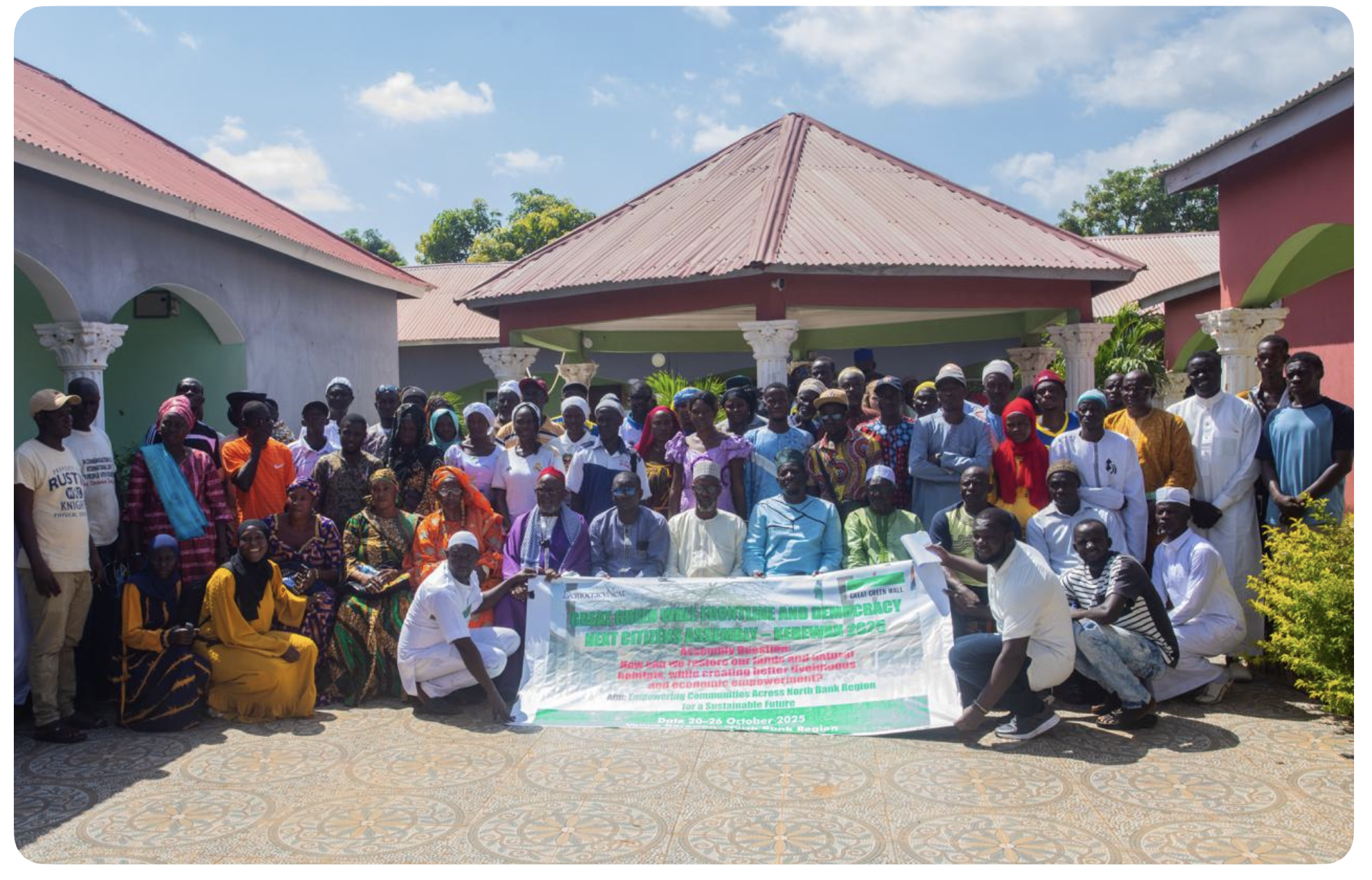
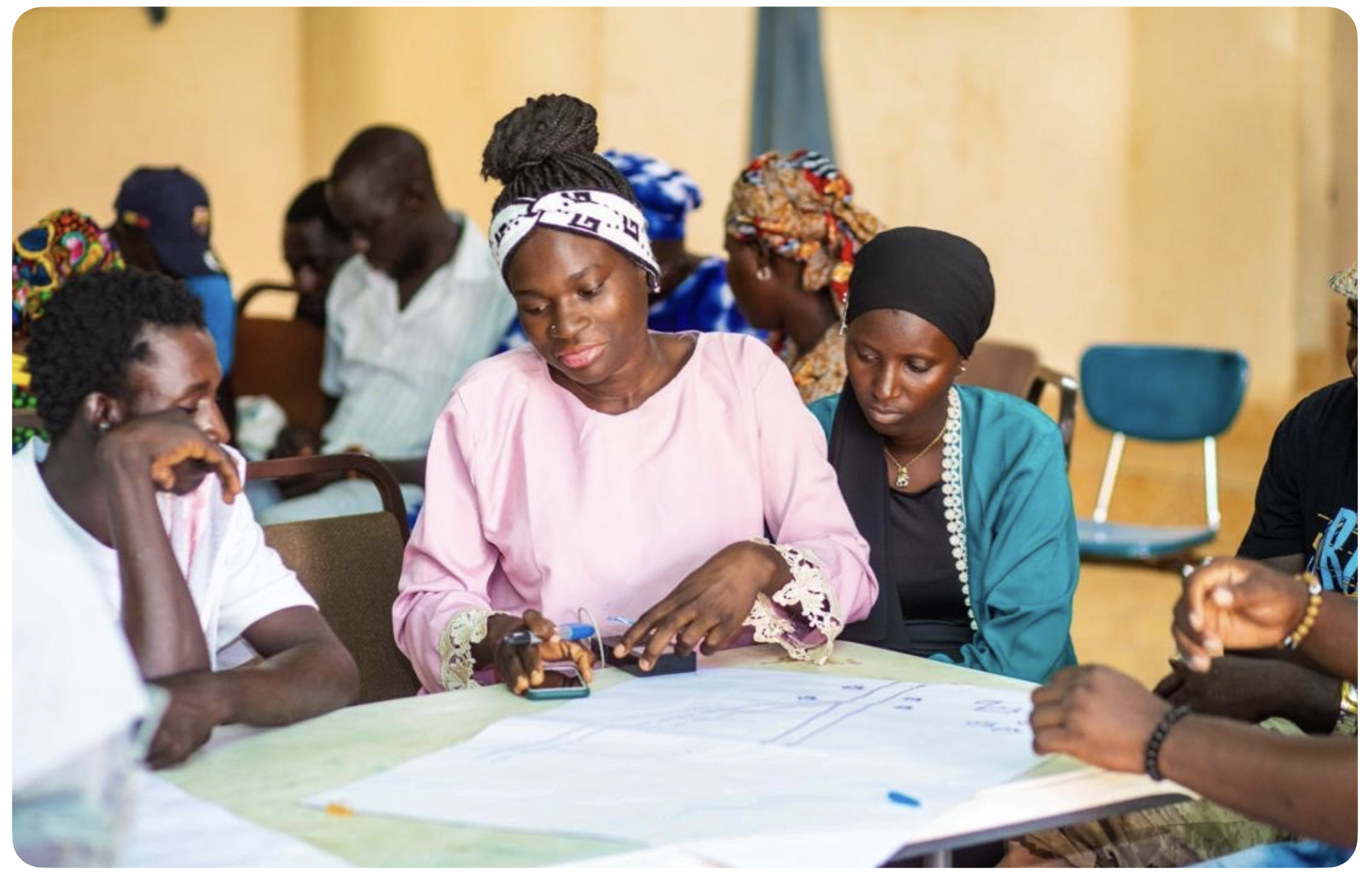
North Bank Region Citizens’ Assembly members and organising team, Kerewan, The Gambia.

Recommendations for advancing deliberative democracy in Africa

Regional frameworks provide normative support for deliberative democracy in Africa, with African Union instruments committing member states to promote popular participation, civil society engagement, and good governance (African Union, 2007; 2020; 2025). In principle, these commitments create space for innovations such as citizens’ assemblies to complement representative institutions. In practice, however, weak implementation, low ratification rates, limited institutional capacity, and uneven political will continue to constrain translation of these norms into domestic governance reforms (Africa Center, 2025; European Parliament, 2022; UNDP, 2025). These conditions shape the opportunities and constraints faced by different stakeholders in advancing deliberative democracy.

  • Governments confront a fundamental tension between the democratic imperative to enable citizen participation and the political risks of empowering assemblies that may produce recommendations challenging existing policies or power structures. Organisers should therefore:
  • Secure commitments before assemblies convene by identifying specific officials and agencies responsible for receiving and responding to recommendations.
  • Clarify how assemblies link to existing institutions, ensuring deliberative processes complement rather than undermine representative authority.
  • Develop legal or procedural frameworks that require formal responses to assembly outputs, even where implementation cannot be guaranteed.
  • Align deliberative agendas with administrative capacity, avoiding mandates that span multiple ministries without coordination mechanisms.
  • Funders similarly navigate difficult trade-offs between their institutional imperatives (short funding cycles, pressure to demonstrate measurable impact) and the requirements for effective deliberative democracy. They should therefore:
  • Adopt longer funding horizons that support institutionalisation rather than short-term pilots, recognising that policy impact often unfolds over many years.
  • Support adaptive, context-specific designs, rather than privileging replication of Global North models.
  • Recognise civic inclusion and capacity-building as core impacts, not only policy change, given the importance of engaging citizens excluded from formal governance spaces.
  • Provide post-assembly funding for follow-up, including dissemination, advocacy, and monitoring, to strengthen implementation pathways.
  • Civil society organisations (CSOs) face the challenge of facilitating complex deliberative processes, conducting sustained advocacy, monitoring implementation, and building public awareness – all while operating with precarious funding, limited technical capacity, and competing demands from multiple donor-driven projects. CSO-led processes should therefore:
  • Form coalitions and regional networks to pool facilitation skills, advocacy capacity, and learning, reducing the burden on individual organisations.
  • Integrate assemblies into ongoing programmes, such as community organising or participatory governance initiatives, rather than treating them as standalone projects.
  • Invest in local facilitation capacity, training community leaders and practitioners to reduce reliance on international consultants.
  • Partner with academic and research institutions to support evaluation, documentation, and evidence-based advocacy with governments and funders.

Overall, our research and analysis suggest that deliberative democracy holds significant promise in African contexts, particularly where conventional channels of political representation are viewed as unresponsive.

However, durable democratic impact depends less on process design alone than on formal institutional embedding, sustained financial and organisational support, and political incentives to incorporate citizen input into policy cycles. Without these enabling conditions, democratic innovations risk remaining isolated experiments, valuable for learning and empowerment but insufficient to transform governance systems in the longer term.

About the co-authors

Rorisang Lekalake is a political scientist and survey research specialist whose work combines rigorous statistical analysis with policy-relevant insights on varied topics related to the political economy of development and democratic governance. She is currently Director of Analysis at Afrobarometer, a pan-African research network that conducts public opinion surveys across more than 40 countries. In her various roles at Afrobarometer, Rorisang has managed survey implementation across partner countries, strengthened survey methodologies, helped to build research capacity among network staff and partners, and contributed to the organisation's expanding body of publications.

Stephen Buchanan-Clarke is a security and development specialist with extensive experience in research and policy development across Africa. As Head of the Peace and Security Programme at Good Governance Africa (GGA), he currently leads multi-country research initiatives on natural resource governance, transnational security threats, and regional integration. Stephen has worked with diverse international partners and managed complex multi-country research, policy engagement, and capacity building projects in over a dozen African countries. He regularly provides strategic advisory services to government ministries, private sector actors, and international organisations on a range of security and development issues, and has published extensively across academic and policy platforms.

How to cite this paper

Lekalake, Rorisang and Stephen Buchanan-Clarke, 2026, “Deliberative Democracy in Africa: Learning from Past Citizens' Assemblies and Guidance for Future Action”, DemocracyNext.
The full paper

Abstract

Africa faces a paradox. Most people continue to support democratic institutions, even though their satisfaction is declining with institutions’ ability to deliver inclusive economic prosperity and accountable, responsive governance. Citizens’ assemblies offer a way forward by offering the opportunity to draw on indigenous traditions of sustained deliberation and consensus-building to tackle complex policy problems.

In this paper, we explore how citizens’ assemblies can be adapted to Africa’s diverse contexts by drawing on real-world experiences across the continent. We begin by outlining the civic strengths and cultural traditions that underpin deliberative democracy in Africa, before reviewing emerging deliberative experiments – including citizens’ assemblies – that illustrate their potential. We introduce an analytical framework to assess the strengths and limitations of citizens’ assemblies and apply it to case studies from Mali, Malawi, and The Gambia. Finally, we highlight insights from an upcoming citizens’ assembly in South Africa.

The paper serves two purposes: advancing theoretical frameworks for evaluating deliberative processes in the Global South, and offering practical guidance to foster experimentation and collaboration in democratic innovation across these contexts. Rather than proposing a single model, we identify context-sensitive strategies that help citizens’ assemblies bridge Africa’s democratic delivery gap, while building on longstanding traditions of collective decision making.

Our findings reveal both promising possibilities and persistent obstacles. Well designed deliberative processes can meaningfully enhance democratic capacity through assembly member empowerment, strategic dissemination, and meaningful engagement with authority figures. However, realising this potential requires confronting several fundamental challenges: the absence of legal frameworks mandating implementation; severe resource constraints affecting accessibility and documentation, and the difficulty of transitioning from experimental pilots to systematic institutional integration.

These tensions carry distinct implications for governments navigating political risks and competing priorities, funders balancing short-term accountability with long-term institutionalisation needs, and civil society organisations (CSOs) operating with precarious resources while still attempting to sustain complex advocacy efforts. We conclude by identifying adaptive strategies that can help these actors to navigate these constraints and advance deliberative democracy’s transformative potential in African governance.

1: Introduction: The case for citizens’ assemblies in Africa

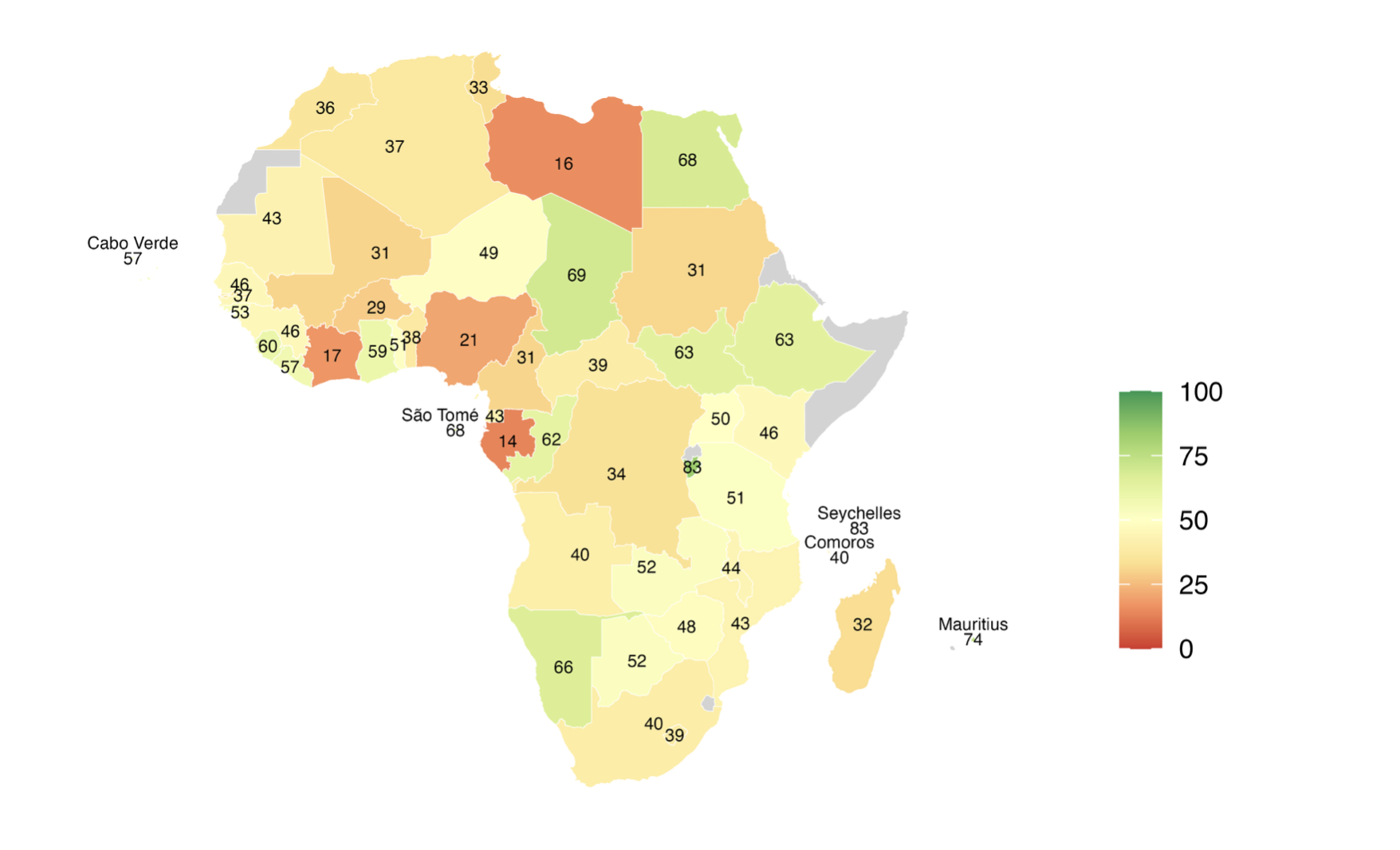
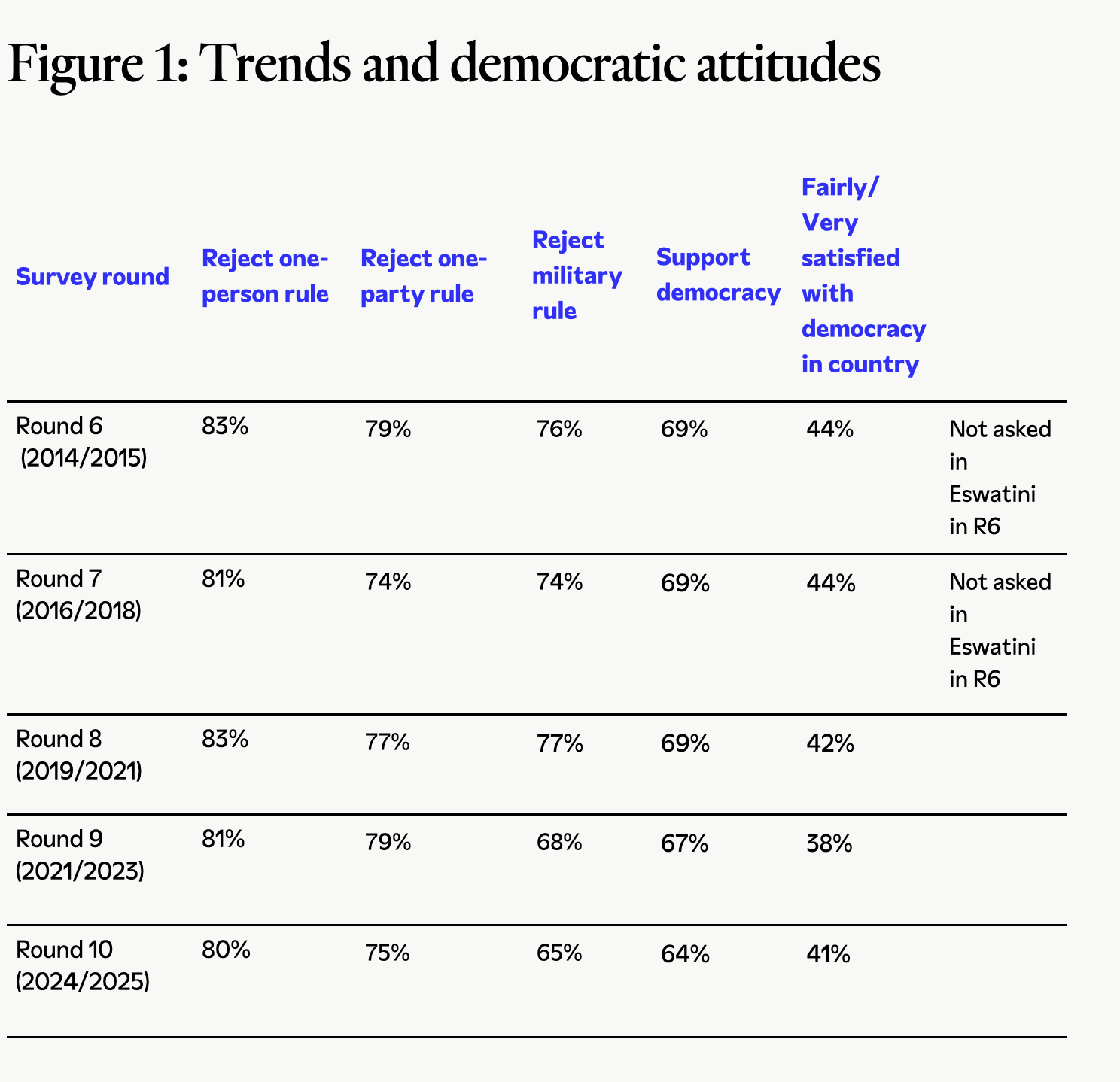
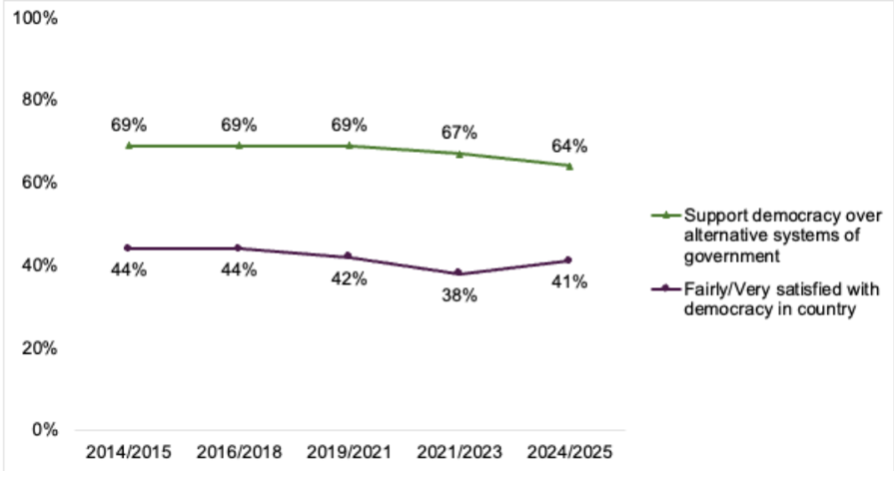
Africa faces a democratic paradox. Whilst citizens across the continent continue to have faith in democratic ideals, their satisfaction with how democracy is working has collapsed over the past decade (Afrobarometer, 2024a).

As electoral manipulation grows more common, and trust in institutions erodes (Adaba & Boio, 2024; Freedom House, 2025a), a troubling shift is underway. More than half of Africans say they would accept military intervention if elected leaders abuse their power, with youth (aged 18-35) showing even higher levels of support than older generations (Afrobarometer, 2024a). This is a dangerous inflection point for African democracy. (See Figure 1 on the next page)]

The widening gap between what people want from democracy and what they are getting from it reflects a profound failure: democratic institutions across the continent are struggling to meet citizens’ aspirations for inclusive economic prosperity and accountable, responsive governance. The continent faces complex, interconnected challenges that traditional electoral politics – with its short cycles and winner-takes-all dynamics – struggles to address. But the answer is not to give up on democracy; instead, we need bold institutional innovation.

Deliberative processes, such as citizens’ assemblies, offer a pathway to bridge the continent’s democratic delivery gap through inclusive, evidence-based deliberation that both honours and builds on indigenous African traditions of collective consensus-building.

Results for 28 countries surveyed consistently between Rounds 6 and 10.Percentage of respondents who support democracy over alternative systems of government and who are “fairly” or “very” satisfied with how democracy works in their country, averaged across 28 countries surveyed by Afrobarometer between 2014/2015 and 2024/2025. Source: Afrobarometer (2026).

1.1. Africa’s engagement advantage

Africa’s democratic landscape reveals a complex picture – citizens’ engagement is increasing, despite their growing disillusionment with conventional democratic institutions. Comparative survey research shows that Africans lead other world regions in collective action, with about half (48%) attending community meetings compared to just 26% in Latin America (Afrobarometer, 2025b). Furthermore, less-resourced citizens are more likely to engage in politics and collective action, not less. This stands in stark contrast to participation patterns in Western democracies, where economic advantage typically translates into higher participation through greater access to resources and civic skills (Brady et al., 1995; Dalton, 2017).

African citizens also continue to prove their capacity to drive democratic progress when institutions respond to their voices. In Malawi, citizen mobilisation and judicial independence produced a historic annulment of the 2019 election and a credible revote in 2020 (Dionne & Dulani, 2024). In Senegal, sustained civic pressure reinforced respect for term limits in 2022 and prevented elections from being postponed in 2024 (CIVICUS staff, 2024). In Kenya, public mobilisation and judicial responsiveness checked attempts to weaken constitutional safeguards (Cheeseman et al., 2024). Recent elections in Botswana and South Africa also demonstrate democracy’s continued potential to effect change, with voters ending six decades of single-party rule in Botswana (Al Jazeera, 2024; Anim, 2025) and forcing South Africa’s African National Congress (ANC) into its first coalition government (Lewis, 2024).

These examples show that when institutions listen and respond, African citizens are capable of driving meaningful democratic renewal. Yet recent research also reveals a troubling trend: where governments fail to demonstrate responsiveness, citizen engagement declines (Afrobarometer, 2025b). For instance, in countries where local councillors are perceived as responsive, constituents contact them more often. Where leaders are unresponsive, citizens withdraw – not just from contacting officials, but from voting and collective action too.

This suggests that initiatives to address Africa’s democratic delivery gap – including citizens’ assemblies – must focus on making political institutions more open, inclusive, and responsive.

1.2. The citizens’ assembly solution

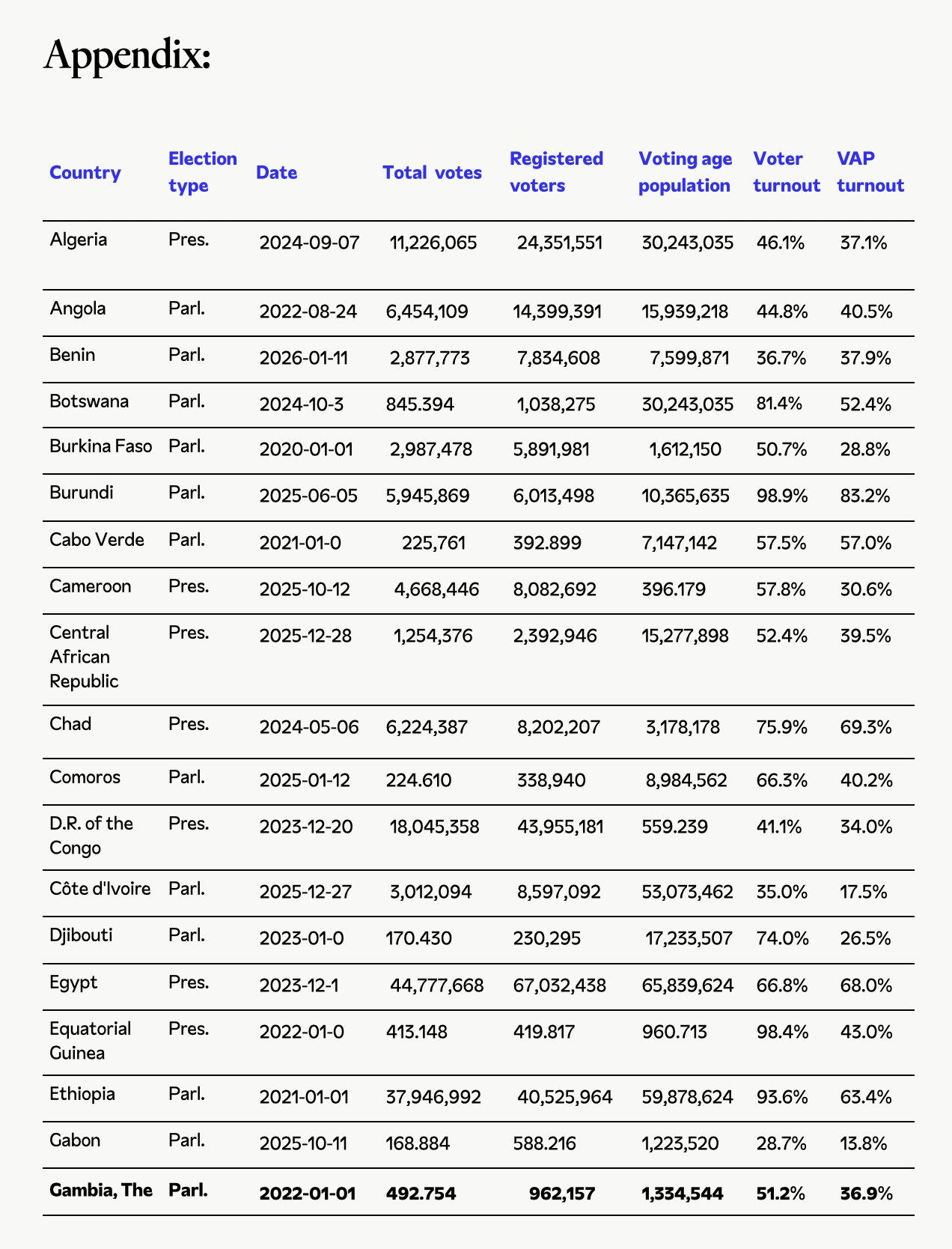
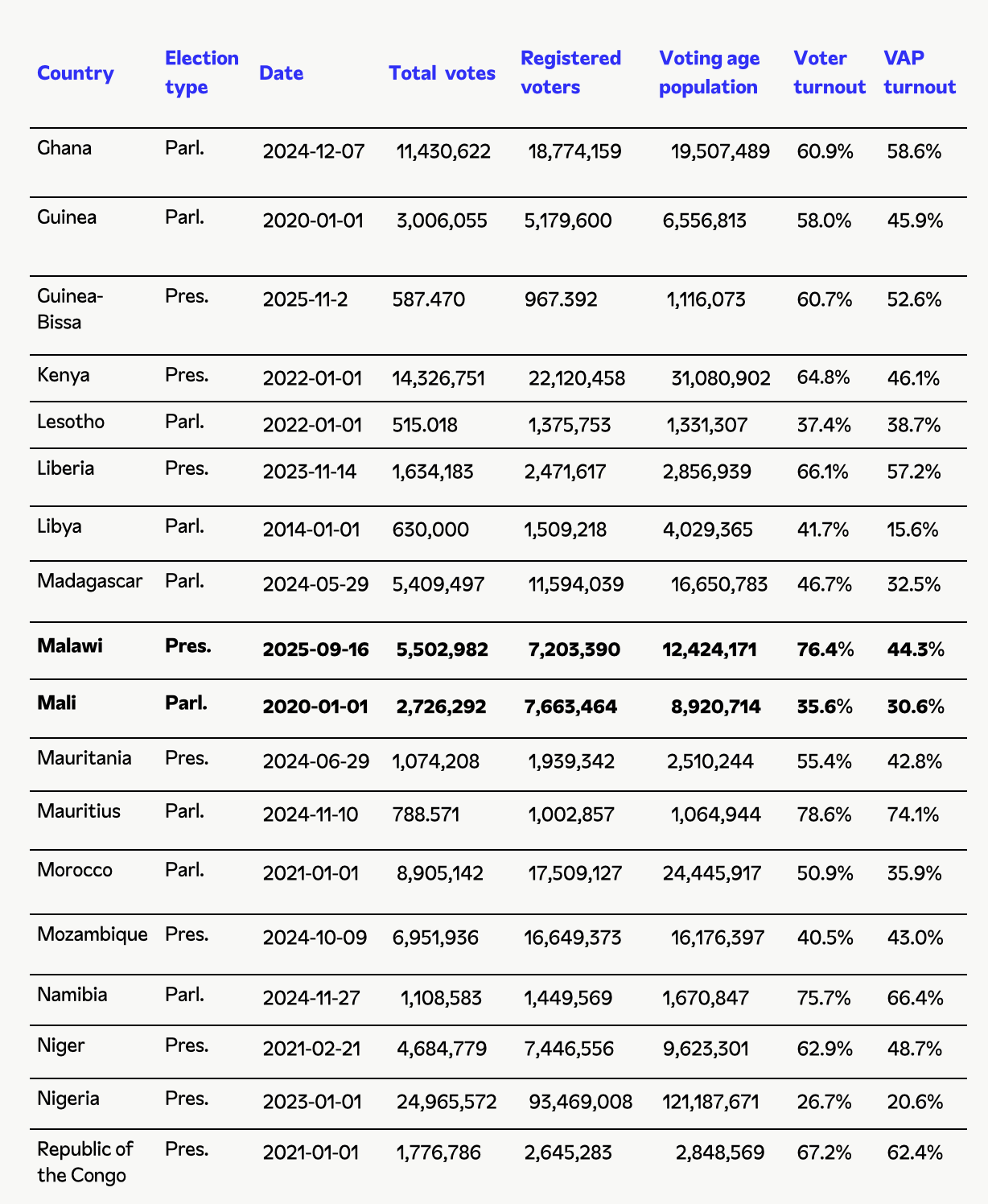
Citizens’ assemblies offer a way forward. Turnout trends across the continent suggest that elections alone are no longer sufficient to sustain meaningful civic engagement (Figure 2). By supplementing elections with structured deliberation, assemblies can improve how institutions respond to citizens while building on Africa’s existing civic strengths and traditions of community dialogue.

Elections across the continent face mounting challenges. Electoral manipulation is a growing problem (Arriola et al., 2023; Freedom House, 2025a) and citizens feel increasingly disconnected from political parties (Afrobarometer, 2025). Moreover, elections provide only brief moments to express existing preferences without opportunity for learning or dialogue (see Gutmann & Thompson, 2004). The high-stakes, winner-take-all nature of elections also fuels violence in many countries, as competing groups clash over power and resources (Finkel et al., 2012; Yusuf & Mutereko, 2019).


Figure 2: Voter turnout in Africa (%)

1Somalia was excluded because of the age of the data, which dated from 1984. Rwanda was excluded because reported turnout exceeded 100% of the voting age population. This could be due to inaccuracies in population estimates, inclusion of diaspora voters, or mismatches in data collection periods between vote counts and census data.

Where elections provide only brief moments of participation, citizens’ assemblies create space for deep, structured engagement (OECD, 2020, 2021). Through sortition (random selection with stratification) that is supported with measures that help remove barriers to participating, such as paying assembly members a stipend and covering caring and travel costs, they ensure every citizen within a targeted population has an equal opportunity to participate in deliberating on specific policy challenges over extended periods of time – rather than just those with the motivation, time, or resources to engage in conventional democratic processes. In addition, assemblies enable members to reach informed judgments through broad and diverse expert information, structured deliberation, and systematic evidence review – rather than relying on pre-existing beliefs or partisan allegiances.

Deliberative processes can therefore lead citizens to produce actionable policy solutions that reflect both democratic values and Africa’s own indigenous traditions of consensus-building adapted for contemporary challenges and scaled for continental transformation. Perhaps more importantly, citizen assemblies could potentially help to restore public confidence in democratic governance by demonstrating that people can meaningfully shape decisions that affect their lives.

2: Deliberation and democracy in Africa

‘Deliberation’ refers to structured discussion where people consider evidence, listen to different perspectives, and work together to understand complex issues before reaching a shared decision. Unlike other forms of political participation (e.g., voting, lobbying, protesting), deliberation involves genuine openness to changing one’s mind based on new information and insights from a range of different arguments and opinions (DemocracyNext, 2025; OECD, 2020).

Deliberative democracy puts thorough and constructive discussion about complex issues at the centre of decision making. Rather than simply aggregating citizens’ preferences through voting, deliberative democracy creates spaces where assembly members can learn about issues, hear from experts and affected communities, discuss trade-offs with their peers, and develop informed recommendations through facilitated deliberation. As a result, these processes often lead to more nuanced, creative, and widely acceptable solutions than traditional forms of political participation – especially when addressing complex, contentious, or divisive issues (Bächtiger et al., 2018).

Africa has unique advantages for deliberative democracy that remain largely untapped. For generations, indigenous consensus-building traditions have provided platforms for community debate and collective decision making.

Deliberative democracy is therefore not a foreign import, but builds on deeply rooted principles and practices in many parts of the continent.

While recent deliberative experiments underscore this potential, they remain limited in number and often take the form of isolated, one-off initiatives rather than sustained practices.

2.1. Deliberation and democracy in Africa

African communities have long practised forms of collective decision making rooted in consensus-building, inclusive dialogue, and community welfare. These traditions, while diverse in form and practice across the continent's regions, often share common deliberative principles that align with modern citizens’ assemblies.

These include privileging reasoned discussion over voting, seeking consensus through extended dialogue, and prioritising collective wisdom in addressing community challenges.

Across West and parts of Central Africa, the palaver system exemplifies these deliberative practices. Rooted in historical African legal and diplomatic practice, palaver gatherings bring community members together for open-ended discussions – typically under a tree – to build consensus within a group with the ultimate goal of achieving peace or reaching agreement on important social and economic issues. Elders moderate these forums, which emphasise reconciliation and dialogue over adversarial debate. Igiyimbere (2022), in his study of the practice, argues the palaver offers a practical, inclusive, and consensus-building model for deliberative democracy applicable across modern and diverse African states.

In East and the Horn of Africa, similar customary traditions exist, such as the baraza system in Kenya, Tanzania, and Uganda, where community meetings facilitated by chiefs or elders enable citizens to express concerns and resolve disputes through structured dialogue (Naanyu et al, 2011). Rwanda’s gacaca courts demonstrate the adaptive capacity of traditional deliberative practices.

Historically used for dispute resolution, these community-elected forums were revitalised post-genocide to facilitate participatory truth-telling and accountability (Corey, 2004). Similarly, Ethiopia’s shimgilina employs consensus-based mediation by elders to resolve disputes and maintain social harmony, and has been instrumental in resolving land and water disputes (Alamineh, 2023).

In Southern Africa, deliberative heritage is also rich. Botswana’s kgotla system serves as an open public forum where all adult members may speak, with strong emphasis on consensus facilitated by the chief (kgosi) (Ngwenya & Kgathi, 2011). South Africa’s imbizo, lekgotla, and indaba traditions among Zulu, Xhosa, Sotho, and Ndebele communities similarly convene public gatherings for participatory, dialogical community decision making (Kiyala, 2023). These processes all draw philosophical grounding from Ubuntu, the Southern African philosophy based on the idea that “I am because we are,” which emphasises relational identity, communal solidarity, and other-orientation over individualism (Tavernaro-Haidarian, 2018).

These diverse practices share several features:

  • Open participation within cultural contexts;
  • Consensus-seeking rather than majoritarianism;
  • Facilitation by respected elders or leaders;
  • Extended discussion until agreement emerges;
  • An orientation toward community welfare over individual gain.

It is important to note, however, that like any form of democratic practice, these deliberative traditions are not perfectly inclusive and are open to capture by political elites, which can negatively impact on their legitimacy and effectiveness (Murumba et al, 2022). But where appropriate, their core deliberative principles remain valuable for contemporary democratic innovation.

2.2. Deliberative innovations

Deliberative democracy encompasses a wide range of institutional designs, each tailored to different purposes and contexts. The Organisation for Economic Co-operation and Development (OECD) identifies twelve distinct models of representative deliberative processes that governments have commissioned for public decision making (OECD, 2020).

These can be grouped into four main categories based on their purpose:

  1. Processes designed to produce informed citizen recommendations on complex policy questions;
  2. Shorter formats to gauge citizen opinion on specific issues;
  3. Methods to help voters evaluate ballot measures, and
  4. Permanent deliberative bodies that enable ongoing citizen input into governance.

Despite this diversity, all high-quality representative deliberative processes share four core elements:

  1. A fair sortition process;
  2. Structured learning phases with diverse experts input
  3. Facilitated deliberation
  4. Collective production of recommendations (typically with 75%-80% consensus)

These elements distinguish deliberative processes from other public consultations. Citizens’ assemblies in particular rely on sortition to ensure demographic diversity and equal opportunity for participation.

2.2.1. Deliberative democracy in Africa

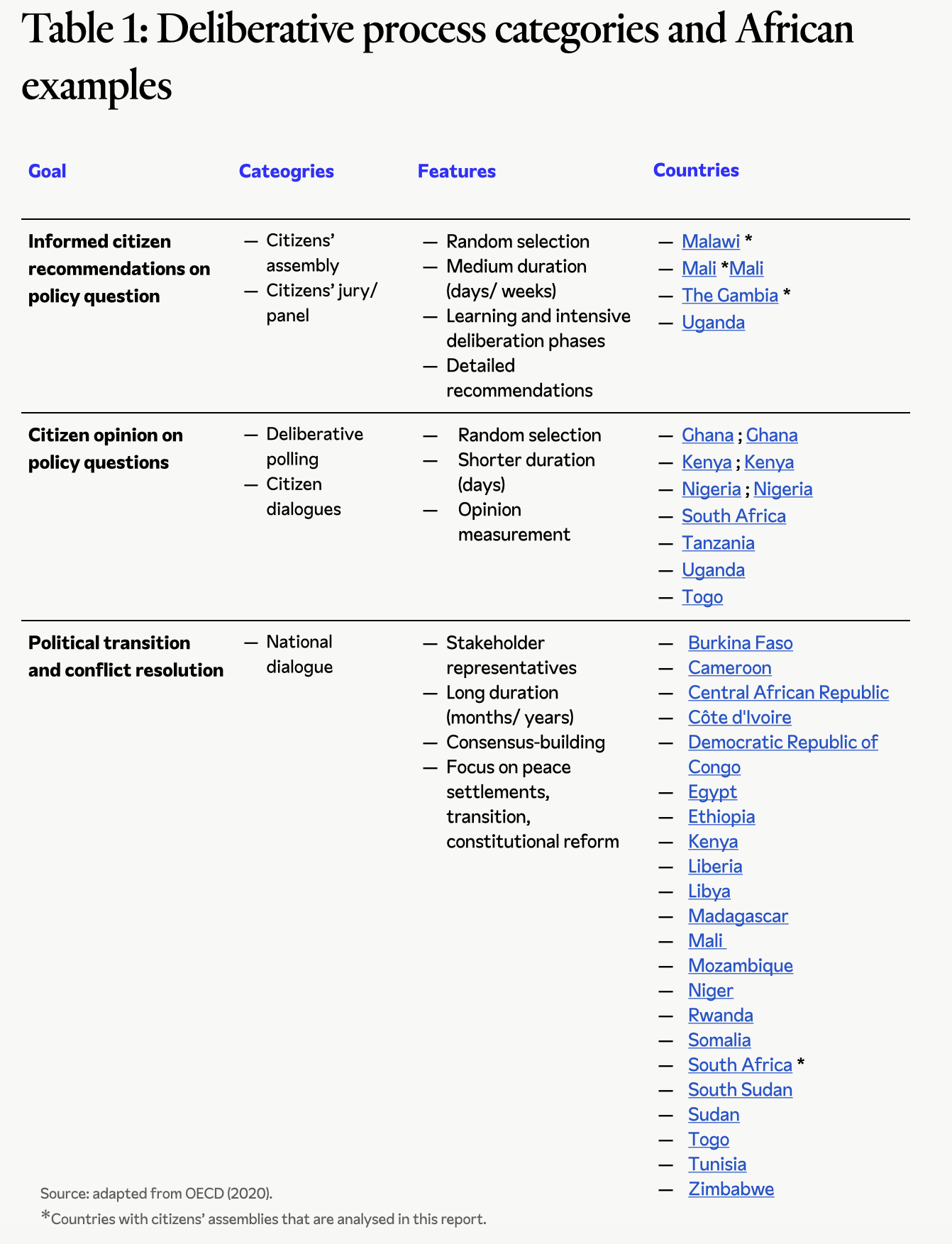
Africa has seen growing experimentation with deliberative approaches. We have identified a variety of deliberative processes across the continent, all of which fall into the categories of producing informed citizen recommendations and measuring citizen opinion (see Table 1).

We have also showcased three recent examples below: Kenya's “cityzens’ assembly” on air quality (2025); a multicountry deliberative poll on governing virtual and augmented reality platforms (2022); and Uganda’s citizens’ jury on electronic medical records (2022). Africa has also extensively adopted and adapted a form of large-scale deliberative process not captured in the OECD framework: national dialogues.

National dialogues are a process used globally for conflict resolution and political transformation that have become a particularly prominent feature of African political transitions (Imaka & Ebiede, 2024; Mandikwaza, 2024).

Unlike the citizen-focused OECD models, they convene representative stakeholders (e.g., political parties, civil society organisations, unions, armed groups, and traditional leaders) to address existential political challenges during moments of crisis or transition. Therefore, while national dialogues share core deliberative principles, they reflect a different approach to inclusive deliberation suited to high-stakes political transitions, where buy-in from organised groups is essential for successful implementation.

The most common variation from the OECD's standards in citizen-focused deliberative processes in Africa has been in member selection: most use purposive (where participants are deliberately chosen to reflect specific demographic or stakeholder criteria) or mixed selection methods rather than pure sortition - aside from the cases in Malawi and The Gambia. This largely reflects practical challenges around implementation amid limited data availability. Additionally, while some processes were commissioned by public authorities, as the OECD framework requires, others were initiated and led by other stakeholders – including academic institutions, local CSOs, and international development partners.

Nevertheless, these experiments have generated valuable lessons about what works in African contexts and point to significant potential for further development. This diversity reflects the continent’s vibrant civil society and the varied pathways through which democratic innovation is emerging on the continent.

2.2.2. Three recent examples

The following three examples represent the wide range of formats, methodologies, and topics being explored as deliberative processes become increasingly common across Africa. They were selected to illustrate the diversity and potential of deliberative approaches: from single-day citizens’ assemblies addressing urban environmental challenges, to multi-country online deliberative polling on emerging technology governance, to citizens' juries deliberating on health data ethics and community consent.

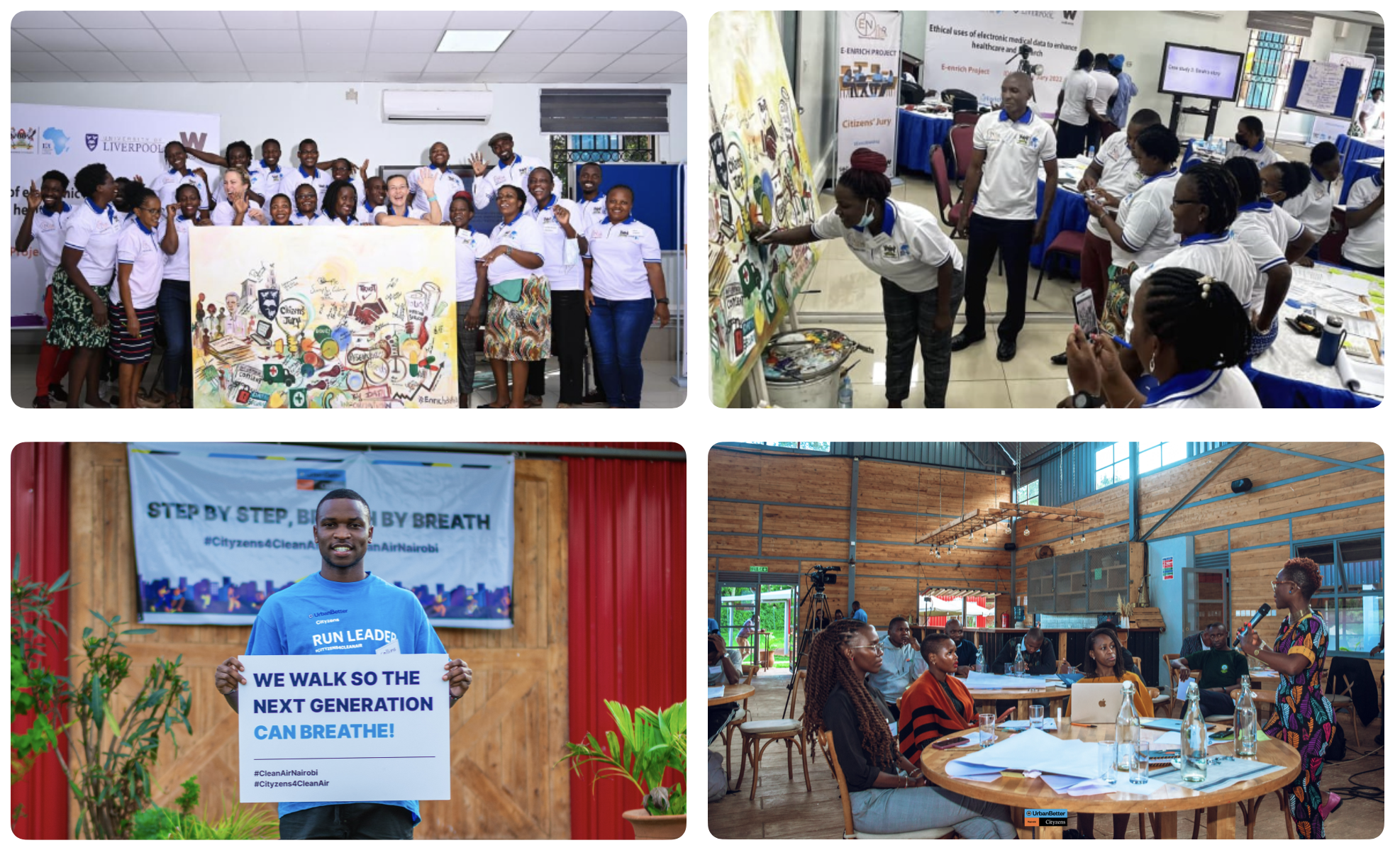
Top row: Citizens’ jury on electronic medical records, Kampala, Uganda, Source: https://news.liverpool.ac.uk/2022/08/12/postcard-citizens-jury-debate-ethical-use-of-electronic-health-data-in-uganda/. Bottom row: Nairobi Cityzens’ Assembly on Air Quality. Photo credit: UrbanBetter and Kounkuey Design Initiative.

2025: Nairobi Cityzens’ Assembly on Air Quality

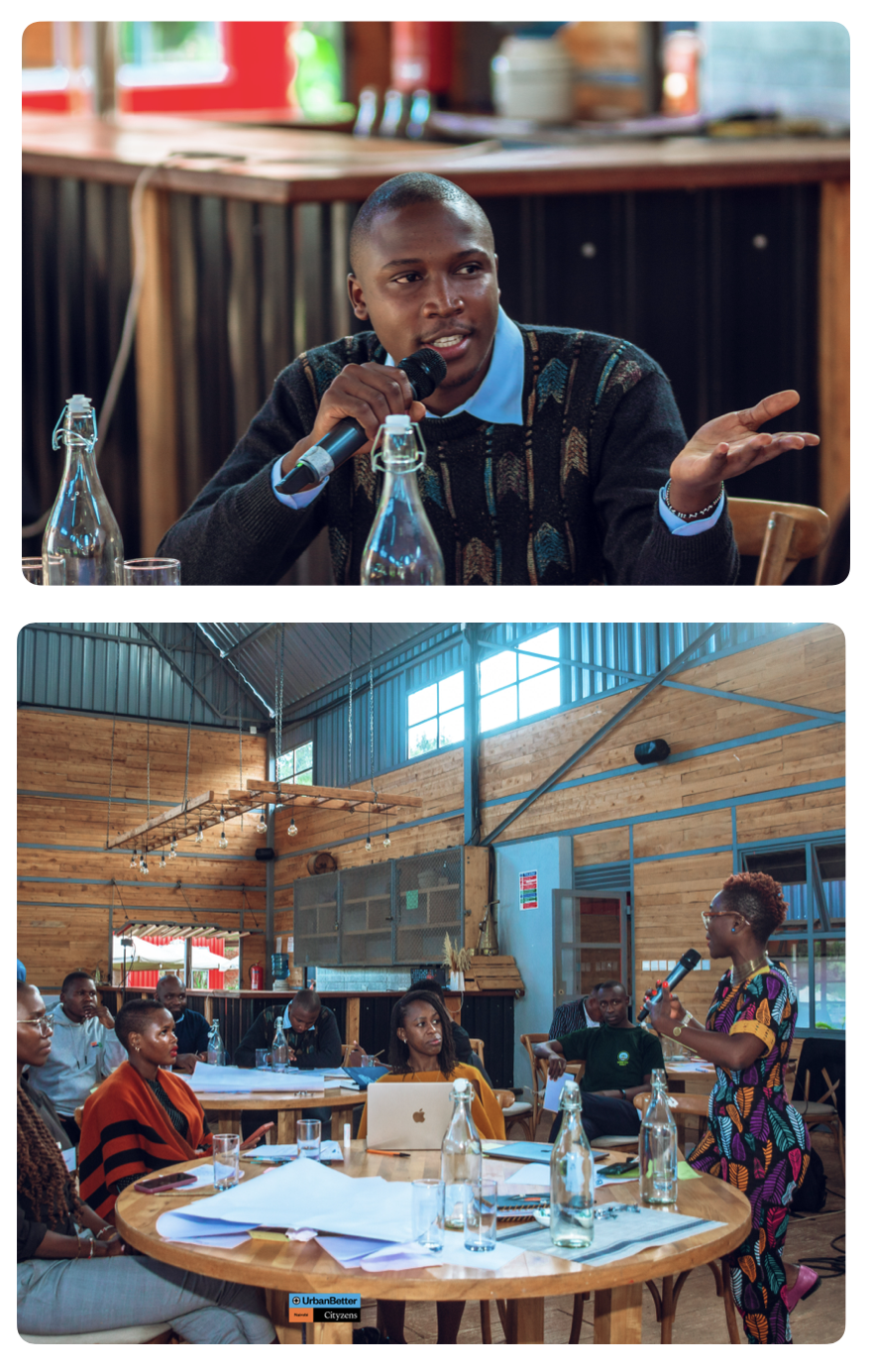
In June 2025, two local civil society organisations – UrbanBetter and Kounkuey Design Initiative – convened The Nairobi Cityzens Assembly, bringing together stakeholders from 17 sub-counties in Nairobi to address the issue of air quality and urban health through participatory governance. Under the theme “Hewa Safi, Mtaa Bora: Pamoja Tuijenge Nairobi Yetu” (Cleaner Air, Better Neighbourhoods: Together, Let Us Build Our Nairobi), the convening addressed how air pollution impacts the health of residents, ecosystem resilience, and economic productivity (UrbanBetter, 2025).

Pre-planning included two community-led activations using mobile AirBeam sensors and walkathons to generate awareness and local data on disparities in air pollution exposure, particularly among women, youth, and informal sector workers (Wangeshi, 2025). Fifty assembly members were selected through an open call and targeted recruitment ensuring representation across age, gender, sub-county, and stakeholder categories. The one-day programme featured expert presentations, facilitated discussion, and collaborative proposal development and prioritisation. Assembly members identified three urgent priorities – cleaner public transport systems, safer walking and cycling infrastructure, and school-focused clean air zones – which were synthesised into recommendations for the Nairobi County Environment and Transport Committees (UrbanBetter, 2025).

Key lessons and innovations: The convening demonstrated that meaningful change occurs when those most affected by urban challenges become co-creators, rather than just informants, in policy processes. The initiative illustrates how community-generated data through citizen science can inform policy advocacy and complement official monitoring systems and established a model for participatory climate-health governance that bridges data, community knowledge, and urban decision making (Wangeshi, 2025).

Nairobi Cityzens’ Assembly on Air Quality. Photo credit: UrbanBetter and Kounkuey Design Initiative

2022: Multinational Deliberative Polling on Metaverse Governance - Ghana, Kenya, Nigeria, and South Africa

In December 2022, the Stanford Deliberative Democracy Lab organised Africa’s first multicountry deliberative polling exercise as part of a wider global project commissioned by Meta to assist the company make decisions around the governance of its technologies, with a particular focus on the Metaverse (Harris, 2022). Deliberative polling has also been used on the continent to deliberate on public health concerns in Ghana (Chirawurah, et al, 2019), land management issues in Uganda (Fishkin et al, 2017), and natural gas issues in Tanzania (Sandefur et al, 2022). In this case, 786 participants from Ghana, Kenya, Nigeria, and South Africa were recruited via address-based probability sampling from active social media users, with deliberate selection to reflect the demographic composition of their countries' general populations. On their Online Deliberation Platform, the Stanford team facilitated over 12 hours of online deliberation through structured learning, listening, and collaboration phases with AI assistance and technical support. Pre- and post-deliberation surveys measured participants’ agreement with a range of proposals on a ten-point scale, allowing researchers to measure how informed deliberation shifts opinions, knowledge levels, and attitudes toward trust, respect, and civic engagement (Siu et al, 2025).

Key lessons and innovations: Deliberations led to a convergence of opinion regardless of the participants’ country or origin, suggesting that deliberative processes can help to build cross-national consensus (Siu et al, 2025). Moreover, survey data indicated that participation in the process itself increased participants’ levels of trust in their community, respect for others’ points of view, willingness to compromise, and perception that their voice mattered were captured (Siu et al, 2025).

2022: Citizens’ Jury on Electronic Medical Records - Uganda

In July 2022, Uganda’s E-enrich (Enriching electronic medical records) project hosted the country’s first citizens’ jury to determine public attitudes toward using electronic health records for research purposes. This represented an opportune moment to understand community perspectives before widespread implementation of a new technology. The citizens’ jury addressed the question: “Should routinely collected electronic medical data be used for research, and if so, under what conditions?”

Six months prior, an advisory committee conducted scoping activities to assess community members’ baseline knowledge of electronic medical records, identify their primary concerns, and gauge their willingness to engage in deliberation on this topic. Fifteen members representing diverse healthcare touchpoints – including people living with HIV, health facility staff, patient representatives, and students – deliberated over two days with expert witness presentations, facilitated discussions, and active feedback sessions. The jurors unanimously agreed that anonymised electronic healthcare data could be used for research purposes with appropriate safeguards (Waitt et al, 2025), providing the first citizens’ jury on the use of health data in Africa (Walker et al, 2024).

Key lessons and innovations: The initiative integrated creative arts into deliberations to overcome hierarchical dynamics in Ugandan education and social structures, thus promoting empowered and authentic participation (see Waitt et al, 2025). A drama team specialising in providing community health education composed 10-minute dramatisations depicting both the potential benefits and risks in English and Luganda. A local artist created experiential live art throughout proceedings, painting emerging themes on a large canvas. This enabled ongoing dialogue between artist and jurors, culminating in a presentation summarising how themes evolved. In addition, a videography team documented proceedings, provided feedback mechanisms (some jurors preferred speaking reactions on camera rather than in written form), and produced accessible summary materials including a YouTube documentary and animated explainer.

3: Methodology

To carry out this study, we created an analytical framework that helps compare citizens' assemblies across different African contexts. The framework builds on established international best practices in deliberative democracy (DemocracyNext, 2025; OECD, 2020, 2021), while incorporating criteria that account for Africa’s highly diverse political landscapes, institutional capacities, and social structures. This approach maintains rigorous standards, while reflecting local economic and governance realities. It may also prove applicable to other parts of the Global South with similar developmental and institutional characteristics.

The framework, organised around the deliberative process lifecycle, is applied to three case studies.These cases were selected for their geographic and thematic diversity, as well as the research team’s access to rich documentation and key informants involved in their design and implementation. The first, Mali’s Espace Citoyen d'Interpellation Démocratique (Citizen's Space for Democratic Deliberation, or ECID), convened local farmers in 2006 to deliberate the proposed introduction of genetically modified organisms (GMOs) into Malian agriculture. The second case, the citizens’ juries held in Salima District in 2020, addressed citizen preferences on local resource allocation (constituency development funds) in Malawi. And the third case, 2025 North Bank Region Citizens’ Assembly in Kerewan, The Gambia focused on how the region can restore degraded lands and natural habitats while creating sustainable livelihoods and economic opportunities in the region.

Given that each case represents a different stage of implementation with varying levels of documentation, our framework requires flexible application tailored to available evidence. In addition, we outline preliminary plans for a pilot citizens’ assembly in Cape Town, South Africa.

3.1. Analysis framework

The analysis framework organises our assessment criteria into three interconnected phases that capture the complete lifecycle of a citizens’ assembly:

  1. Phase 1: Designing the structural foundations for inclusive deliberation;
  2. Phase 2: Process implementation quality and outputs; and
  3. Phase 3: Impact of broader democratic effects and long-term consequences.

Each phase addresses distinct but complementary dimensions of assembly effectiveness. Together, they create a systematic approach to understanding both assembly member experiences and wider democratic outcomes (figure 3).

3.1.1. Design phase: Establishing foundations

The design phase determines whether assemblies have the structural foundations necessary for inclusive and effective deliberation. In this analysis, we examine fundamental choices about purpose, mandate, governance, representation, and resource allocation that shape all subsequent deliberative activities.

We begin with design fundamentals. The assembly’s purpose and mandate should address important social or political issues, while simultaneously being appropriate for citizen deliberation informed by expert input. Secondly, the assembly’s governance structure should ensure institutional independence and adequate accountability mechanisms – with particular attention to preventing political interference, given varying levels and forms of governance across African contexts. Lastly, assemblies should allocate sufficient deliberation time to enable meaningful learning, reflection, and consensus-building.

Next, in considering representation, we analyse an assembly’s selection methods – a cornerstone of citizens’ assemblies that distinguishes them from other forms of deliberative processes. These initiatives therefore require careful attention to ethnic, linguistic, regional, gender, and socioeconomic dimensions when selecting assembly members. Ensuring representative participation in African contexts may also require targeted outreach at a household-level to ensure the inclusion of marginalised groups, especially youth and women.

Next, we focus on resource efficiency, a novel addition that specifically addresses Africa’s economic landscape. In this criterion, we recognise that citizens’ assemblies must work within realistic financial, institutional, and human resource constraints to ensure their sustainability. Effective implementation may therefore require creative adaptation, rather than replicating resource-intensive international models that may be financially unfeasible.

3.1.2. Process phase: Deliberative quality and engagement

In the process phase, we shift our focus to how assemblies actually function during implementation and the quality of their primary outputs. We assess information provision, deliberative quality, participation dynamics, and the development of high-quality recommendations that emerge from the deliberation process.

The information and learning environment refers to whether assembly members receive broad, diverse perspectives. This includes assessing whether an assembly has member-driven inquiry mechanisms that enable progressive learning and allow members to shape their own learning agenda, rather than passively receiving content from facilitators and expert commentators. Moreover, Africa’s multilingual and multicultural societies require special attention to linguistic accessibility and cultural appropriateness.

In considering the quality of participation and deliberation, we examine the social and procedural dimensions of deliberative engagement. Assembly members should have genuine chances to contribute through structured discussion formats that prevent domination by more vocal – or privileged – members. Furthermore, facilitators should employ techniques adapted to local communication norms, including conflict resolution approaches and consensus-building traditions. We also analyse whether and how assemblies move from individual learning and discussion toward collective decision making, including processes for managing disagreement, incorporating minority perspectives, and crafting coherent recommendations.

Thirdly, when looking at recommendation development and quality we focus on the substantive outputs that emerge from citizen deliberation. Recommendations should demonstrate comprehensiveness, coherence, and feasibility while being grounded in evidence and – ideally – exhibiting innovation in addressing policy challenges. In addition, proposals must demonstrate clear reasoning processes and achieve meaningful consensus levels (70% or higher), while also documenting any minority positions or dissenting views. Given the African context, this dimension also considers whether recommendations meaningfully integrate with local customary practices.

3.1.3. Impact phase: Democratic effectiveness and integration

In the impact phase, we examine the broader democratic effects and long-term consequences of citizens’ assemblies beyond their immediate outputs. This includes how participation in an assembly influences its members to exert policy influence and affect legislative change, and impact on the wider citizenry and democratic institutions more broadly.

Assembly member learning and empowerment refers to the transformative effects of assembly participation on individual citizens and their communities. This includes assessing evidence of changes in civic efficacy – the belief that one can understand a political issue and participate effectively in political processes to exert outcomes – and the development of democratic skills that members can apply beyond the assembly context. We also consider community-level outcomes, including how assembly members share newly-acquired knowledge and skills within their networks/communities, and whether participation catalyses broader democratic engagement. This is particularly important in African contexts, as existing community-based governance traditions may amplify these effects.

Our second dimension, public transparency and engagement, is about the openness and accessibility of assembly processes to the broader public. This includes assessing methodology transparency, funding disclosure, and comprehensive public documentation that enables scrutiny and replication. Furthermore, we examine whether organisers pursued proactive media engagement and strategic communication efforts that maintain public interest and accountability throughout the process. We also consider accessibility measures – particularly multilingual information provision in culturally appropriate formats that ensure meaningful public understanding given the high levels of ethnolinguistic diversity in many African countries.

Lastly, policy influence and implementation refers to the substantive impact of assembly recommendations on government decision-making and policy outcomes. This includes checking whether authorities provide timely, detailed responses that explain their rationale for accepting or rejecting specific recommendations. We also assess whether organisers create tracking mechanisms that monitor the implementation of recommendations and provide regular public updates on implementation status. We consider how assembly processes integrate with broader consultation frameworks and existing policy development cycles to ensure that citizen deliberation complements other participatory mechanisms.

While the framework above builds on the OECD's Good Practice Principles for Deliberative Processes, we place additional emphasis on dimensions particularly relevant to African contexts. These include resource efficiency and budget optimisation given significant financial constraints, multilingual accessibility in highly ethnolinguistic diverse societies, individual civic empowerment and democratic skills development, and community-level diffusion of knowledge and practices through existing social networks and customary governance structures. This adaptation recognises that assessing deliberative democracy in Africa requires attention not only to process quality but also to practical feasibility, cultural appropriateness, and the potential for assemblies to catalyse broader democratic transformation beyond immediate policy outputs.

3.2. Case studies

We apply our analytical framework to three case studies that span different African contexts and deliberative approaches (Table 3, on the next page). The first, Mali’s Espace Citoyen d'Interpellation Démocratique (Citizen's Space for Democratic Deliberation, or ECID), convened local farmers in 2006 to deliberate on the proposed introduction of genetically modified organisms (GMOs) into Malian agriculture. The second case, the Citizens’ Juries held in Salima District in 2020, addressed citizen preferences on local resource allocation (constituency development funds) in Malawi. Lastly, the 2025 North Bank Region Citizens’ Assembly in Kerewan, The Gambia illustrates the use of community-based deliberation to address sustainable natural resource governance in the face of climate change.

These cases vary in geography (West and Southern Africa), political systems (Mali’s democratic pre-coup democratic period, Malawi’s consolidated multiparty democracy, and The Gambia’s post-authoritarian transition), issue areas (agriculture, public finance, climate resilience), and scale (district-level to regional). The time span from 2006 to 2025 also allows us to examine how deliberative processes have evolved. The contextual variation enables comparative analysis that can yield practical insights for designing context-appropriate citizens’ assemblies in diverse African settings.

The case studies also include a mix of examples at varying stages in the deliberative lifecycle – from fully completed events (Mali, Malawi) to the early stages of the impact phase (The Gambia). This temporal diversity requires us to be flexible in how we apply the analysis framework. Some cases illuminate design integrity and preparatory processes, while others provide insights into deliberative quality, recommendation development, or longer-term democratic impacts.

We drew on a wide range of sources for this study including the terms of reference issued by the convening authority, facilitator notes, meeting reports, and – in the case of Mali – scholarly literature produced by co-organisers of the process. In both Mali and Malawi, extensive video footage of deliberations offered valuable additional insights into the day-to-day dynamics of the assemblies, while in The Gambia, this study’s principal author was able to attend preliminary sessions to observe proceedings in person. Finally – and most importantly – our analysis draws on multiple interviews with individuals who were directly involved in the organisation and facilitation of the principal case studies to further clarify and contextualise the findings.

Beyond these three cases, we briefly outline two additional citizens’ assemblies without applying our full analytical framework: the follow-up citizens’ juries to the ECID in Mali (2010) and the upcoming climate assembly in Cape Town, South Africa (planned for 2026).

The case studies also include a mix of examples at varying stages in the deliberative lifecycle – from fully completed events (Mali, Malawi) to the early stages of the impact phase (The Gambia). This temporal diversity requires us to be flexible in how we apply the analysis framework. Some cases illuminate design integrity and preparatory processes, while others provide insights into deliberative quality, recommendation development, or longer-term democratic impacts.

We drew on a wide range of sources for this study including the terms of reference issued by the convening authority, facilitator notes, meeting reports, and – in the case of Mali – scholarly literature produced by co-organisers of the process. In both Mali and Malawi, extensive video footage of deliberations offered valuable additional insights into the day-to-day dynamics of the assemblies, while in The Gambia, this study’s principal author was able to attend preliminary sessions to observe proceedings in person. Finally – and most importantly – our analysis draws on multiple interviews with individuals who were directly involved in the organisation and facilitation of the principal case studies to further clarify and contextualise the findings.

Beyond these three cases, we briefly outline two additional citizens’ assemblies without applying our full analytical framework: the follow-up citizens’ juries to the ECID in Mali (2010) and the upcoming climate assembly in Cape Town, South Africa (planned for 2026).

3.2.1. Background context

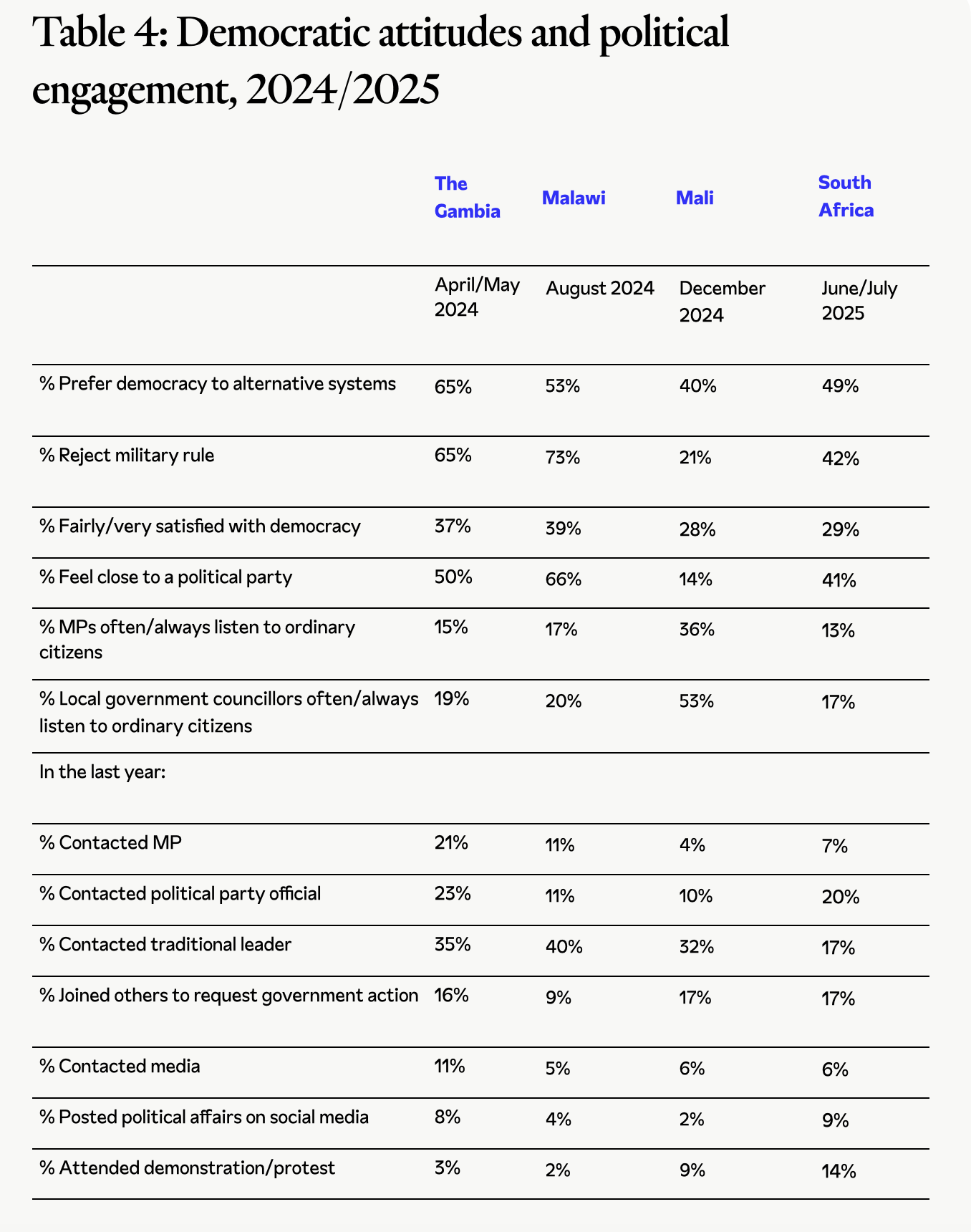
Public opinion data from Afrobarometer reveals the wide variety in both democratic attitudes and modes of civic engagement across The Gambia, Malawi, Mali, and South Africa (Table 4, on the next page). Support for democracy is highest in The Gambia (65%) and lowest in Mali (40%), while rejection of military rule is particularly strong in Malawi (73%) but strikingly weak in Mali (21%). As in much of the continent, satisfaction with democracy is low across all four countries, ranging from 28% in Mali to 39% in Malawi. This indicates widespread frustration with democratic performance.

Patterns of political engagement also differ markedly: Malawi and The Gambia show relatively high party attachment (66% and 50%), whereas Mali exhibits very weak partisan ties (14%). In contrast, citizens in Mali report comparatively higher confidence that MPs and local councillors listen to ordinary people (36% and 53%), despite lower overall democratic support. Informal and community-based engagement remains important, with high rates of contact with traditional leaders, especially in Malawi and The Gambia. South Africa stands out for higher levels of protest participation (14%) and social media activism (9%), reflecting more confrontational and digital forms of engagement, while direct contact with MPs and officials is generally low across all cases.

Overall, the data underscore that democratic participation in these countries takes diverse forms, shaped by differing institutional trust, party systems, and civic traditions.

Source: Afrobarometer

4: Espace Citoyen d'Interpellation Démocratique (Citizen's Space for Democratic Deliberation) Sikasso, Mali (2006)

Mali transitioned from military dictatorship to multiparty democracy in 1991, gradually building democratic institutions through competitive elections and a strengthened civil society over the following two decades (Freedom House, 2025c). A 2012 insurgency in northern Mali triggered the first of several military coups that ended civilian rule, while the spread of violent extremist organisations has created insecurity across the country. More recently, the military government postponed the 2024 elections and dissolved all political parties, entrenching military rule, with no clear path to democratic restoration.

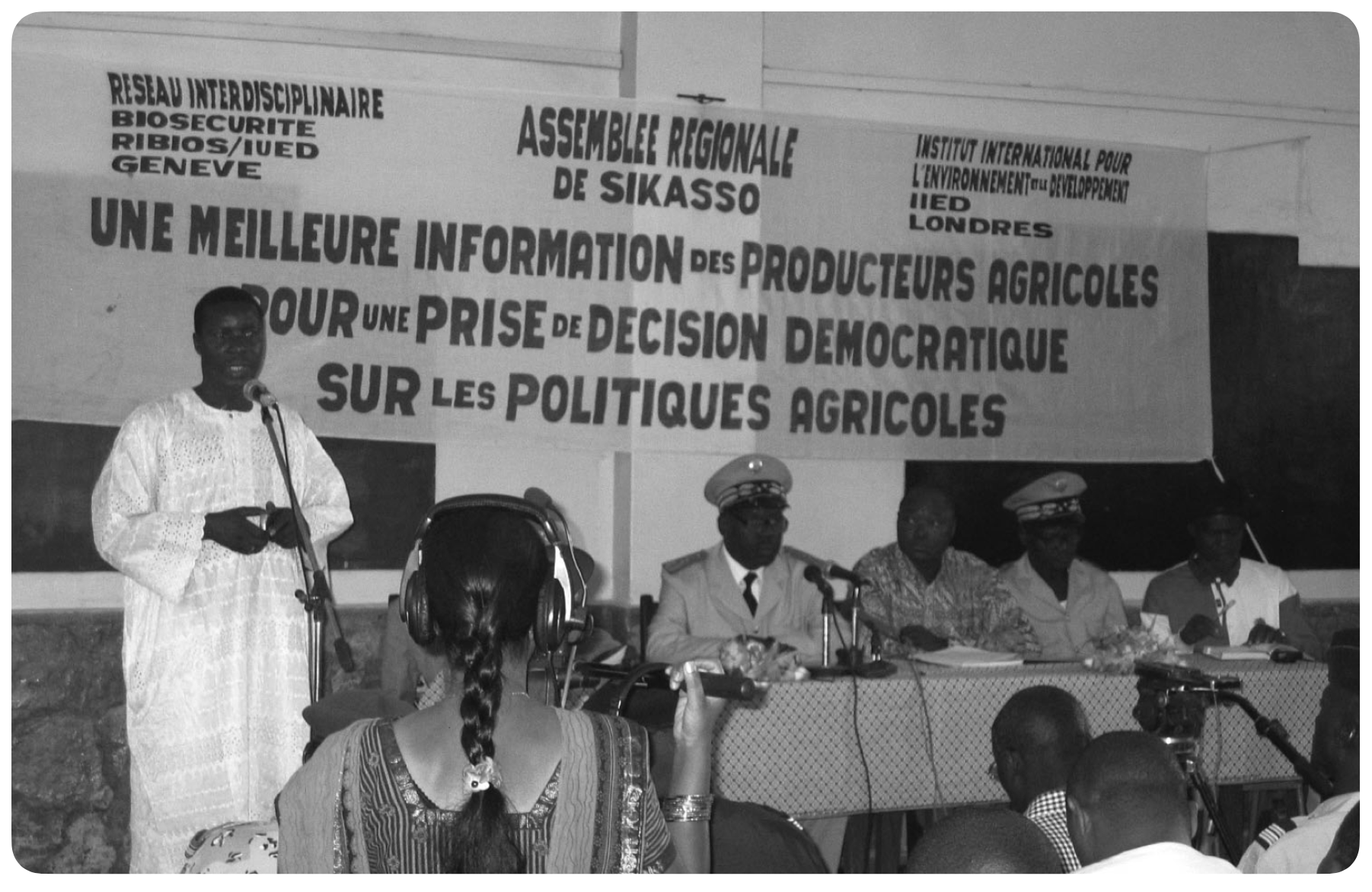
The Espace Citoyen d’Interpellation Démocratique (ECID) was an invited policy space convened in January 2006 – during the height of Mali’s democratic period – by the Regional Assembly of Sikasso, the country’s leading agricultural region. At the time, Mali faced mounting pressure from the United States Agency for International Development (USAID) and biotechnology firms like Monsanto to approve biosafety legislation enabling GMO trials, yet smallholder farmers who constituted the vast majority of cotton producers were largely excluded from policymaking (Pimbert & Barry, 2021). The ECID sought to redress this imbalance by giving ordinary producers a structured platform to learn, deliberate, and create recommendations on this consequential agricultural decision.

The process represented one of Africa’s earliest methodologically rigorous experiments in citizen deliberation, and a landmark effort to democratise biotechnology policymaking on the continent through deliberative democracy (Bryant, 2008). Its strong cultural embeddedness and inclusive governance structures enhanced both legitimacy and public trust (Bryant, personal communication, 2025). While the ECID aligned with Mali’s decentralisation framework, its lack of permanent legal institutionalisation constrained its long-term influence. These institutional limitations were later compounded by Mali’s deteriorating security situation and democratic backsliding.

4.1. Design and set up

The ECID’s purpose, mandate, and question framing centred on the proposed introduction of a GMO, Bt cotton, in Mali. It aimed to help cotton producers to understand GMOs and to develop recommendations on appropriate regulatory measures and the future direction of the country’s agriculture's policy (Assemblée Régionale de Sikasso, 2006).3

The issue presented trade-offs across economic, environmental, social, ethical, and sovereignty dimensions (Pimbert & Barry, 2021). Proponents argued that Bt cotton (a genetically modified, pest-resistant variety) would reduce pesticide costs and increase yields, given its resistance to a major pest (cotton bollworm). Critics warned that benefits would accrue mainly to large-scale producers, with smallholders (98% of farmers) facing higher seed costs, foreign dependency, risks to cottonseed oil, ecological uncertainty, and ethical concerns about genetic modification. Citizens were thus required to weigh competing claims about likely policy impacts.

The ECID was organised by the Regional Assembly of Sikasso, with conceptual and methodological support from the Réseau Interdisciplinaire de Biosecurité (RIBios – IUED, Switzerland) and the Institute for Environment and Development (IIED, United Kingdom). Funding for the initiative was provided by the Swiss Agency For Development Cooperation (SDC) and the Netherlands Development Cooperation (NDC) (Assemblée Régionale de Sikasso, 2006).

3 Swiss and Dutch agencies contributed approximately 90% of funding, while the Regional Assembly of Sikasso and local partners contributed the remaining 10% (Pimbert & Barry, 2021).

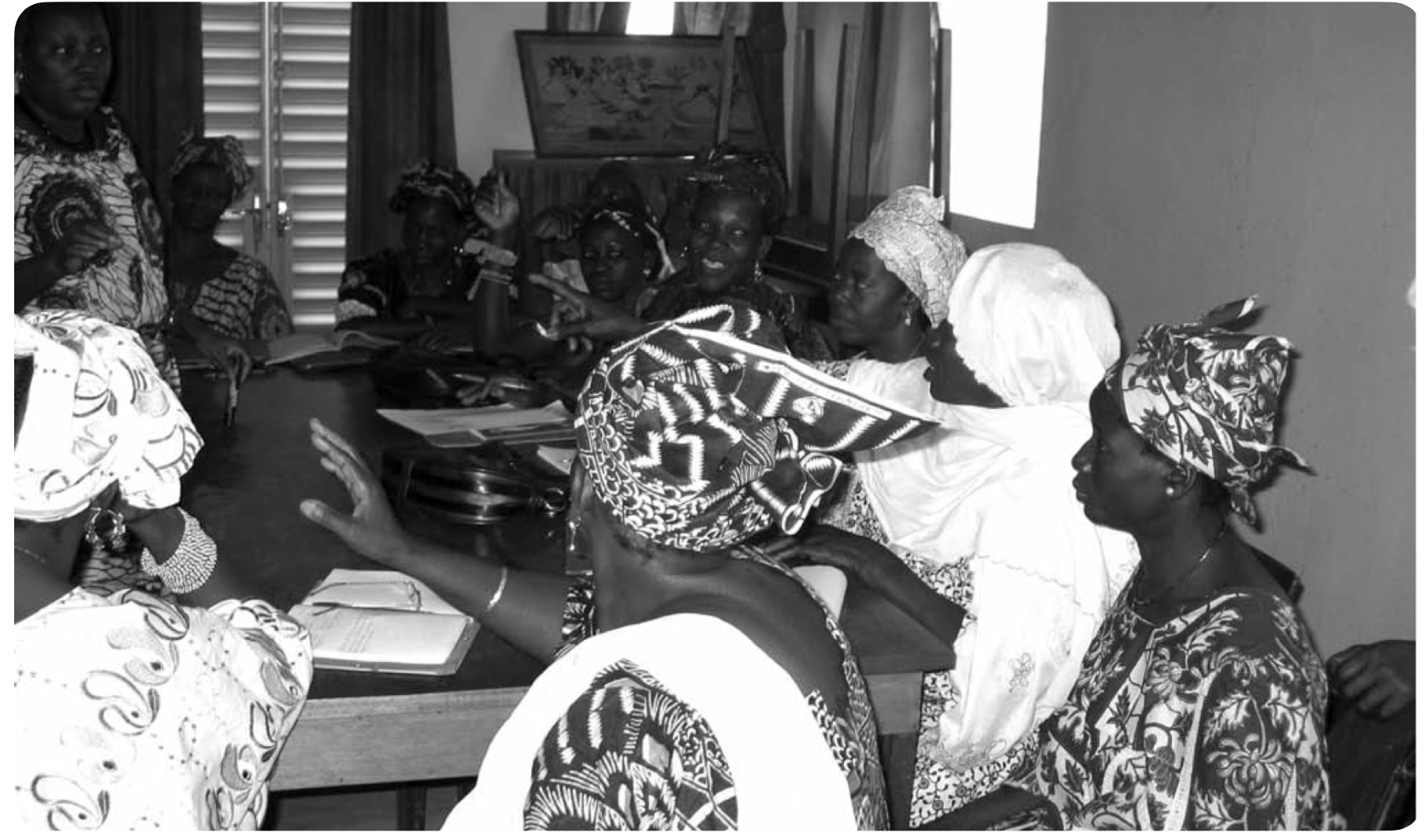
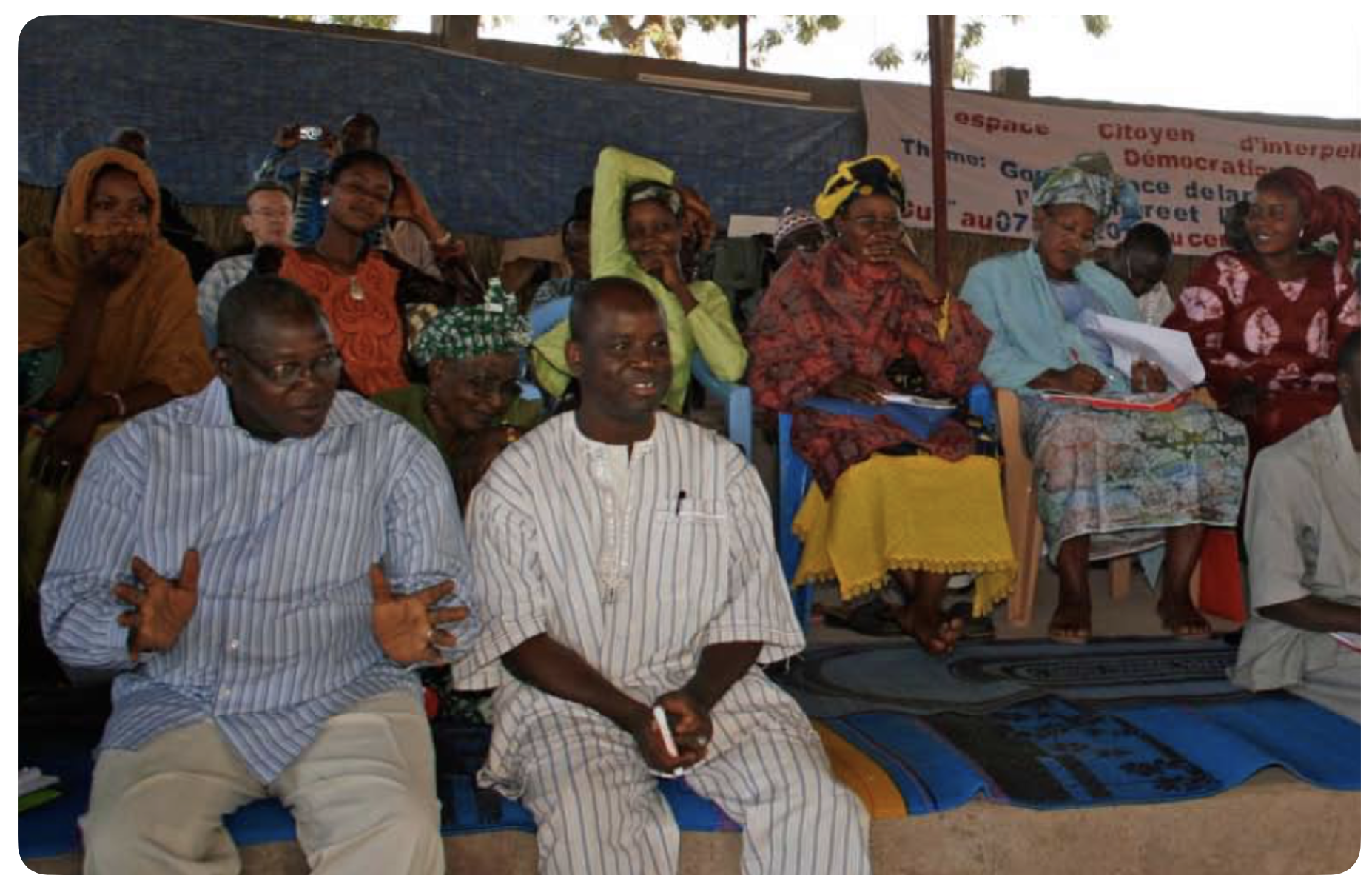
Deliberation sessions during the ECID, Mali. Photo credit: Michel Pimbert. Source: https://www.iied.org/sites/default/files/pdfs/migrate/G02530.pdf

Its key governance structures aimed to ensure its independence and efficacy, comprising:

  • Multi-actor Steering Committee that oversaw the process, with representatives from public, private, international and local civil society organisations, as well as the Regional Assembly President;
  • Executive Committee that drove planning and implementation; and
  • Oversight Panel tasked with ensuring fairness, credibility, and procedural integrity (Pimbert, M.P., personal communication, 2025).

In terms of timeline and pacing, the preparatory phase began in June 2005, with the Steering and Executive Committees overseeing six months of stakeholder outreach, member selection, expert witness selection, and logistical planning. Ongoing engagement with the Oversight Panel helped build trust among government and non-government stakeholders, which participants identified as critical to the process’ success (Pimbert, M.P., personal communication, 2025).

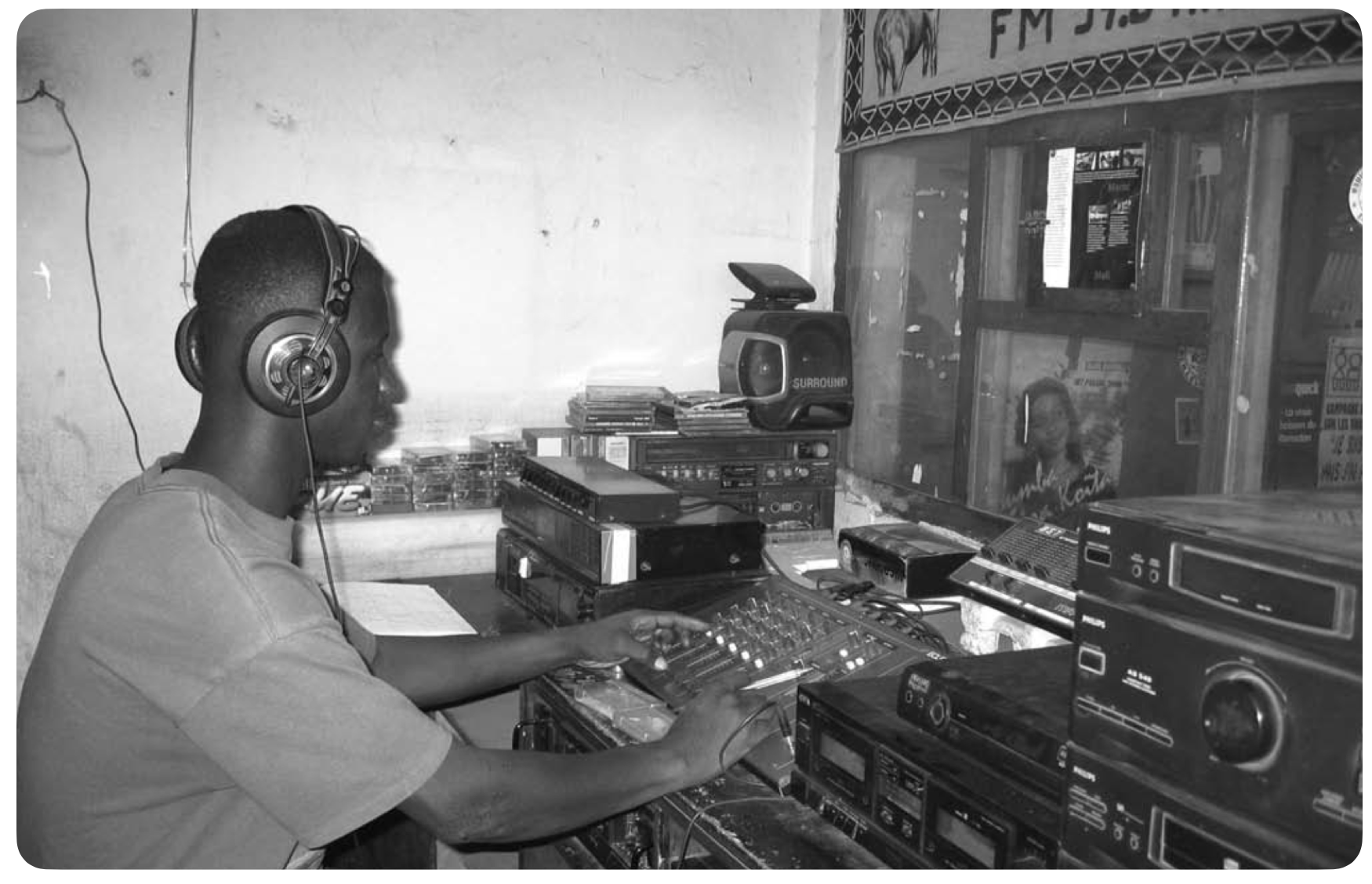
The citizen deliberation and inclusion process received strong media coverage, with all hearings broadcast live across seven local radio stations in the Sikasso region. Photo credit: Michel Pimbert. Source: https://www.iied.org/sites/default/files/pdfs/migrate/G02530.pdf

The sortition process began with discussions on selection criteria among key stakeholders in all seven districts of the Sikasso region. Pre-selection quotas included gender (minimum 30% women) and producer type (small, medium, and large-scale) (Pimbert & Barry, 2021). From an initial pool of 290 randomly sampled farmers, additional criteria – including age diversity and affiliation with producer organisations or unions – yielded an eventual selection of 45 farmer-jurors (30% women). The ECID achieved 30% female representation through purposive recruitment from women's agricultural associations, but no specific method was included to ensure youth participation (Pimbert & Barry, 2021).

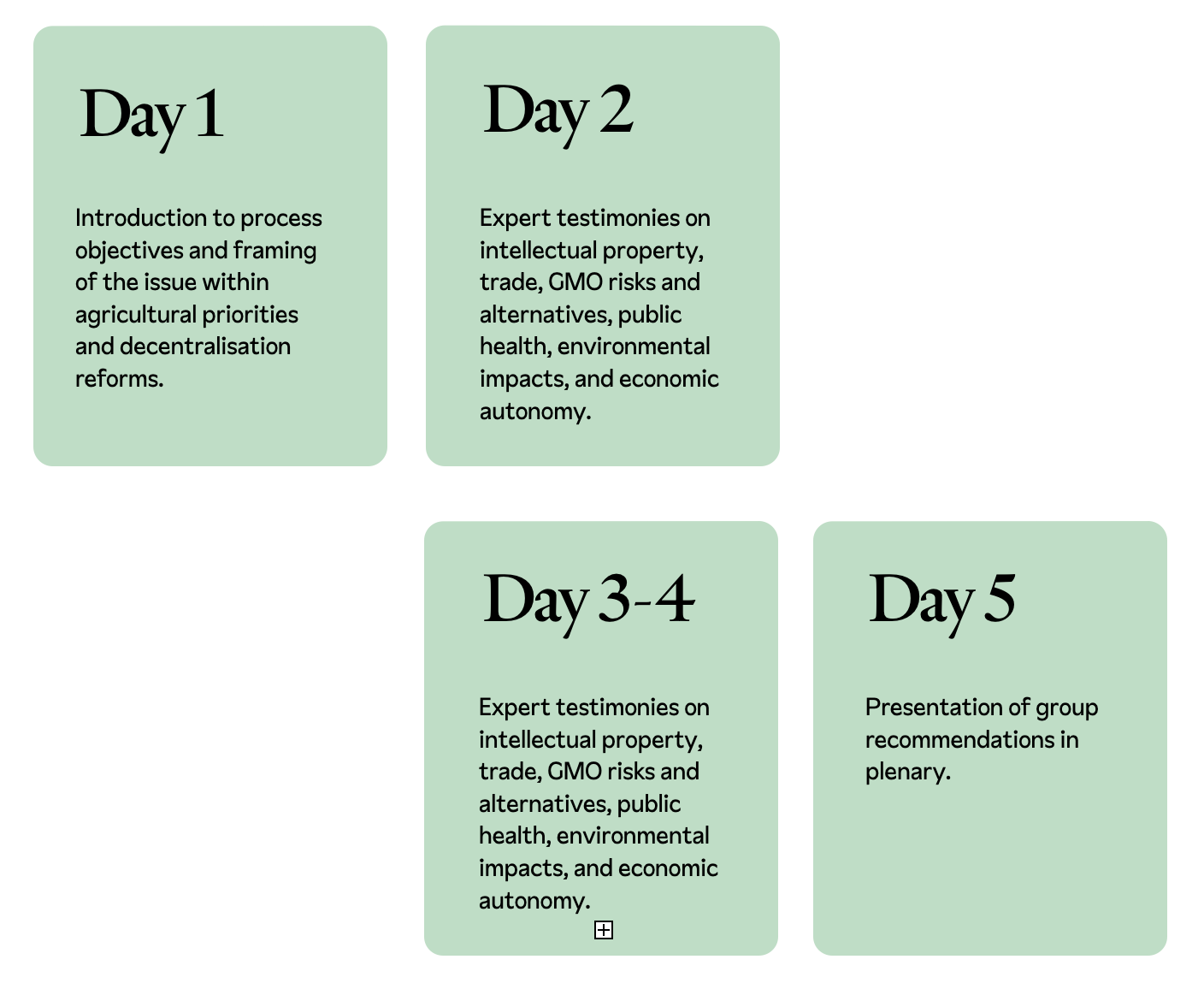
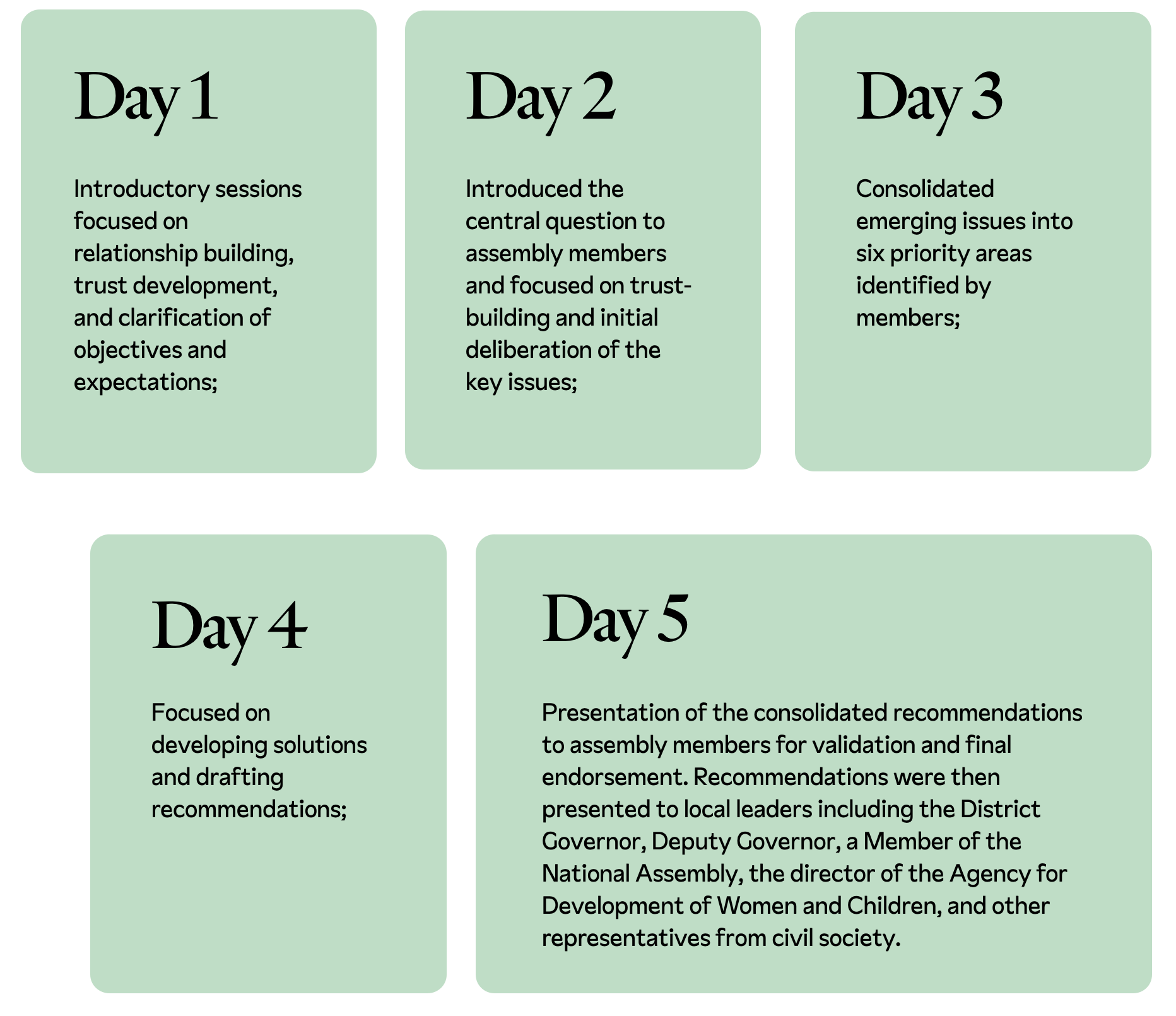
The ECID farmer-jurors deliberated over five days, between 25 and 29 January 2006 (Assemblée Régionale de Sikasso, 2006; Pimbert & Barry, 2021):

Logistical arrangements addressed linguistic diversity through translation and interpretation, with materials and discussions conducted in local languages, including Bambara, to ensure comprehension across varying levels of French proficiency. The Regional Assembly venue provided adequate infrastructure without the costs associated with commercial conference facilities (Pimbert & Barry, 2021).

Organisers achieved budget optimisation through a combination of factors. In-kind support, including the use of a Regional Assembly and outreach via community radio networks and local press, reduced costs. In addition, significant upfront community engagement enhanced deliberation quality through early trust-building and stakeholder buy-in (Pimbert, M.P., personal communication, 2025). Moreover, focusing on a single, well-defined question within a five-day format limited stipend and accommodation costs while still enabling engagement with complex technical issues (Pimbert & Barry, 2021).

The delivery of the final verdict, with recommendations from the assembly, Mali. Photo credit: Roger Gaillard. Source: https://www.iied.org/sites/default/files/pdfs/migrate/G02530.pdf

4.2. Process and deliberation

The ECID’s information architecture, deliberative design, and facilitation practices were structured to ensure balanced knowledge exchange, inclusive participation, and culturally legitimate decision making.

Balanced information provision was achieved through structured presentations covering technical, economic, environmental, social, and ethical aspects of Bt cotton from 14 regional and international expert witnesses (Pimbert & Barry, 2021). These included agronomic evidence from the Institut d’Economie Rurale, comparative experiences from international development organisations, and critical perspectives from farmer groups and civil society. Organisers aimed to avoid privileging scientific over indigenous knowledge to prevent one-sided advocacy and support pluralistic deliberation (Pimbert, M.P., personal communication, 2025).

Deliberation was member-driven and iterative. Working groups examined multiple policy dimensions and recalled experts for clarification, while farmers challenged assumptions based on their practical experience – thereby creating genuine dialogue rather than one-way transmission despite the compressed timeline (Pimbert & Barry, 2021).

Linguistic accessibility was ensured through translation and documentation in multiple languages, including French and Bambara, and accommodations for varying literacy levels. The ECID’s design also ensured cultural accessibility by drawing on palaver traditions emphasising consensus, harmony, and collective reasoning. Facilitation respected social norms while actively promoting inclusive participation, with venue and timing aligned to agricultural and family responsibilities (Pimbert, M.P., personal communication, 2025).

Small-group deliberation supported equal participation, particularly among women and lower-status farmers, with facilitators moderating dominant voices and reducing technical barriers. Seven local and two international facilitators were selected for linguistic ability, mediation experience, and local knowledge, reinforcing procedural fairness (Pimbert & Barry, 2021).

Recommendations were developed through consensus rather than voting, producing nuanced outputs that integrated expert testimony and farming realities. Key recommendations included rejecting Bt cotton pending further evidence, strengthening biosafety regulation, promoting agroecological approaches, protecting seed sovereignty, and introducing GMO labelling (Assemblée Régionale de Sikasso, 2006; Pimbert & Barry, 2021).

4.3. Impact and democratic integration

The ECID’s procedural quality generated learning, empowerment, and public visibility effects that extended beyond the five-day deliberation. Outcomes were evident at individual, community, and policy levels, supported by deliberate transparency and media strategies:

  • Assembly member learning: Members gained substantial knowledge of agricultural biotechnology, policy processes, and citizen rights, enabling them to critically assess expert claims rather than defer to authority.
  • Civic efficacy: The process strengthened deliberation, evidence assessment, and consensus-building skills, enhancing political efficacy and confidence to engage in policy debates. Some assembly members later became advocates for farmer inclusion in agricultural decision-making (Bryant, 2008; Pimbert & Barry, 2021; Pimbert, M.P., personal communication, 2025).
  • Perspective change through deliberation: Exposure to competing claims led to more nuanced views, shifting from general fears of “foreign” technologies toward specific concerns about seed sovereignty and local seed systems. The process therefore promoted informed judgment rather than opinion convergence (Pimbert & Barry, 2021).
  • Sustained civic and community engagement: Jurors presented recommendations to national and regional policymakers in Bamako in July 2006, and local assemblies requested further workshops. Community reporting, farmer organisations, and radio broadcasts extended dialogue beyond assembly members, amplifying impact across the Sikasso region (Bryant, 2008; Pimbert & Barry, 2021).
  • Transparency and accessibility: Organisers thoroughly documented the ECID’s methodology, selection procedures, expert testimony, and deliberation design. Proceedings were filmed and archived by the Regional Assembly and IIED. Materials and broadcasts were provided in French and Bambara, ensuring access for non-literate and non-French-speaking audiences (Pimbert & Barry, 2021).
  • Proactive media engagement: Community radio coverage before, during, and after the assembly disseminated recommendations and elevated farmer voices at low cost, while national and international press expanded visibility and learning across contexts (Pimbert & Barry, 2021).
  • Implementation tracking: Researchers documented the process and immediate aftermath, but no systematic recommendation implementation monitoring was established (Bryant, 2008; Pimbert & Barry, 2021).
  • Policy influence and institutional limits: Although lacking formal legal authority, ECID recommendations informed government debates as well as national policy, and likely contributed to delays in GMO legislation (Bryant, 2008; Pimbert, M.P., personal communication, 2025). Government interest led to further citizens’ assemblies on agriculture and food security in early 2010 (Pimbert et al., 2011), but no permanent monitoring or institutionalisation followed – leaving deliberative capacity vulnerable to Mali’s subsequent political and security crises (Pimbert & Barry, 2021; Pimbert, M.P., personal communication, 2025).
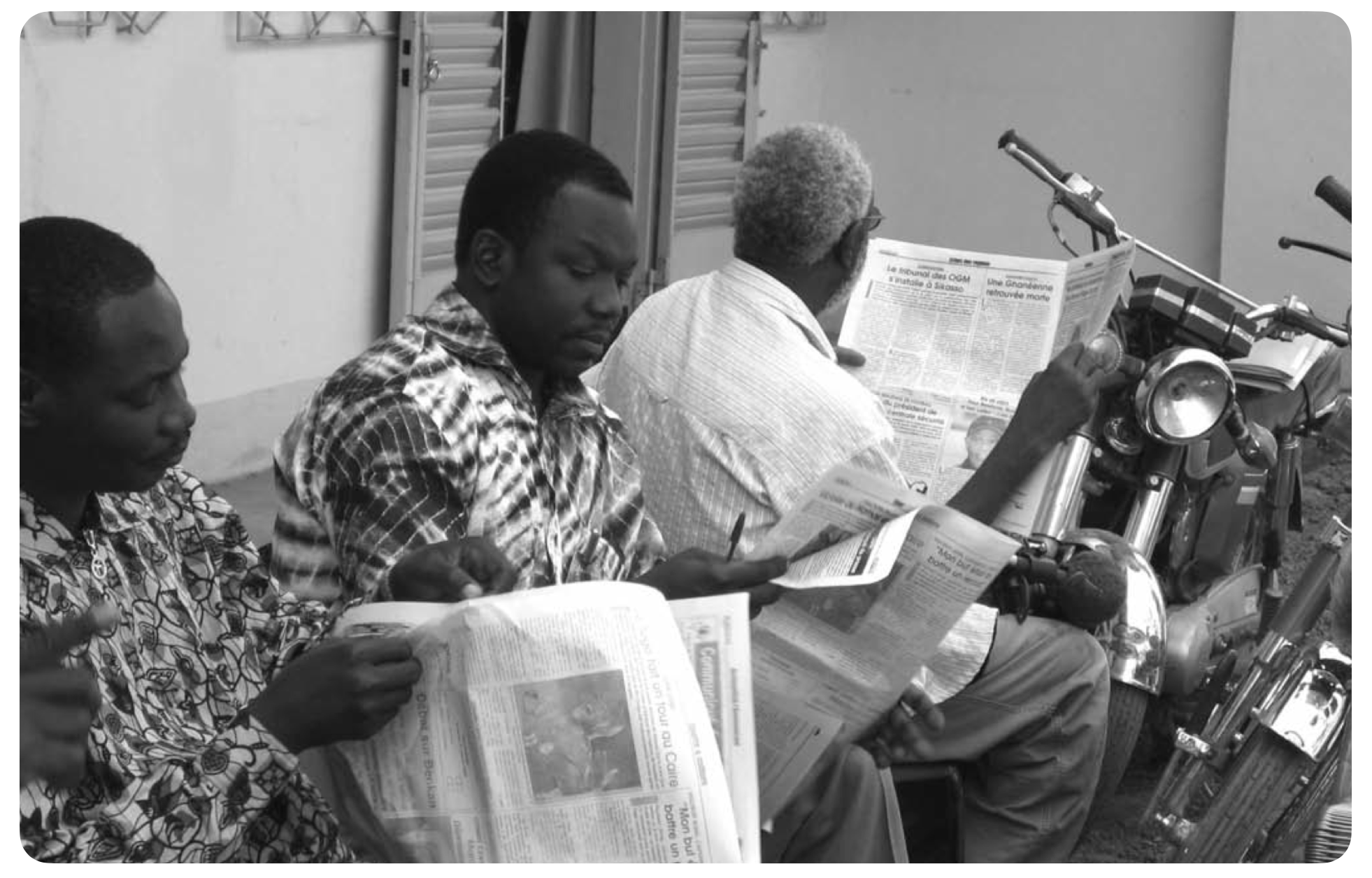
Assembly members reading the newspaper coverage of the citizens’ jury after the first day of hearings, Mali. Photo credit: Michel Pimbert. Source: https://www.iied.org/sites/default/files/pdfs/migrate/G02530.pdf

Key lessons include:

  • The importance of integrating indigenous and scientific knowledge systems;
  • Investing in trust-building and facilitation quality;
  • Using small-group formats to equalise participation across gender and socio-economic status;
  • Strategic use of community media and transparent documentation can extend impact beyond assembly members and strengthen public legitimacy.

The ECID demonstrates that well-designed citizen deliberation can enable rural and low-literacy populations to engage meaningfully with complex, technocratic policy issues when processes are culturally embedded, linguistically accessible, and supported by balanced information.

However, the case also shows that without formal institutional embedding or mechanisms for monitoring implementation, even influential deliberative processes remain vulnerable to political instability and risk becoming one-off consultations rather than sustained governance mechanisms. In Mali, this vulnerability was exacerbated by worsening insecurity and democratic backsliding, which curtailed opportunities to sustain or replicate deliberative practices. This highlights how broader political and security contexts can shape the durability of participatory governance innovations – regardless of their design and process quality.

5: Citizens’ Juries, Salima District, Malawi (2020)

Malawi transitioned from authoritarian rule to multiparty democracy in 1994, ending three decades of one-party dictatorship under former President Hastings Banda. Since then, the country has held regular elections and experienced several peaceful transfers of power (Freedom House, 2025b). Democratic resilience was notably demonstrated in 2020, when Malawi’s Constitutional Court annulled the disputed 2019 presidential election due to irregularities and ordered a fresh vote, which was subsequently won by opposition leader Lazarus Chakwera (Bebington, 2025). This marked the first time in Malawi’s history that election results were successfully overturned through judicial processes.

Against this backdrop, Malawi’s first-ever citizens’ juries were piloted in Salima District in 2020. With methodological support from the newDemocracy Foundation, local CSO proposed the initiative to the Salima District Council and constituency Members of Parliament as a means of addressing long-standing governance problems associated with the Constituency Development Fund (CDF), a national mechanism that disburses central government funds directly to electoral constituencies for local infrastructure projects (Msewa, 2018; Msewa, E., personal communication, 2025a). Although designed to promote local development, the CDF has been widely criticised for politicisation, weak oversight, and limited community participation.

The Salima District Citizens’ Juries were therefore conceived as a participatory mechanism through which citizens could assess how the fund operated in practice and propose reforms to improve accountability and service delivery.

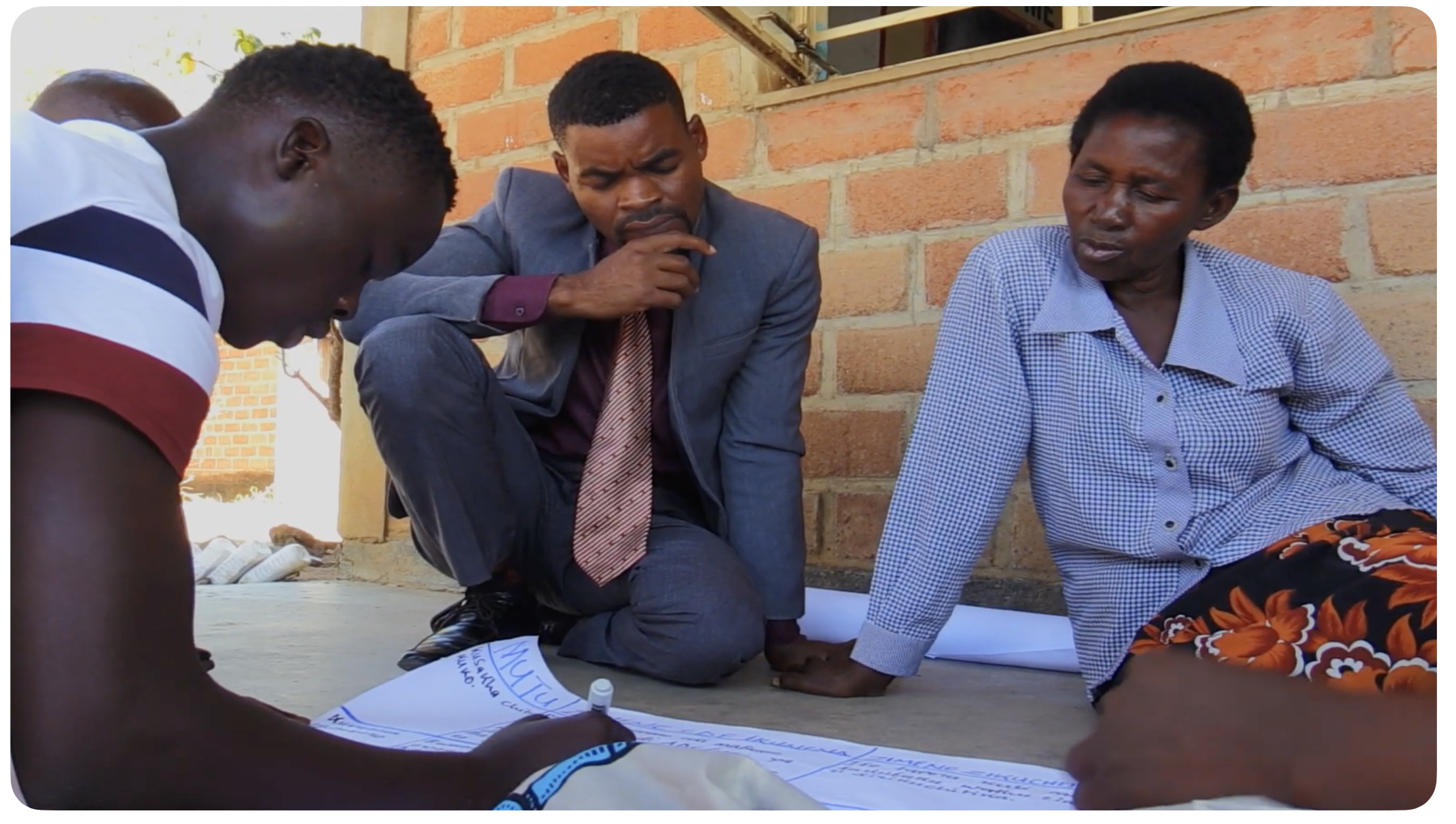
Salima citizen assembly members. Photo credit: Still shots from documentary ‘Teaching Power’ by All Hands On filmmakers

5.1. Design and set up

The Salima Citizens’ Juries’ purpose, mandate, and question framing focused on the governance and management of Malawi’s CDF in the Salima District. The central guiding question of the process was: “How can Salima District Council fairly and transparently utilise CDF money to achieve the objectives for which the fund was set up?” (Msewa, 2018, p. 9). This framing enabled jurors to examine how projects were identified, approved, implemented, monitored, and audited, and to consider the respective roles of public officials (Members of Parliament, district officials), traditional authorities, and community members. The issue involved trade-offs between political discretion and administrative control, community participation and bureaucratic efficiency, and rapid project delivery versus procedural accountability.

The citizens’ juries were initiated by local civil society actors, with conceptual and methodological support from the newDemocracy Foundation and financial backing from the United Nations Democracy Fund (UNDEF) (Msewa, 2018). Early engagement with the Salima District Council and local Members of Parliament secured political buy-in and commitments to receive and respond to the juries’ recommendations. Unlike the ECID in Mali, however, the Malawi process did not establish formal governance bodies such as a steering committee or independent oversight panel. Instead, individuals from each constituency were selected to serve as local facilitators alongside the lead project organiser. These facilitators, who were teachers, were chosen due to their experience in facilitating public meetings and their high levels of trust within their communities (Msewa, E., personal communication, 2025b).

In contrast to the ECID, the citizens’ juries’ timeline and pacing followed an extended, phased approach over six months, from July to December 2020 (Msewa, personal communication, 2025a).4 The process unfolded through several stages:

  • Initial presentation of the project to the Salima District Council to secure institutional buy-in;
  • Design and implementation of the selection process;
  • A learning phase focused on familiarising jurors with CDF objectives and accountability mechanisms;
  • Approximately 10 weeks of field investigations and deliberation on observed governance practices; and
  • A final recommendation drafting and presentation phase to Members of Parliament and district officials in December 2020.

This ambitious design enabled jurors to move beyond abstract discussion to direct investigation of project sites and implementation processes, though it also increased exposure to external disruptions and required sustained participant commitment over time.

The sortition process combined randomisation and purposive adjustment adapted to local conditions. Organisers mapped market schedules across Salima’s five constituencies and conducted recruitment at marketplaces, which function as central community hubs attracting a broad cross-section of residents. At each site, approximately 100 prospective jury members were randomly divided using coloudesign choices in order to achieve budget optimisation. Venue costs were minimised by using existing community facilities (Teacher Development Centre, or TDC) and facilitation teams travelled between constituencies during deliberation phases, which reduced transport and accommodation costs associated with centralised meetings. Local civil society organisations contributed to community mobilisation, while the phased structure allowed investigations to be conducted within members’ own communities rather than requiring prolonged residential sessions (Msewa,E., personal communication, 2025a).

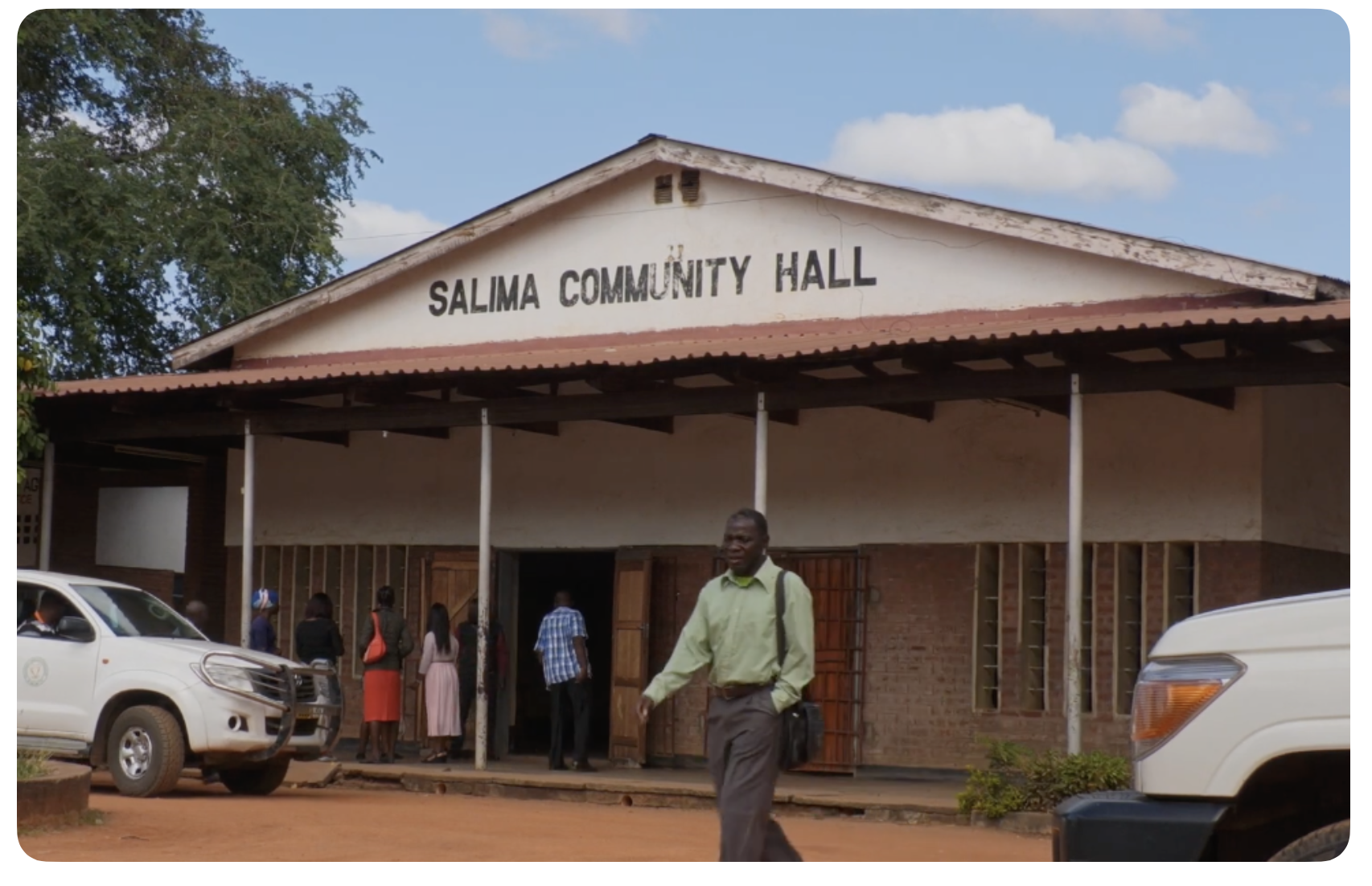
Salima citizen assembly members. Photo credit: Still shots from documentary ‘Teaching Power’ by All Hands On filmmakers


5.2. Process and deliberation

The citizens’ juries employed an information and learning architecture designed to support informed judgment on governance reform. Many jurors initially had limited awareness of the legal framework governing the CDF or of their rights and responsibilities as citizens in relation to local development processes (Msewa, 2022). The learning phase therefore focused on introducing members to CDF objectives, legal provisions, and formal accountability mechanisms.

The organisers ensured balanced information by including presentations from a variety of stakeholders. Government officials explained official procedures for project identification, approval, and implementation, while civil society organisations presented documented challenges associated with the CDF’s management, including citizen complaints in their communities.

A distinctive feature of the Malawi process was the central role of participant-driven inquiry over an extended period of time. Citizen jurors generated much of the evidence base through structured field investigations, including site visits, interviews with implementers and beneficiaries, and review of documentation (Msewa, E., personal communication, 2025a). This experiential learning allowed members to verify official claims, identify implementation gaps, and assess governance failures not visible in formal reports.

Following field investigations, jurors met in deliberative sessions to synthesise findings and identify recurring problems, including failures in consultation processes, lack of transparency in budgeting and expenditure, and unclear accountability lines among MPs, district officials, and contractors. Through this process, members not only refined their understanding of systemic weaknesses but also experienced recognition of their own agency as legitimate evaluators of public governance, actively requesting further clarification and holding officials’ accounts to scrutiny (Msewa, E., personal communication, 2025b).

Linguistic accessibility and cultural appropriateness were critical given Malawi’s highly diverse population. While English is an official language, Chichewa and other local languages are more widely spoken, particularly in rural areas. The juries employed local teachers from each of the constituencies as facilitators and the use of existing community structures, such as TDCs, helped ensure cultural appropriateness because these are familiar venues for collective decision making in these constituencies (Msewa, E., personal communication, 2025).

Ensuring equal opportunity for participation required deliberate facilitation strategies to address differences in education, social status, and political knowledge. Field visits allowed members to engage with evidence directly rather than relying on verbal argument alone, legitimising lived experience and countering hierarchies linked to formal education or political connections (Msewa, E., personal communication, 2025b).

Recommendation development followed a progressive and consensus-oriented process. Malawi’s process emphasised finding common ground while respecting diverse experiences.

The fieldwork component helped to build consensus, as assembly members had witnessed similar problems across different sites. After synthesising their findings, jurors drafted a comprehensive set of recommendations addressing transparency, accountability, and citizen participation. Drafts were refined in plenary sessions, and final recommendations were reached through extended discussion rather than voting (newDemocracy Foundation, 2020).

Based on the evidence collected throughout the process, key recommendations included: strengthening community participation in project identification, requiring public reporting of CDF expenditures, establishing citizen oversight committees, clarifying roles and sanctions for mismanagement, improving coordination among authorities, and strengthening audit mechanisms (newDemocracy Foundation, 2020). Moreover, the presentation to officials included dialogue about diverse community needs, enabling minority perspectives to inform implementation discussions even when they didn't alter core recommendations (newDemocracy Foundation, 2020).

5.3. Impact and democratic integration

The Salima District Citizens’ Juries’ innovative, extended design and procedural quality generated significant impact at individual, community, and district level:

  • Member learning: Facilitators reported that participation was transformative for many jurors, who developed knowledge of public finance processes, investigative skills, and confidence engaging authorities (Msewa, E, personal communication, 2025a).
  • Civic efficacy and democratic skills: Both were enhanced by showing that citizens could meaningfully evaluate government performance and propose credible reforms to decision-makers. Some jurors expressed their intention to remain engaged in community accountability initiatives (newDemocracy Foundation, 2023), though systematic tracking of long-term behavioural change was limited.
  • Community-level outcomes: The juries’ recommendations were presented publicly to MPs and district officials, enabling broader community observation of citizen-government dialogue (Msewa, 2019). However, similar processes were not replicated in other districts, limiting diffusion of deliberative practices at the national level.
  • Transparency: Public documentation exists in the form of project reports and some recorded materials, and local radio coverage raised awareness in Salima District (newDemocracy Foundation, 2023). A publicly-available documentary was also produced on the process.
  • Government response and uptake: Policy influence appears to have been largely symbolic and relational. Officials engaged with jurors and requested further dialogue, but evidence of concrete reforms or systemic changes to CDF administration remains limited (Msewa, E., personal communication, 2025b). No formal mechanisms required authorities to report on recommendation uptake.
  • Democratic integration: The juries were not legally institutionalised and functioned as ad-hoc consultations rather than recurring participatory mechanisms. While aligned with decentralisation structures, long-term integration into governance systems did not occur.

The Salima District Citizens’ Juries demonstrate that extended, phased deliberative designs can enable deeper citizen investigation of governance failures and produce specific, evidence-based recommendations. Field-based inquiry strengthened jurors’ analytical capacity and grounded deliberation in observed realities, while local facilitation and community venues enhanced cultural legitimacy.

However, sustained policy impact remains limited due to a lack of legal mandates or implementation monitoring mechanisms. While district and local authorities engaged constructively, a lack of accountability requirements and long-term resources constrained follow-through.

The case therefore highlights the tension between experimental flexibility and institutional durability, showing that lasting democratic impact depends on integration into governance systems and sustained political incentives for reform.

Salima citizen assembly members. Photo credit: Still shots from documentary ‘Teaching Power’ by All Hands On filmmakers
6: North Bank Region Citizens’ Assembly, Kerewan, The Gambia (2025)

The Gambia experienced a democratic breakthrough in 2016, when opposition candidate Adama Barrow defeated long‑entrenched autocrat Yahya Jammeh, ending more than two decades of authoritarian rule (Freedom House, 2025d). Since Jammeh’s forced exile in 2017, democratic performance has improved, including gains in election quality and political freedoms. However, progress toward accountable governance remains constrained, in part due to the failure to enact a new constitution (Nabaneh, 2025).

The North Bank Region Citizens’ Assembly emerged from DemocracyNext’s Cities Programme, a three-year programme involving an International Task Force on Democratising City Planning that led to a research paper “Six Ways to Democratise City Planning” and a Call for Proposals for cities to collaborate on implementing the ideas. The Gambian assembly in the North Bank Region was one of the three successful applicants and was funded by the National Endowment for Democracy (NED). The collaboration included a preparatory learning phase, where participants from the selected cities grew their knowledge and capacity to implement a citizens’ assembly for the first time with the goal of institutionalisation.

The assembly in The Gambia was situated within the broader context of the African Union-led Great Green Wall Initiative, aimed at combating desertification across the Sahel (African Development Bank, 2024). The assembly addressed the complex question of how to pursue environmental restoration alongside securing livelihoods and economic empowerment in rural communities, where immediate survival needs often compete with longer-term sustainability goals.

The assembly sought to create a structured space for citizens on development and environmental governance amid The Gambia’s renewed democratic openness. Unlike the previous two cases, however, the assembly was commissioned and implemented by civil society organisations (Great Green Wall Frontline Initiative and Civic) rather than by regional or district authorities. While this enhanced its operational independence, it may have created additional challenges for formal recommendation uptake and long‑term democratic integration.

North Bank Region Citizens’ Assembly, The Gambia. Photo credit: Natty Productions

6.1. Design and set up

The North Bank Region Citizens’ Assembly’s purpose, mandate, and question framing addressed the challenge of balancing environmental restoration with economic livelihoods and community empowerment (MacDonald‑Nelson, J.,Terry, H., personal communication, 2025; Gaye, C., personal communication, 2025a). The question it addressed was:

“How can we restore our lands and natural habitats, while creating better livelihoods, and economic empowerment?”

Although clear and mobilising, this framing combined several major and distinct policy issues into one and assumes that everyone agreed on the goals of environmental restoration and economic development. As a result, assembly members could have been led to focus on how to achieve these goals, rather than express different views on what development should look like in practice.

As in our other cases, the process reflected partnerships between local, regional, and international actors. Implementation was led by the Green Wall Frontline Initiative (GGWF; a Gambian CSO) and Civic (an international non-profit), with conceptual and technical support from DemocracyNext. This configuration combined strong local embeddedness with international and methodological support, which enhanced its operational capacity while maintaining sensitivity to local political and cultural dynamics.
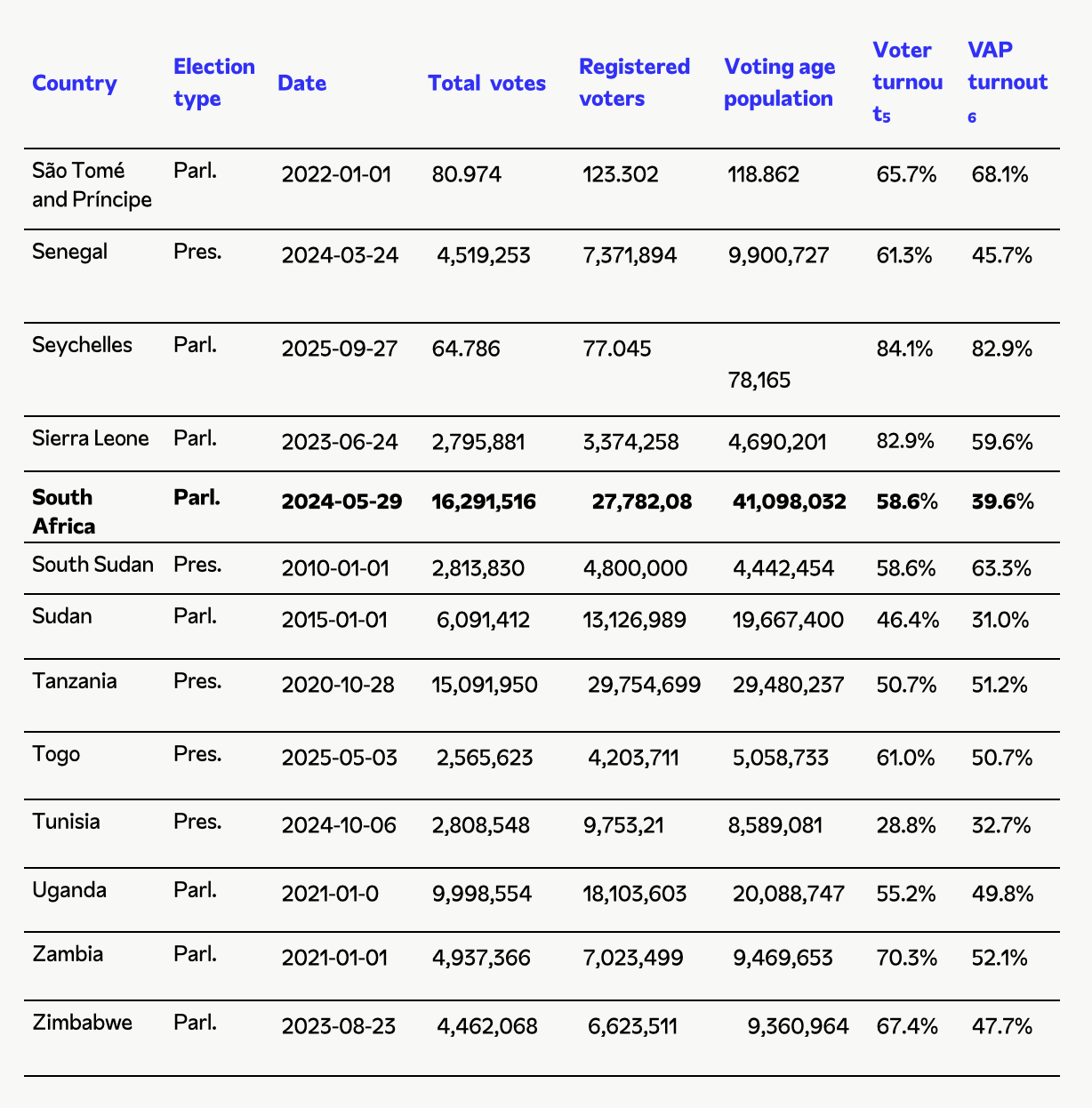
To safeguard independence and credibility, the assembly’s governance structure incorporated an oversight group with representation from government, international and local CSOs, and traditional leaders. In addition, independent researchers from the Centre for Policy, Research and Strategic Studies (CepRass) were contracted to observe and evaluate the process against agreed guiding principles on member selection, facilitation, and deliberation. While the assembly lacked legislative mandate, organisers engaged government stakeholders early and ensured alignment with existing policy frameworks in an effort to maximise prospects for constructive engagement. This included designing the assembly in consultation with district coordinators from each of the North Bank Region’s seven districts.

As in the ECID case, the North Bank Region Citizens’ Assembly involved a timeline combining an extensive preparatory phase followed by an intensive period of deliberation. Planning began in January 2025 and included connecting with and learning from the lead organiser of the Salima District Citizens’ Juries, capacity building for facilitators and GGWF staff, consultations with district coordinators and local leaders, and development of a preliminary assembly design (MacDonald-Nelson & Terry, personal communication, 2025). The exact timing of the assembly was decided in consultation with assembly members to accommodate agricultural cycles and religious observances, which organisers believed contributed to high attendance and sustained engagement.

The sortition process followed a novel multi‑stage design:

  • District coordinators listed all villages in their respective districts.
  • Village names were randomly drawn from a hat. Villages where GGWF already operated were automatically included as these represented locations where recommendations could have an immediate impact.
  • Door‑to‑door recruitment in each of the selected villages (42 in total) created a pool of over 200 potential assembly members.
  • 30 members and five alternates were selected using Panelot software based on demographic quotas.
  • Selected assembly members were called and informed that they had been chosen. They were also invited to an in-person information session to learn more about the process.
  • When 10 of the initially selected members declined participation, replacements were drawn manually.

To ensure representativeness, selection criteria included age, gender, occupation, and district, though data constraints prevented inclusion of disability status and required reliance on national rather than regional demographic profiles (MacDonald‑Nelson, J.,Terry, H., personal communication, 2025). As in the other cases, achieving inclusivity on the basis of gender and age also required contextual adaptation, such as scheduling around caregiving responsibilities and providing transport to the venue. The facilitators noted that most assembly members had never participated in such a civic process, suggesting that the sortition process largely met its goals (Gaye, C., personal communication, 2025b).

Deliberations took place over five days in October 2025 and followed a structured sequence (Gaye, C., personal communication, 2025a):


Funding reflected a collaborative partnership model aimed at budget optimisation. In addition to external funding from NED which was used to cover the logistics costs of the assembly, GGWF contributed additional resources, including in-kind contributions and contextual expertise. Facilitators worked at reduced fees, and combining accommodation and venue in a single location reduced transport costs, though unforeseen expenses emerged during sortition and participant transport. While evaluation costs did not impact the amount available to cover the assembly expenses, it constituted a large share of the overall budget. This choice reflects the high priority placed on generating transferable learning for future assemblies in The Gambia and Africa more widely (MacDonald‑Nelson, J.,Terry, H., personal communication, 2025).

Locating the assembly in the North Bank Region’s administrative capital, Kerewan, increased its physical accessibility for assembly members, with some being able to commute daily to the venue (Gaye, C., personal communication, 2025b). However, this decision likely limited participation by experts based in the national capital, Banjul, creating a trade‑off that favoured assembly member inclusion over expert breadth.

North Bank Region Citizens’ Assembly, The Gambia. Photo credit: Natty Productions

6.2. Process and deliberation

The design of the North Bank Region Citizens’ Assembly’s intentionally built on lessons from earlier African assemblies in Mali and Malawi, while adapting its features to the specific political, social, and cultural conditions of the Gambian context (MacDonald‑Nelson, J.,Terry, H., personal communication, 2025). The process was facilitated by two expert facilitators with extensive experience in the region and strong familiarity with local social dynamics (Gaye, C., personal communication, 2025b).

Information provided to assembly members focused on how climate change is affecting the region and sharing existing policy frameworks. Presenters included representatives from international civil society, ActionAid’s national coordinator, and the Deputy Dean of the University of The Gambia’s School of Agriculture and Climate Change. Facilitators sought to ensure that recommendations aligned with national development plans and environmental legislation to maximise implementation prospects, though they noted that additional expert diversity might have further enriched deliberation (Gaye, C., personal communication, 2025b).

The deliberation process emphasised participant-driven inquiry by inviting assembly members to scrutinise and refine the central question during deliberations. Facilitators also stressed that trust‑building on the first day was critical for enabling meaningful deliberation, particularly given that many assembly members had never engaged in structured political discussion (Gaye, C., personal communication, 2025b). This approach strengthened participant agency in shaping the agenda. Members felt sufficiently comfortable to express concerns that the assembly question was too broad and, through collective discussion and multiple rounds of voting, identified and ranked six priority areas. This allowed the deliberation to focus on more concrete themes.

The organisers also prioritised linguistic accessibility to ensure full representation. Proceedings were conducted in Fula, Mandinka, and Wolof, and all recommendations were translated and validated in each language. Local deliberative traditions such as Bantaba and Kaafo informed facilitation design to ensure that they were culturally-appropriate – although adaptations were introduced to balance this goal with achieving inclusivity across age and gender (Gaye, C., personal communication, 2025a).

Facilitators ensured equal opportunity by actively addressing power hierarchies, including gender and status dynamics that initially resulted in one male participant dominating discussions. Interventions reinforced norms of equal participation and collective deliberation (Gaye, C., personal communication, 2025b). Facilitators underwent extensive training, including exchanges with organisers from Malawi’s Citizens’ Juries and a three day training with facilitator Pete Bryant from the organisation Shared Future. They deliberately avoided expressing their own views, focusing instead on helping assembly members articulate their own solutions in policy‑relevant language (Gaye, C., personal communication, 2025b).

Recommendations were comprehensive and structured around six priority areas, including food security and soil degradation, cross‑border grazing and pollution, carbon emissions and waste management, climate education, and climate law and policy implementation. Members also proposed the formation of Regional Climate Resilience Committees to sustain engagement beyond the assembly (Gaye, C., personal communication, 2025a).

Consensus was achieved through multiple rounds of discussion and voting, resulting in approximately 90 percent agreement across recommendations. While members reported diverse personal experiences of climate impacts, deliberation enabled convergence on shared priorities and collective strategies.

It is too soon to assess the North Bank Region Citizen Assembly's policy impact or long-term civic impacts. Nevertheless, it demonstrates how deliberative innovations in African contexts can integrate rigorous random selection, multilingual facilitation, cultural legitimacy, and policy alignment under significant resource constraints. Importantly, its design reflects deliberate learning from earlier African assemblies in Mali and Malawi, rather than total reliance on models developed in other regional contexts.

Top: A bantaba is a traditional community meeting place in The Gambia (and across West Africa). Typically a shaded open-air space, often under a large tree, where community members gather to discuss issues, resolve conflicts, share news, and make collective decisions The Gambia. Photo credit: James MacDonald-Nelson. Bottom: Handover of recommendations to stakeholders including the District Governor, Deputy Governor, a Member of the National Assembly, the director of the Agency for Development of Women and Children, and other representatives from civil society, Kerewan, The Gambia. Photo Credits: Natty Productions.

Although the assembly lacked formal legal authority, its organising team has sought to maximise political relevance by aligning recommendations with existing policies and engaging government representatives through advisory structures (Gaye, C., personal communication, 2025a). This includes national frameworks, including the Recovery‑Focused National Development Plan, the National Climate Change Policy, the National Adaptation Programme of Action, the Forestry Policy, and the Plastic Waste Management Policy. While this does not guarantee that the government will implement them, it represents a pragmatic attempt to connect citizen deliberation to policy processes that already structure environmental governance in the country.

While the institutionalisation of citizens’ assemblies in local government is a long-term ambition, it should be noted that Great Green Wall Frontline initiative, in collaboration with their parent organisation, Civic, intend to continue implementing sortition-based deliberative processes within the North Bank Region and beyond, as they expand their work across the Sahel. They are exploring how they might integrate a permanent assembly model into the governance and decision making around the allocation of new funding streams for their work in the region. Since there is an eagerness to institutionalise this model in the North Bank Region and other projects they are involved in, it is an exciting opportunity to test how citizen deliberation can impact their work as CSOs.

North Bank Region Citizens’ Assembly members and organising team, Kerewan, The Gambia. Photo credits: Natty Productions.
7: Additional assemblies

7.1. Deepening Democratic Deliberation: Espaces Citoyen d'Interpellation Démocratique on Agricultural Research, Sélengué-Nyeléni, Mali [2010]

Building on Mali’s earlier experience with citizen deliberation in 2006, two citizens' juries – the Espaces Citoyen d'Interpellation Démocratique (ECID) sur la Gouvernance de la Recherche sur l'Agriculture et l'Alimentation (Citizen Spaces for Democratic Dialogue on the Governance of Agricultural and Food Research) – were convened in January and February 2010 in Sélengué-Nyeléni, Mali. These juries were the culmination of an international participatory research initiative seeking to create safe communicative spaces where farmers and food producers could scrutinise expert knowledge and shape agricultural research priorities.

Each jury was selected by a steering committee comprising 15 local, national, and international institutions, with oversight provided by an independent panel of eight people to ensure the process was credible and representative. A public recruitment drive identified roughly 1,000 farmers and food producers, with the steering committee selecting 50 for each jury. The organisers used transparent assessment criteria to ensure representation across socio-professional groups, gender, farming scales, and the different agro-ecological zones in Mali, Senegal, Burkina Faso, and Benin.

Following an extensive research phase, each of the six-day citizen juries addressed a central question about the governance and future direction of agricultural research in West Africa:

Citizens’ jury 1: What kind of knowledge and agricultural research priorities do small scale producers and food processors want (or not)?

Citizens’ jury 2: How can we democratise the governance of food and agricultural research?

Jurors heard testimonies from 15 international specialist witnesses (agricultural scientists, development economists, farmer organisations, and civil society representatives) before engaging in extended deliberations in four separate “commissions” representing different producer groups: (1) farmers and forest users; (2) women; (3) herders and fishermen; and (4) food processors.

The organisers selected a team of culturally- and gender-sensitive facilitators, translators, and video filmmakers to coordinate, record, and archive the proceedings. In addition, national and regional media representatives worked with the project partners to organise a number of joint media events before, during, and after the exercise.

Each commission developed detailed recommendations disseminated through a range of national and international meetings aimed at influencing regional agricultural policy and practice. This pioneering process stands out for bringing together participants from four different countries and for combining a variety of approaches, including participatory research, multi-actor learning groups, and farmer-led assessments of national research.

For further details, see the resulting report on Democratising Agricultural Research for Food Sovereignty in West Africa.

Deepening Democratic Deliberation: Espaces Citoyen d'Interpellation Démocratique on Agricultural Research, Sélengué-Nyeléni, Mali Photo source: https://www.iied.org/sites/default/files/pdfs/migrate/14603IIED.pdf

7.2. Future Directions: Climate Citizens’ Assembly, Cape Town, South Africa [2026]

South Africa’s transition from apartheid rule to a multi-racial democracy in 1994 is widely regarded as an example of how deeply divided societies can move from oppression to inclusive democracy without descending into large-scale civil conflict (Van Reybrouck, 2025). The African National Congress (ANC) party dominated national politics for 30 years before losing parliamentary majority for the first time in the May 2024 election, which compelled the formation of a coalition Government of National Unity (GNU) with nine other political parties.

The ANC's electoral decline stems from widespread public dissatisfaction following the corruption and state capture that characterised Jacob Zuma's presidency (2009-2018) (Booysen, 2015). This crisis compounded longstanding failures to address unemployment, poverty, inequality, and service delivery – undermining the democratic promise of 1994. The scale of disillusionment is starkly reflected in voter turnout, which plummeted from 86% of the voting age population in 1994 to just 40% in 2024 (International IDEA, 2025).

Plans for a citizens’ assembly in Cape Town emerged in 2023 from an academic research initiative led by the Centre for Research on Democracy (CREDO) at Stellenbosch University. The organisers were initially motivated by questions about whether deliberative forums could function effectively in the South African context and help address declining voter participation (Alberts, K., personal communication, 2025). While this academic origin allowed for extended design and reflection, it also created challenges in identifying a policy question and securing institutional partners.

Assembly organisers from Stellenbosch University and the University of the Western Cape convening during an assembly design workshop - Photo credit: CREDO

The project has since evolved into a multi-actor partnership involving CREDO, the Centre for Urban and Public Governance at the University of the Western Cape, the City of Cape Town’s Climate Directorate, the Mayor’s Climate Commission, and the Western Cape provincial government. Government participation was secured through sustained engagement and commitments to consider recommendations within provincial policy processes.

Climate governance was selected early as the thematic focus because it is viewed as both politically salient and less polarising than other policy areas. However, identifying a narrow and actionable question in a highly unequal urban context remains challenging, particularly where environmental risks intersect with transport, housing, and service delivery. Electoral timing has further shaped design choices, with implementation planned for August to October 2026, ahead of local government elections.

While the assembly has been framed as a “pilot” in the sense that it would be South Africa’s first citizens’ assembly, its organisers emphasise that it is intended as a full-scale deliberative process rather than a small-scale experiment. The preliminary design envisions a multi-weekend format with 60 to 100 participants selected through sortition, though sampling strategies for informal settlements remain under development.

Facilitation planning draws on local deliberative traditions and lessons from earlier African assemblies in Malawi and The Gambia, reflecting an effort to adapt deliberative models to local political and cultural realities rather than importing external templates. Organisers noted, for example, the value of mid-process breaks, careful management of handover moments with government, and sensitivity to cultural expressions of authority and respect (Alberts, K., personal communication, 2025). Rather than attempting to neutralise local power dynamics, their approach seeks to work with them, recognising that facilitation strategies must align with social norms if participation is to be both inclusive and legitimate.

8: Conclusion: Opportunities and challenges for citizens’ assemblies in Africa

8.1. Opportunities and challenges for citizens’ assemblies in Africa

Taken together, the case studies demonstrate that citizens’ assemblies can be adapted to African institutional, cultural, and resource contexts without undermining deliberative quality, provided that core design principles are preserved and meaningfully localised. Across Mali, Malawi, and The Gambia, organisers invested heavily in building trust with communities and public authorities, ensuring linguistic accessibility, and grounding facilitation in culturally legitimate practices. These elements were not peripheral but foundational to assembly member engagement and perceived legitimacy.

8.2. Success factors and obstacles

Several design features consistently supported effective deliberation:

  • Extensive preparatory phases, including stakeholder engagement, assembly member support, and relationship building;
  • Linguistic and cultural accessibility, extending beyond translation to facilitation aligned with local deliberative traditions;
  • Broad and diverse information environments, incorporating expert knowledge, civil society perspectives, and lived experience;
  • Skilled and context-sensitive facilitation, capable of managing inequalities related to gender, education, age, and social status; and
  • Strategic institutional linkages, connecting assemblies to decentralised authorities, statutory bodies, or recognised policy frameworks.

At the same time, the cases reveal persistent structural constraints that shape the limits of deliberative impact. None of the assemblies operated within legally institutionalised participatory frameworks, leaving implementation dependent on political goodwill and administrative capacity rather than formal accountability mechanisms. Monitoring of recommendation uptake was limited or absent, reducing opportunities to assess longer-term influence or to sustain engagement beyond the initial process.

Important trade-offs also emerged in relation to process design:

  • Intensive formats (as in Mali and The Gambia) improved feasibility and reduced costs, but constrained opportunities for extended learning and independent inquiry;
  • Phased processes (as in Malawi) enabled deeper citizen investigation but required sustained participation and were more vulnerable to external disruptions; and
  • Venue and location choices may require organisers to balance assembly member accessibility against expert participation, sometimes prioritising member inclusion at the expense of diverse external perspectives.

Political and security environments further shaped durability. In Mali, subsequent authoritarian consolidation and insecurity curtailed opportunities to institutionalise or replicate deliberative practices, despite strong early legitimacy. While political conditions are currently more permissive in Malawi and The Gambia, the absence of their assemblies’ formal integration into governance systems limited prospects for sustained citizen participation beyond pilot initiatives. These cases highlight that even well-designed deliberative processes remain highly sensitive to broader political trajectories.

Where impact extended beyond the immediate assembly, it was often mediated through:

  • Civil society organisations that disseminated recommendations and sustained advocacy;
  • Media engagement that broadened public awareness;
  • Opportunities for assembly members to interact directly with policymakers.

Nevertheless, in all three cases, citizens’ assemblies functioned primarily as one-off consultative interventions rather than institutionalised mechanisms of participatory governance. However, in the case of the North Bank Regions Citizens’ Assembly, the intention was to learn from this first experience to integrate sortition-based deliberative processes into GGWF’s decision making. While they enhanced civic agency, policy learning, and perceived legitimacy in the short term, they do not appear to have fundamentally altered formal decision-making structures.

8.3. Recommendations for advancing deliberative democracy in Africa

Regional frameworks provide normative support for deliberative democracy in Africa, with African Union instruments committing member states to promote popular participation, civil society engagement, and good governance (African Union, 2007; 2020; 2025). In principle, these commitments create space for innovations such as citizens’ assemblies to complement representative institutions. In practice, however, weak implementation, low ratification rates, limited institutional capacity, and uneven political will continue to constrain translation of these norms into domestic governance reforms (Africa Center, 2025; European Parliament, 2022; UNDP, 2025). These conditions shape the opportunities and constraints faced by different stakeholders in advancing deliberative democracy.

North Bank Region Citizens’ Assembly, The Gambia. Photo credit: Natty Productions

Governments confront a fundamental tension between the democratic imperative to enable citizen participation and the political risks of empowering assemblies that may produce recommendations challenging existing policies or power structures. Organisers should therefore:

  • Secure commitments before assemblies convene by identifying specific officials and agencies responsible for receiving and responding to recommendations.
  • Clarify how assemblies link to existing institutions, ensuring deliberative processes complement rather than undermine representative authority.
  • Develop legal or procedural frameworks that require formal responses to assembly outputs, even where implementation cannot be guaranteed.
  • Align deliberative agendas with administrative capacity, avoiding mandates that span multiple ministries without coordination mechanisms.

Funders similarly navigate difficult trade-offs between their institutional imperatives (short funding cycles, pressure to demonstrate measurable impact) and the requirements for effective deliberative democracy. They should therefore:

  • Adopt longer funding horizons that support institutionalisation rather than short-term pilots, recognising that policy impact often unfolds over many years.
  • Support adaptive, context-specific designs, rather than privileging replication of Global North models.
  • Recognise civic inclusion and capacity-building as core impacts, not only policy change, given the importance of engaging citizens excluded from formal governance spaces.
  • Provide post-assembly funding for follow-up, including dissemination, advocacy, and monitoring, to strengthen implementation pathways.

Civil society organisations (CSOs) face the challenge of facilitating complex deliberative processes, conducting sustained advocacy, monitoring implementation, and building public awareness – all while operating with precarious funding, limited technical capacity, and competing demands from multiple donor-driven projects. CSO-led processes should therefore:

  • Form coalitions and regional networks to pool facilitation skills, advocacy capacity, and learning, reducing the burden on individual organisations.
  • Integrate assemblies into ongoing programmes, such as community organising or participatory governance initiatives, rather than treating them as standalone projects.
  • Invest in local facilitation capacity, training community leaders and practitioners to reduce reliance on international consultants.
  • Partner with academic and research institutions to support evaluation, documentation, and evidence-based advocacy with governments and funders.

Overall, our research and analysis suggest that deliberative democracy holds significant promise in African contexts, particularly where conventional channels of political representation are viewed as unresponsive.

However, durable democratic impact depends less on process design alone than on formal institutional embedding, sustained financial and organisational support, and political incentives to incorporate citizen input into policy cycles. Without these enabling conditions, democratic innovations risk remaining isolated experiments, valuable for learning and empowerment but insufficient to transform governance systems in the longer term.

References
Appendix
5 Percentage of registered voters.6 Percentage of the voting age population (generally, aged 18 and older except in Cameroon where the minimum age for voting is 20).

Authors / project leads