This is one of two reflection essays that we published about multilingualism in June 2026.
Read the other one by James MacDonald-Nelson and Hannah Terry, ‘Deliberation in Europe’s Most Multilingual Country’ here.
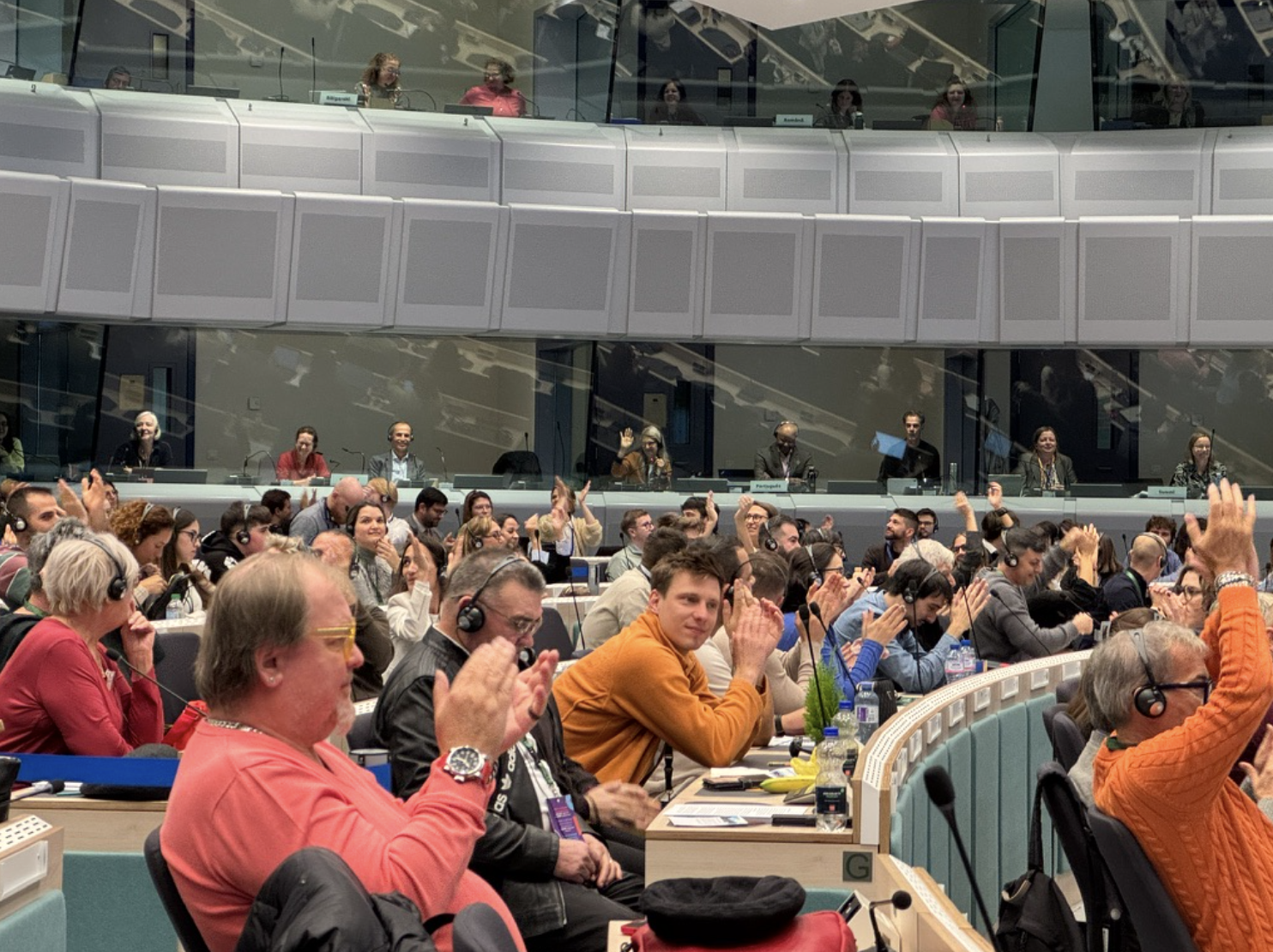
Love is not visibly at work amid the desolate architecture of the European quarter in Brussels. Yet people often reached for the word to describe their experience of a recent citizens' panel there. The assembly was just one of several convened by the European Union since 2021 for randomly selected people from all 27 EU countries to deliberate on future policies for the continent.
Citizens talked of love. Normally uptight European Commission officials talked of love. Perhaps the most remarkable group to talk of love was the one trained to be the most self-effacing: the interpreters.
Indeed, when in November 2025 one of the 150 citizens used their farewell statement on a break-out room microphone to express gratitude to those who had been translating for them for three weekends, one interpreter added an unusually personal comment to their translation (in caps): "and I would like to thank the interpreters… WHO LOVE WORKING FOR YOU!"
The passionate engagement of panel members seems promising for citizens' panels. Aside from bottom-up insights on policy options, this democratic tool deepened citizens' enthusiasm for the European Union, the organiser. It also shows how language differences need not be an obstacle to people making decisions together. Attending one made an observer like me more confident about the smooth functioning and scaling up of multilingual citizens' assemblies.
Policy in 24 languages
Citizens’ panels, assemblies, juries or councils are groups of people, randomly selected from a community, and given a mandate to find a way out of a gridlocked policy decision. They are briefed on the problem, deliberate in small groups, suggest new ideas, and then vote on them to see what gets super-majority support.
The first modern citizens' assembly was held in 2004 in Vancouver, Canada. By 2019, more than 700 had been held, and the number has at least doubled since then. But few have been held in more than one language.
One exception is Belgium, a deliberative democracy pioneer, which held its first citizens' assembly in 2011. With a long tradition of most people being able to speak or understand both French and Dutch, facilitators at national assemblies switch seamlessly between the two and interpretation is offered for presentations. Still, the situation remains potentially divisive: most deliberation tables are monolingual, even if some cater to those who can speak both languages. And in Brussels, where the population is 40% foreign – one of the world's most diverse – a family member or friend often has to come along to help if one of those randomly selected only speaks, say, Swahili, Arabic, or Turkish.
Most linguistically ambitious is the Global Citizens' Assembly movement, which began randomly selecting assembly members from all over the world to coincide with the COP26 climate change summit in Glasgow in 2021. The movement's 2026 Civic Assembly is doing much the same, asking assembly members to "shape the future of global food systems in light of our shared climate challenge." Since there are more than 7,000 languages in the world, linguistic and other differences can only be dealt with by having each of the 105 randomly selected members accompanied by a 'community host' who takes care of translation and technology needs.
It is the EU's experiment with such citizens' assemblies – the most recent known as citizens' panels – that is the most multilingual, best financed, and most instructive on multiple levels. So far they have staunch political support, with European Commission President Ursula von der Leyen saying "this form of democracy works… it should be part of the way we make policy."
In particular, EU panels set new standards on how good results can be achieved with high-grade interpretation – in all the organisation's 24 official languages – and the use of artificial intelligence for the multilingual, real-time work of building up policy recommendations.
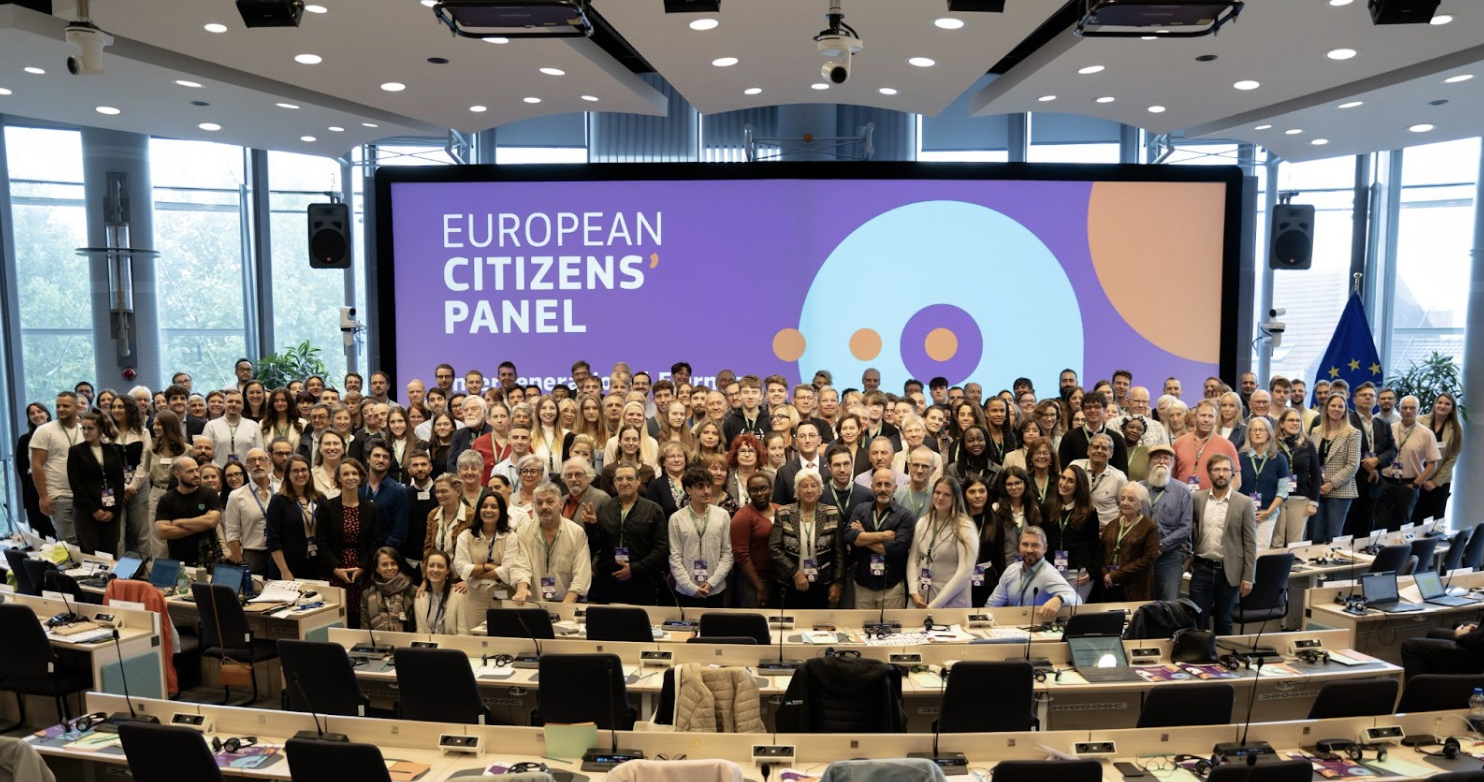
"I was very surprised that people from so many different countries and ages and looks can have so much in common," said one citizen spokesperson at the final plenary of the European citizens' panel on Intergenerational Fairness. "And I have made friends that I am going to cherish.”
A miracle
I was lucky to be invited to observe the same citizens’ panel in Brussels in late 2025, the EU's seventh randomly selected assembly of citizens. I was also able to meet organisers and interview three interpreters for their points of view.
I asked to do so because I had not experienced live interpretation before with the intensity, interactivity, and diversity evident at the panel. Like many of the citizens, without help, I often had only a vague idea of what language a person was using, let alone what they were saying.
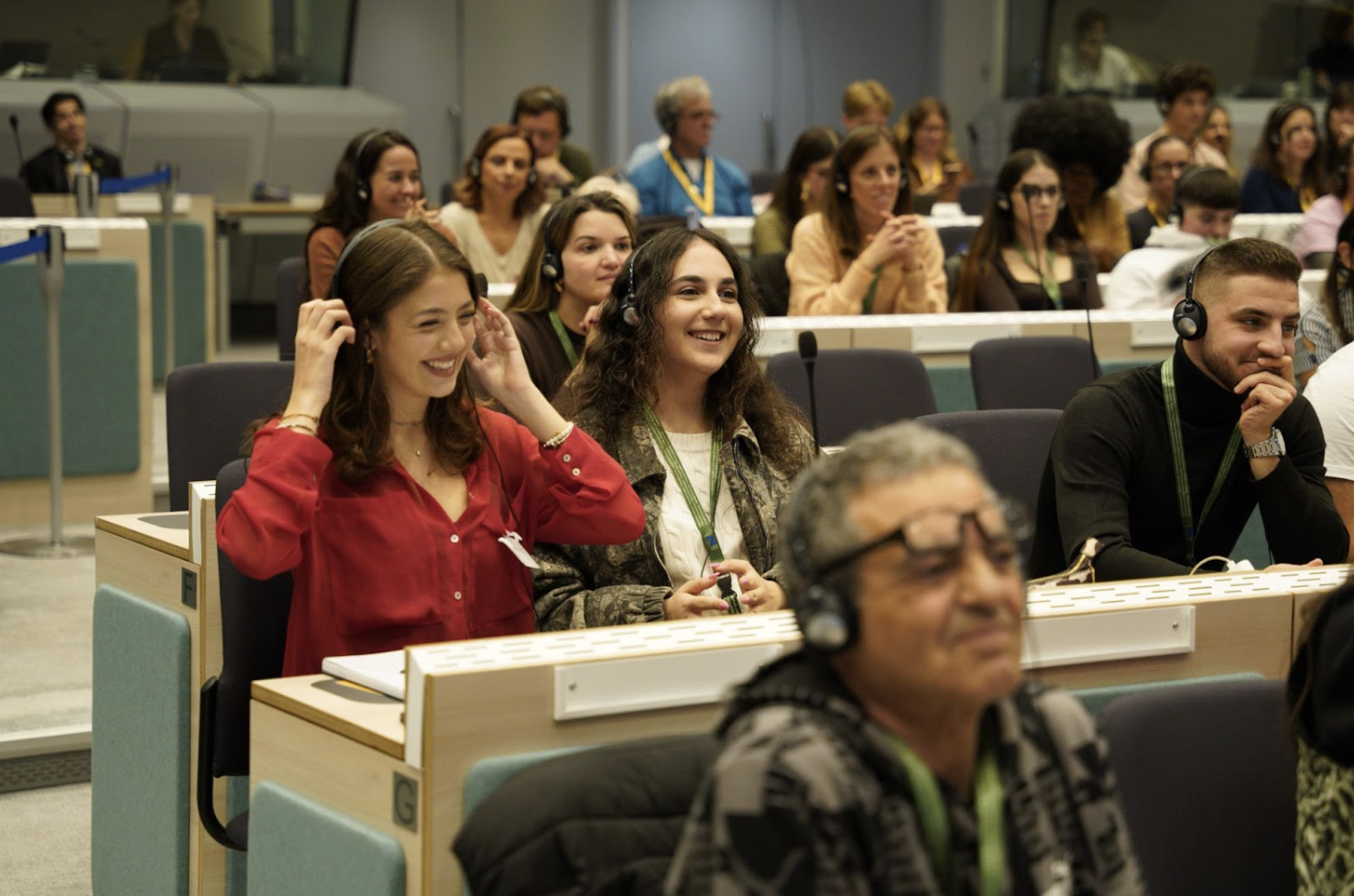
Then I put on my headphones and a miracle happened. A calm, conversational interpretation into English streamed into my ears. The same was happening for everyone in the room, with a choice of 24 languages to tune in to.
"The interpreters love seeing everyone wearing headphones. This doesn't necessarily happen in their daily work, since many officials and delegates tend to understand and speak various languages," said Colin Scicluna, Deputy Director General of the European Commission's interpretation and conference service.
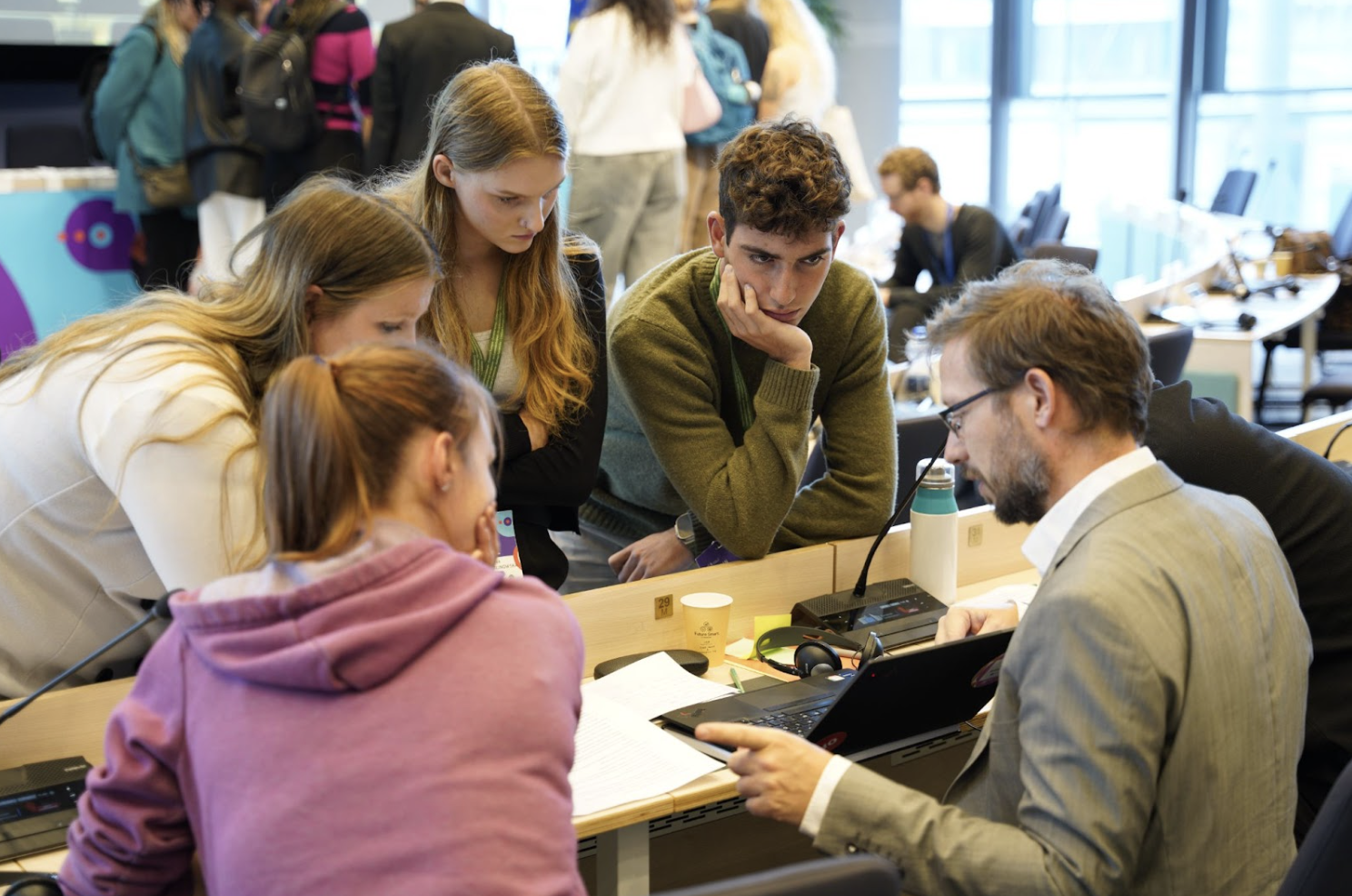
Deliberation on policy recommendations took place in smaller groups. To make interpretation manageable, these breakout groups kept the same dozen members throughout who used three or four languages. Monolingual citizens' assemblies normally mix up such small group discussions to extend the benefits of random contributions. But the limitation was a small price to pay.
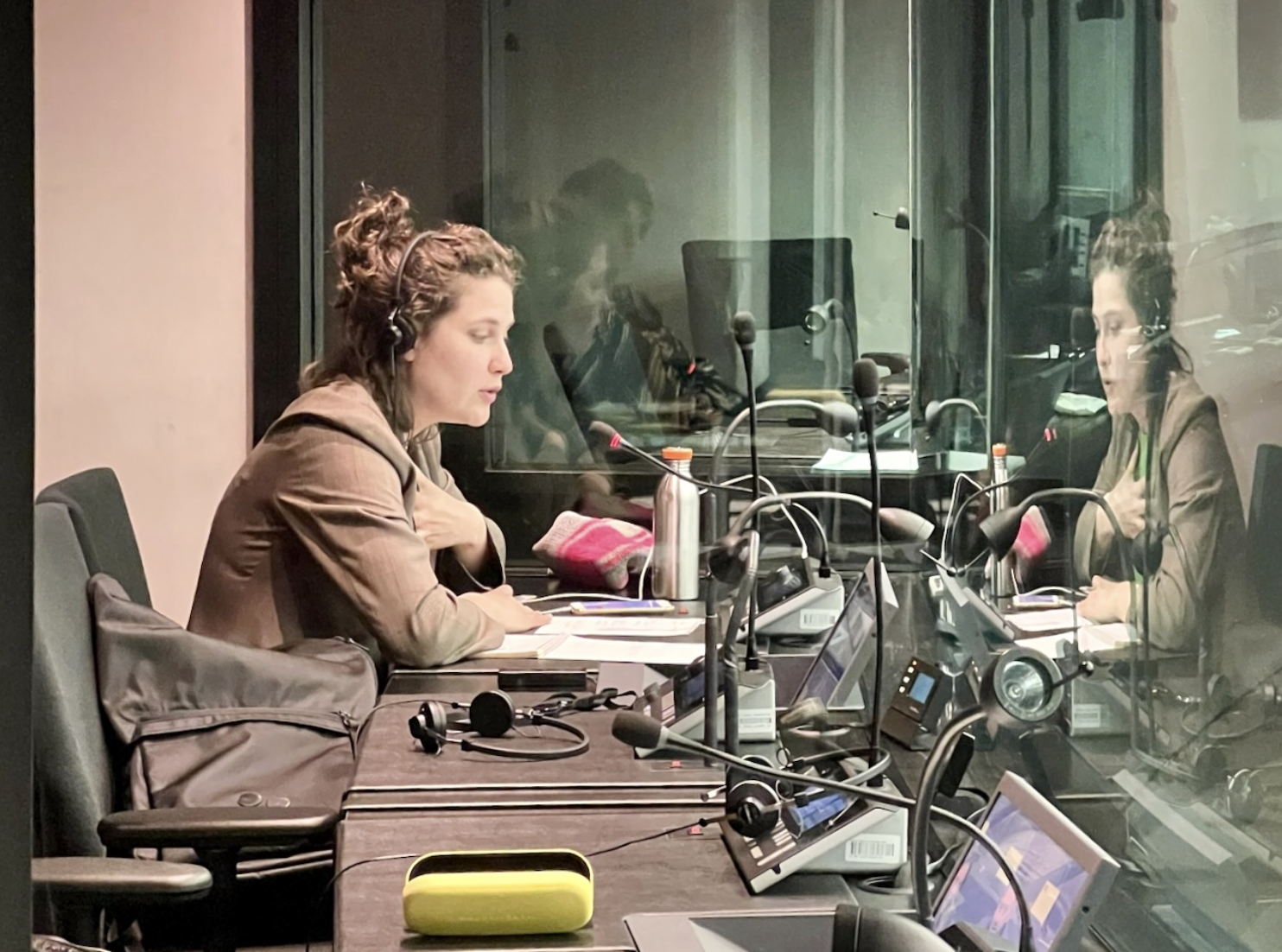
"People's faces light up when they hear that they won't have to speak English. Often they've never spoken in public before," said Carlos Hoyos Fernandez-Savater, head of the European Commission unit organising meetings with interpreters. "We are trying to overcome the barrier to people finding their shared cultural hard drive."
Citizens interacted at will in plenaries, coffee breaks, and social events. At first, they often stuck to their own language groups. Other conversations then tended to be in English, sometimes basic. But it was usually enough to build up a sense of companionship, common purpose, and trust.
"I was excited to come, nervous too. Many people speak English, and I'm grateful to meet people I would never have met," said Per, a Dane. "I have driven trucks all over Europe, but I didn't know that much about the EU. If anything, I thought that two thirds of our laws seemed to come from the EU and that more should come from Denmark."
The silent observers
So far, so cosy. But does an EU citizens' panel qualify people to make decisions in the public interest? Can they ever overcome linguistic and other barriers to be as good as expert technocrats, elected representatives, or the bureaucracies of the EU member states themselves?
Interpreters attend meetings at all these levels and pay the closest attention to what is said and done. They are not only extraordinary translators, but also well qualified to comment on what they observe.
Not all citizens' panels hit the sweet spot. One interpreter said a 2026 citizens' panel on pollinators was "like pulling teeth", because it had many young people who appeared less able to keep up to speed with the topic or articulate their thoughts clearly. But on the whole, interpreters feel that citizens keep up with what's going on.
"It's true that the citizens have to familiarise themselves with the system and learn not to listen to the interpretation of what they are themselves saying via the headphones. But it only takes them one session to do that," said Marina Petsalis, who mainly interprets between Greek and English. "As an exercise, it's 100% positive and useful."
Another interpreter warned against patronising people. "I am convinced that EU policy is understandable to anyone, provided that you take the time to provide them with background information and some expert input. They are perfectly aware, [bring] personal experiences, and have very pragmatic and practical views," said Fernanda Vila Kalbermatten, a mainly Spanish-English interpreter who was particularly impressed by the panel of citizens who coped with the complexities of the EU budget. "I never saw them get stuck trying to understand something."
Secondly, the spontaneity of citizens' suggestions builds up a constructive trust that overcomes linguistic and cultural divisions.
"There is a proper dialogue happening, which is very exciting for us as interpreters," Vila Kalbermatten added.
There's a third "huge difference" between the deliberations of citizens and officials or experts, said Marina Petsalis, the Greek-English interpreter.
"People are not there representing their countries. They are representing themselves," said Petsalis. "The culture clash can still be present in terms of basic attitudes or politics, people being more left or right wing. Those things will filter through into what they are proposing or are in favour of. [But] you didn't get this feeling of national interests clashing."
A different interpreter put it this way: "It's a dream day for an interpreter when [the people you are working for] listen to each other and respond to each other."
Finally, citizens tend to be much readier to speak in their own language than in a typical EU expert meeting. That's because high-level business is now frequently conducted by default in English, and participants feel they will lose face by not keeping up with the others. This can be frustrating for interpreters, who are present and keen to help, but can tell that experts would actually be able to express themselves much better in their native tongues.
"In citizens' assemblies, very often the participants search out to see where you are sitting. They're looking to see 'where is my language?'" said Heidi Rannik, an Estonian interpreter. Then she would see them thinking: "'Ah, there you are!' and they continue staring at you."
As a result, organisers of the breakout panels arrange seating so that citizens can see their interpreters. They also encourage the interpreters to introduce themselves to the working sessions, meet the citizens in coffee breaks and invite them to see their sound-proof booths. Panel organisers are even considering asking interpreters to join citizens' social events as ice-breaking, multilingual hosts.
"It helps both ways. The feedback we got from a survey of our interpreters is extremely positive. They feel proximity because they are citizens too and because they appreciate the nature of discussions among citizens. Even though the panel has to convene on the weekend, we have more than enough volunteers to do the job," said the EU's Scicluna. Closer contact with interpreters makes "the citizens themselves feel more involved, more at ease. The multilingual dimension isn't just about communication."
One citizen reflected on how the format worked for her. "Normally I am the wallflower. At the outset, I decided I wanted to raise my voice, and even though my hands are sweaty, I have done that," said Cato, from the Netherlands.
"I have been motivated to open up newspapers in a way that I didn't before. I have been able to exit my little bubble to meet people from different parts of Europe and different generations. I thought I wouldn't understand the others, but the interpreters really did a wonderful job.”
Broad but shallow?
Citizens do need help. The European Commission survey of interpreters after the most recent panel surfaced suggestions of more technical guidance and training, for instance on how to avoid feedback from microphones. Discipline is especially important for interpreting online sessions. Citizens are already sent the right kind of headsets so interpreters can hear them more clearly.
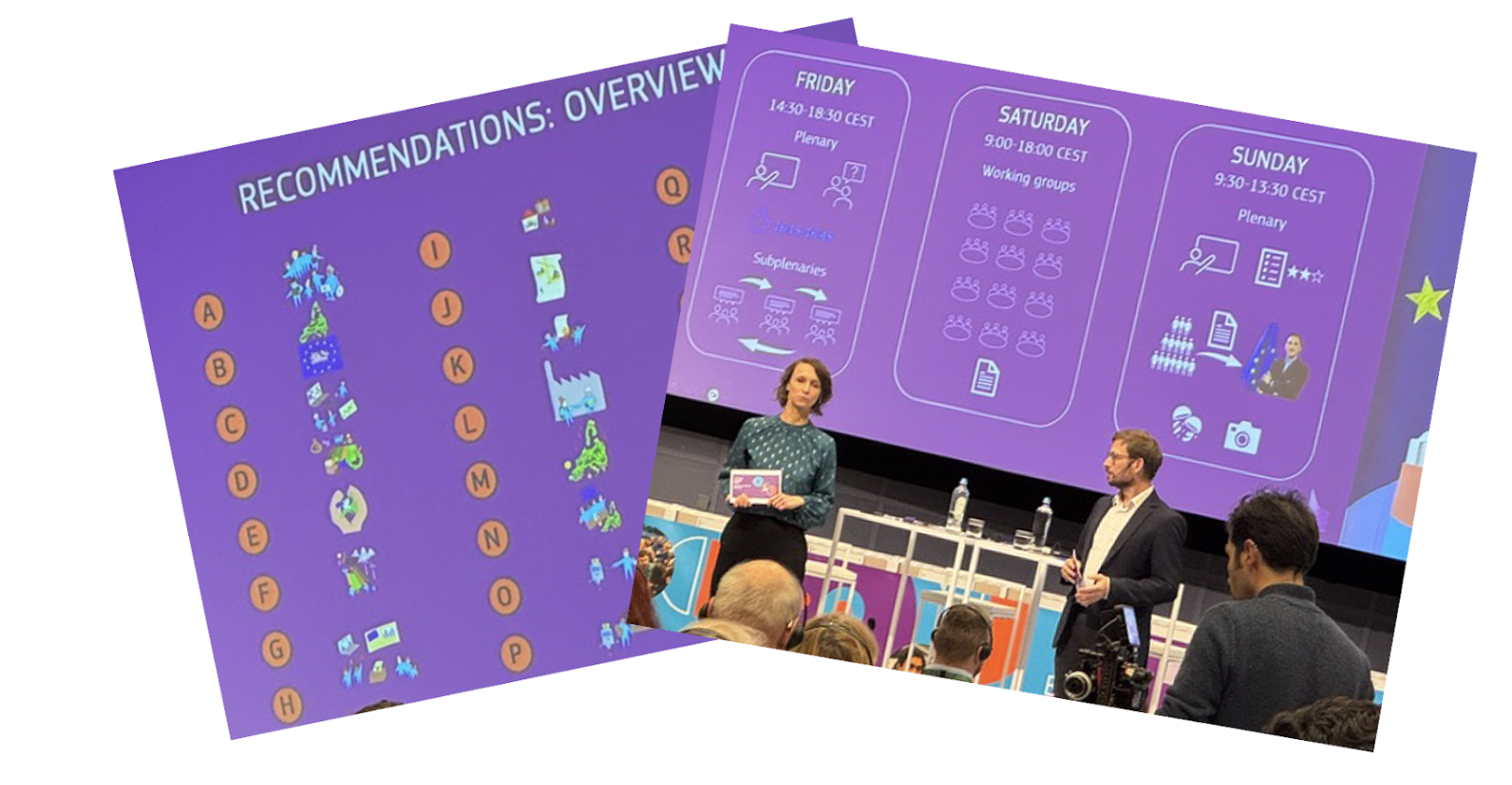
All citizens' assemblies work hard to make expert briefings accessible. Organisers also went beyond language altogether by using emoji-like ideograms to communicate everything from the essence of a recommendation to what was next on the citizens' programmes.
Another challenge for facilitators is how to quickly synthesise into one smooth report all the recommendations voted for by the citizen supermajority. This is especially challenging in 24 languages. Then the documents also have to be printed.
In the more general, programme-heavy plenary sessions, the citizens' attention could falter. At times, perhaps half the audience's eyes wandered to their phone screens. But they were still listening through their headphones. Facilitators kept everyone engaged with regular prompts to give yes/no feedback by holding up coloured cards.
"Some citizens look frustrated when the process is too slow. And for some definitely it's just a cool weekend in Brussels," said Rannik, the Estonian interpreter. They might doomscroll at times, but "some of them are quite good at multi-tasking. Some of them are really engaged. They are really thinking."
The panel sometimes seemed to struggle between the need to keep everyone on board with broadly accessible aspects of intergenerational fairness and the risk of staying too shallow. The citizens who were quickest on the uptake could get frustrated by all the simplification.
"Sometimes I get a bit tense when I feel the point I am making is not landing, or that things are getting lost in translation, or that we didn't really know much about existing systems, for instance for youth-related impact assessments," said Filipa, a panel member from Portugal.
One of the ten experts on the 'Knowledge Committee' of the citizens' panel said the panel could have gone deeper and could have benefited from more expert engagement. "I was surprised that trade-offs on pensions and retirement age featured so little," said Pieter Vanhuysse, who joined the experts as a political scientist specialising in intergenerational fairness at the University of Southern Denmark.
The downplaying of expert input was deliberate, said panel designer Constantin Schäfer, from the German public participation company ifok. Designers wanted "a clear bottom-up approach [to] give citizens a lot of room, time to explore the topic. The overall task was to identify priority areas that they wanted to work on," he said.
Scaling up affordably
Interpretation also adds to expense - one of the big challenges to scaling up the movement for more citizens' assemblies. Even a small monolingual assembly like a recent one on the UK Channel Island of Jersey cost about €50,000, while a top-of-the-line French citizens' convention can cost around €5 million. The EU spends about €1.5 million on each citizens' panel and is trying to push costs down further, officials say.
Elisabetta Degiampietro, in charge of the unit providing logistic organisation to the panels, says interpretation is not more expensive than other costs like travel and accommodation for the panel members. To keep costs down, the Commission organises one of the three weekends online, despite the advantages of meeting in person.
"Online, the sessions are less active. I wouldn't say there is much interaction going on. Citizens have to be prompted a lot to take the floor. There are issues with the connection, the sound, sometimes somebody has a lot to say but we can't hear because they have the microphone turned off," said Rannik, the Estonian interpreter. "These sessions could work more for giving presentations, information. But if you have this document on the screen and you're supposed to discuss it with people that you cannot see, and you're supposed to propose modifications, it doesn't really work."
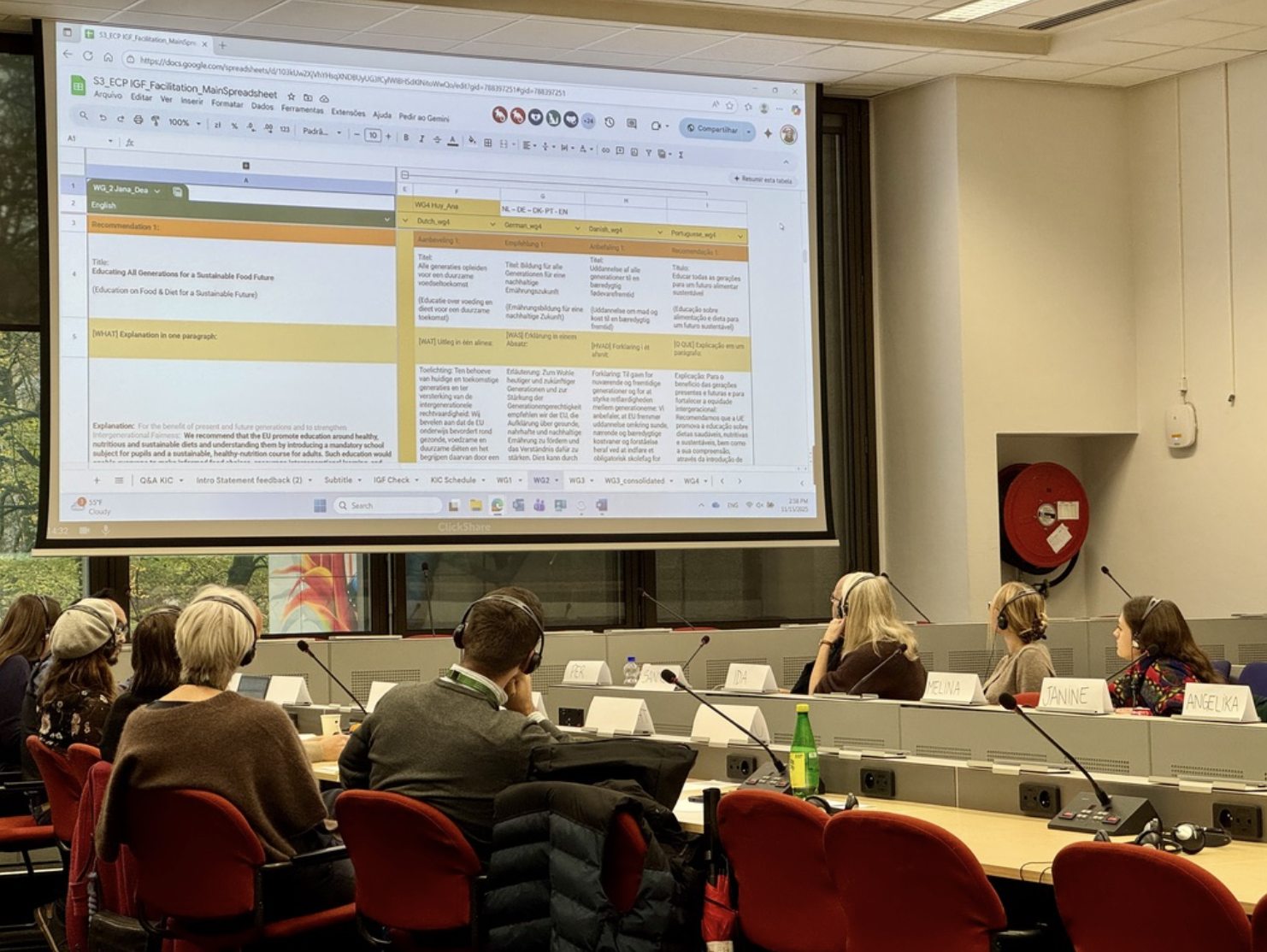
Where technology really does help is in simultaneously translating written materials. This is critical in a citizens' panel, with 24 languages spread over 12 breakout rooms all refining the same text. Typically each breakout room works on the defining English text, but a machine then instantly translates this into four other main languages and interpreters doing the same for the rest. Quality goes down when machine-translating languages that are not widely spoken. But even a few years ago the speed and efficiency of this process would have been almost unimaginable.
Perhaps AI will one day extend to the interpretation itself. Today's interpreters think that point is still distant, especially for the smaller language groups. Heidi Rannik, the Estonian interpreter, still laughs at a recent machine translation offering of "football and infantry" for "foot and mouth disease." And she credits Estonia's presence on the EU stage as saving Estonian as a living, active, technologically modern language.
"AI makes things very fast and very cheap… I understand its value," said Fernanda Vila Kalbermatten, the Spanish interpreter. "But the risks are just too high. The interpretation is still not accurate enough. I am worried about the moment when there's no one checking, no one explaining that it might not be a proper translation. A human check is essential.”
There is more to interpretation than just words, Vila Kalbermatten added.
"AI can't read the room, can't see body language or comprehend other non-verbal communication. It can't judge the emotional charge of words or know what it means if this person is smiling or about to cry. AI hasn't travelled to the country, to be able integrate an understanding of background information."
The human bonds that are the soul of a citizens' assembly also have to be protected, she added. "For the moment, we can distinguish between a human voice and an AI voice. To have a real person talking to you, explaining things to you, there is a human connection, a feeling that is seen and valued. I don't think that happens if a machine is speaking into your ears all day long."
Interpreters, with their experience of working for everyone - from people to presidents - also have a view on the overall value for money of a citizens' assembly in contributing many diverse points of view not usually considered by EU-level officials.
"We need citizens' assemblies. [Technocrats can] lose sight of the wood for the trees, sometimes coming out with legislation that turns out to be problematic in ways they haven't foreseen", said Marina Petsalis, the English-Greek interpreter. "You probably don't want a world entirely run by a citizens’ assembly, but equally you don't want an entirely technocratic approach to all policy.”
Unity in diversity
Time will tell if the recommendations of the citizens’ panel have as much influence on the future of Europe as EU officials promised, designed and hoped for. But there was no doubt it had an impact, both on citizens and, more surprisingly, on the EU officials involved.
"This is why I learned to be an interpreter. This is the most fulfilling experience, to feel like we made communication possible, and that we made citizens realise that they are much more similar than they expect," said Vila Kalbermatten, the Spanish interpreter. "Many people don't know anyone from Finland, or Malta. They don't have an idea about how they think. Then all of a sudden, because both of them come from a rural area, they smile and it's so beautiful. They're like: 'oh, this is what happens to me as well.' Such moments make these days so worth it."
Some citizens complained about aspects of the panel. One used time at a podium to grouse about the food. Another questioned whether randomly selected people were really representative. A couple more complained that there was no point in making recommendations if the EU (or its member states) did not consider them binding.
One German participant of a citizens' panel told me he felt embarrassed at how easily German concerns got aired because Germans are the largest linguistic group present. But small countries like Malta, Luxembourg, or Cyprus are over-represented, with two members each. And facilitators say they keep an eye on quieter citizens from and try to make sure everyone gets a word in.
Most citizens felt they'd been heard. Almost every citizen I met said their minds had been changed.
I saw one lady literally run out of a deliberation session for a toilet break so as not to miss any of the discussion. Another citizen was so taken by the idea of random selection that he proposed it to be used to populate an oversight body. That way intergenerational fairness would not be checked by "just the same old people in European organisations," he said.
Filipa, the citizen from Portugal, said the panel made her feel that her ideas were shared widely across Europe. "It was very satisfying to take part. I am very motivated by the multicultural aspect. Often [as a citizen] you think you are on your own. We have to see the world from other people's perspectives to understand better. The different countries have points of view that we don't. It's enriching, not an obstacle," she said.
Citizen representation
Paradoxically, the European Parliament and its members - theoretically the main institutional representation of European citizenry - has shown only sporadic and mostly rhetorical interest in citizens' panels. Indeed, panel organisers told me that there was some jealousy between the two. No MEPs had ever come to observe the panels, one official said, and nor had the European Parliament requested any information about them.
The European Parliament has its own translation and interpretation services, but interpreters who had worked for both Parliament and the citizens' panels said the difference in atmosphere was striking.
"In parliament there are far more extreme people, expressing extreme views on the right and the left, than we are ever likely to come across in the Commission or Council. I know colleagues of mine who work at the parliament hate the fact that they occasionally have to interpret content that is anathema to themselves. You have to reproduce exactly what they're saying, which can be extremely unpleasant for some people, but that's the job obviously," said Marina Petsalis. "The citizens were lower key too… there were differences of opinion, but nobody was getting unpleasant, or irate, or rude."
Fernanda Vila Kalbermatten said that the way MEPs were constrained by their party lines also set them apart from the more spontaneous citizens. She said she observed directly how citizens' panels actively diminished the political distance and fear of the other that she feels is polarising European societies.
One citizen had "very strong opinions that I felt were traceable back to a specific ideology or party… [but] it didn't escalate. There wasn't anyone playing the same game," she said. In fact, she added, "interpreters make communication a bit slower… so [people] can't interrupt each other. So you force people to listen to someone from beginning to end, which is beautiful."
Beyond intergenerational fairness
The citizens' recommendations about what they thought the EU should be doing went far beyond any narrow definition of intergenerational fairness. Officials and member states could in fact use them more widely as a sounding board of informed European citizen sentiment.
"Some topics related to defence, to education, and to the environment, came out stronger than what I had expected. People had very clear opinions, different priorities coming from their personal experience," said Elisabetta Degiampietro, the Commission official who manages the logistics of each panel.
Degiampietro said this result was partly by design, since unity in diversity is a founding principle of the EU. Interestingly, the same idea is at the heart of the deliberative democracy movement which launched modern citizens' assemblies.
"The European project has this specificity of trying to bring [together] these nations that are very diverse, but who all share this vision and values," Degiampietro said. "Multilingualism is part of our DNA as Europeans. It is a treaty-endorsed principle. No one language is more important than another… and you need to understand what the citizens are talking about. The best understanding is always in your mother tongue.”
The citizens' panels are also a subtle standard bearer for the EU. To reinforce this new sense of European consciousness, Scicluna said, the Commission is building up a voluntary network of alumni of the panels, between 20-40% of whom remain engaged long after they go home. This network now numbers more than 2,200 people. Even if usually of more interest to local media than national or European media, they can be mobilised by EU representation to speak about their experiences.
"What's the first thing I'll say when I get back?", one panel member in a queue for coffee told me when I asked. "That I have hope again in the EU, despite the way we are from different countries, nationalities, and languages."
The citizens are also a powerfully motivating presence for European Commission officials. Heidi Rannik, the interpreter from Estonia, said she was proud to be part of proving "that there are so many things in common in spite of the differences", because she says her family and friends in Estonia often think she is "part of a monster… far away in Brussels."
"We really have the feeling that we are reaching out to citizens, we are helping the democratic process through our interpretation [work], this is extremely rewarding for everyone involved," said Degiampietro, the panel organiser. "It completely changes the picture of Europe. It changes the picture of the European Commission."
Indeed, at the closing session of the citizens' panel, Stefan De Keersmaecker, another senior organiser from the Commission, took the microphone to point out the presence in the hall of many EU officials. To me, it seemed they even outnumbered the 150 citizens. Some of these officials had also told me how the panel had reignited their original idealism about working for the European Union.
"It's an emotional moment," De Keersmaecker said. The EU officials "love being here. It's because of you that we're here. We work for you and with you. We will take a bit of you into our work. I hope you will take a bit of Europe back with you."