Esch-sur-Alzette, Luxembourg

“The collaboration we set up between DemocracyNext and the City of Esch presents one of the core strands of our research project The Esch Clinics, in which we investigate the intersection of urban commons, assembly, and spatial politics. We work towards a more socially just and livable city, especially considering the civic context of the socio-economic transition, the period towards carbon neutrality… We understand ourselves as embedded ‘proximity agents’ – field workers, who investigate, digest, and pass on information, and propose alternatives.”

  • Markus Miessen - Architect and Chair of the City of Esch

Involving citizens in the future of Esch-sur-Alzette

In 2025, DemocracyNext began working with the city of Esch to implement a citizens’ assembly.

The assembly question has been decided:

‘Comment la Ville d’Esch peut-elle repenser ses espaces publics et ses lieux de vie pour renforcer le vivre-ensemble entre les habitants d’aujourd’hui et de demain?’

“How can the City of Esch rethink its public spaces and places of everyday life to strengthen social cohesion between the residents of today and tomorrow?”

This two-year-long collaboration between Cultures of Assembly and DemocracyNext will run in parallel and in close proximity to the forthcoming research project, ‘The Esch Clinics’ (starting in September 2024), devised and conducted by the Chair of the City of Esch. The collaboration will focus on the implementation of a series of citizen assemblies in Esch-sur-Alzette that will produce a local base narrative and complement the activities and initiatives of The Esch Clinics to investigate questions around urban commons and innovative democratic urban governance.
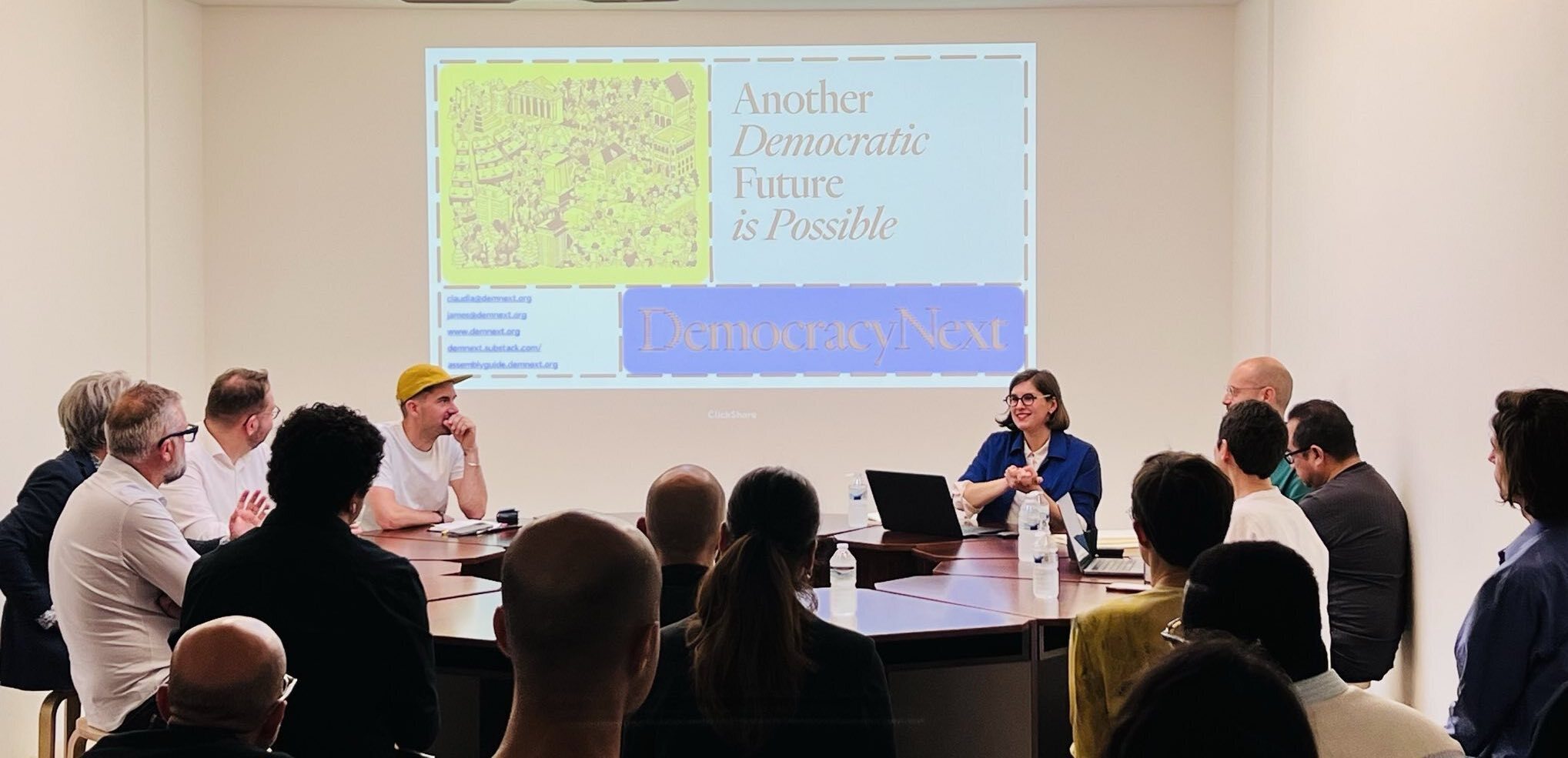
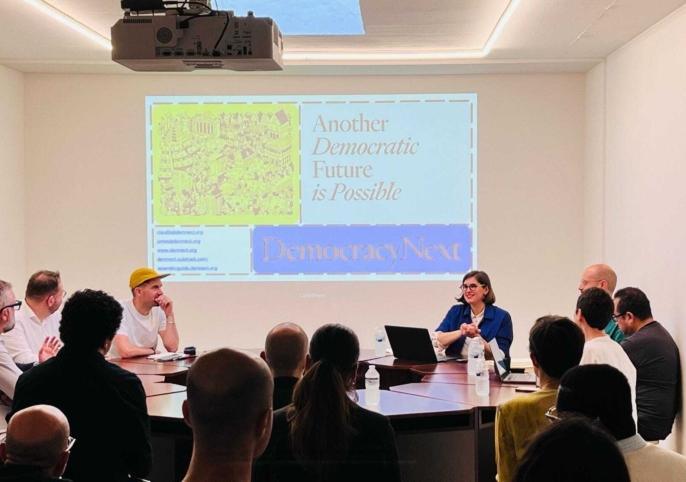
Public presentation by DemocracyNext at the Cultures of Assembly space - 24 Rue de Brill (Photo by: COA)
Visit the Esch assembly website
Existing forms of participation in Esch
  • Hoplr - A neighbourhood-based social network platform designed for facilitating the exchange of goods, services, knowledge, and time between residents.
  • Metzeschmelz - Participation in the development of a new neighbourhood in Esch-sur-Alzette
Integrating technology

In the spirit of experimentation and learning, DemocracyNext is collaborating with two civic tech organisations, Cortico and Dembrane as part of Esch’s citizens’ assembly.

With Cortico, we are organising tech-enhanced student conversations to hear from young people studying at the University of Luxembourg. As many of these students do not live in Esch, but commute from the surrounding areas, they don’t have the opportunity to be selected for the citizens’ assembly. The intention is to capture their take on life in Esch and how they relate to the city, with the goal that the resulting stories, perspectives, and insights will be brought directly to the learning phase of the citizens’ assembly ensuring that student voices are considered in the deliberation.

The conversations will be organised and facilitated by three students from the Department of Geography and Spatial Planning. Each conversation will recorded and uploaded to Cortico’s AI-supported platform so that the facilitators can analyse, highlight, and make sense of what was said.

Cortico is deeply involved, supporting conversation analysis and highlight curation, running a hands-on workshop series to build facilitator capacity for conversation design, sense-making, and medley creation, and assisting with the creation of an interactive voice portal to share key themes with assembly members and the wider public.

Dembrane’s AI-supported platform is being deployed directly in Esch’s citizens’ assembly. Similar to Cortico, Dembrane has developed a tool that listens to, highlights, synthesises, and transcribes conversations. It does not identify individual speakers but creates an overview of what was said. It also helps to identify topics that have come up in conversation once, were forgotten or not brought up again, and resurfaces them in case they are relevant to the deliberations. This will assist assembly facilitators throughout the process and allows them to focus on guiding conversations rather than writing down every point that was brought up. This is the first time such a tool is being used in a multilingual setting including French, Luxembourgish, German, Portuguese, and English.

Dembrane will be present throughout the entire assembly working closely with the facilitators, to ensure their technology is enhancing and enabling productive deliberations.

Timeline

October 2024 - January 2025: All cities in the cohort will follow a 9 module Citizens' Assembly Learning Programme to build their knowledge and capacity to deliver an assembly in their context.

Early 2025: DemocracyNext will run an assembly design workshop to discuss and decide on the specific elements for the whole process (sortition, framing the question, number of assembly members etc.).

March to June 2026: The six assembly sessions will take place over weekends and evenings. The final handover event to municipality will be onm 25 June 2026.

“The history of the city of Esch-sur-Alzette has been written by its citizens; therefore it seems essential to implicate them further in its future development. A lively democracy, representing the people, requires the active participation of most, if not all, citizens. I’m confident that the collaboration between the City of Esch-sur-Alzette and DemocracyNext will open new perspectives through the voices of the people, forging the path towards a local decision-making process guided by the needs and expectations of the citizens.”

  • Mayor Christian Weis

About Esch-sur-Alzette

Country: Luxembourg Population: 36.000

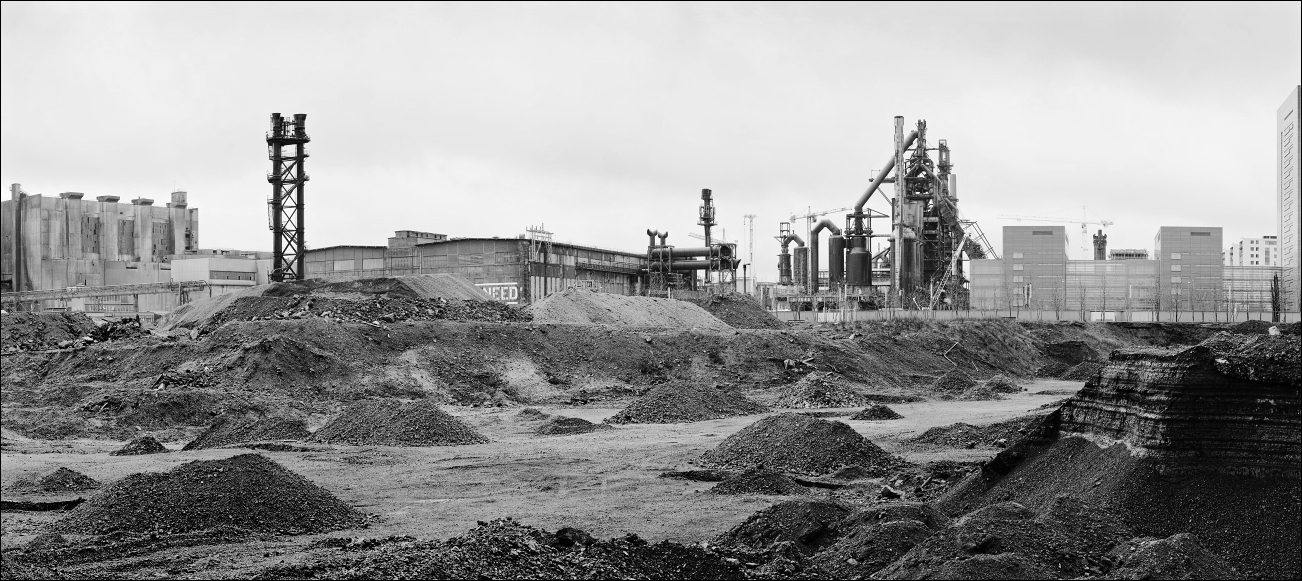
As Luxembourg’s second largest city, Esch-sur-Alzette’s history is closely tied to the steel industry, which was the primary driver of its growth and development in the 19th and 20th centuries. The decline of the steel industry in the late 20th century led to significant economic and social changes. Today, Esch-sur-Alzette is a diverse city with a significant proportion of its population consisting of immigrants, reflecting its industrial past which attracted workers from various countries. While Luxembourgish, French, and German are the official languages of Luxembourg, Portuguese is also widely spoken. This is largely due to the industrial past of the city which attracted many Portuguese migrants to Luxembourg from the 1970’s onwards.

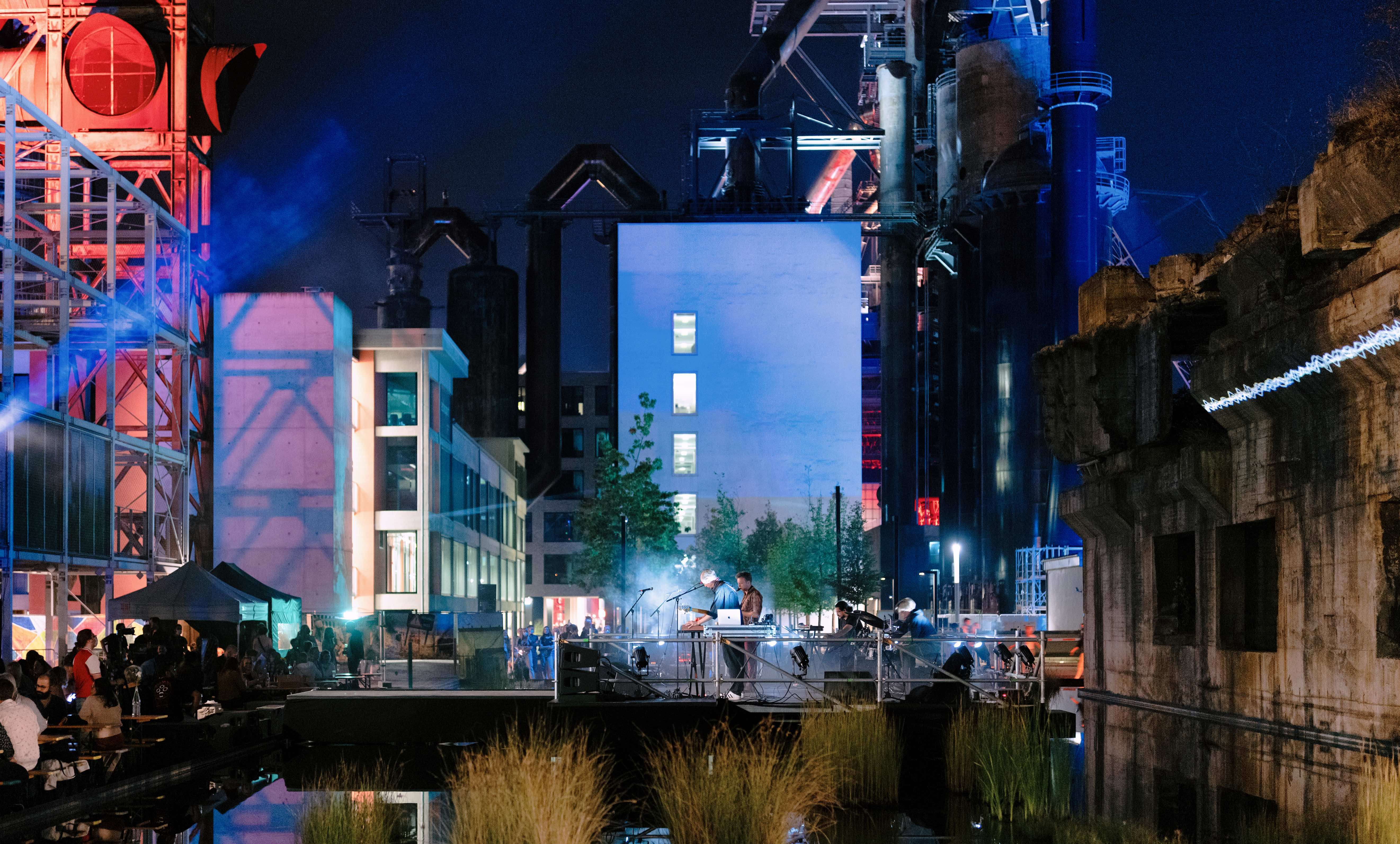
Steel production site Esch-Belval (Photo by Viktor Mácha / viktormacha.com)

More recently, the city has undergone significant urban redevelopment, particularly in the Belval area (one of former centres of steel production in Luxembourg), transforming former industrial sites into modern urban spaces including the main campus for the University of Luxembourg.

Esch-Belval today (Photo by: Emile Hengen for Ville d’Esch)

Hundreds of thousands of French, Belgian, and German cross-border commuters travel to Luxembourg for work every day - including to Esch-sur-Alzette. This is partly to do with the high cost of living in the country and the need for more housing options as well as the ease of access to employment centres from the border regions of neighbouring countries.

Rue de l'Alzette (Photo by: Emile Hengen for Ville d’Esch)
Esch in the press

Stay tuned!

Make sure to check back here for updates as we continue this collaboration with Esch-sur-Alzette.

← Back to Cities Programme

Our newsletter

Powered by Substack. Read the privacy policy. We will not spam you.

Read more

Follow along