At DemNext we focus on how to shift power to citizens, believing that everyone has the capacity and capability to be involved in shaping and making the decisions that affect our daily lives. But humans are not the only beings on the planet. A couple of years ago, thanks to a small grant from Arising Quo, we started exploring what governing with the ‘more-than-human’ might look like, to understand how it might impact on our work on citizens’ assemblies and citizen-led decision-making.
The ‘more-than-human’' is a philosophical and ecological concept popularised by David Abram in his 1996 book The Spell of the Sensuous, that challenges the traditional idea that human beings stand completely separate from, or above, the rest of the world – we are interconnected with all other forms of live, from the soil to fungi, plant and animal life, and water.
In recent years, there has been a range of exciting developments in transforming legal frameworks, such as non-human personhood and rights of nature. Yet, with few exceptions, decision making bodies at the international, national and sub-national level are all still built around the idea that only humans need to be included as decision makers for the decision making process to be just and fair. Yet one of the core principles of democracy is that all who are affected by a decision ought to have a say in it. Given the impacts that almost all political decisions have on nature, it follows that, for those decisions to be democratic, nature needs to be included as a decision maker. The challenge is how to do this.
In 2025, we announced a new collaboration with The University of Sydney on Including the More Than Human in Decision Making to explore this question practically together This work includes the creation of an inventory and set of methodologies on more-than-human inclusion, bringing together a Network, and a series of practical experiments in Australia and Europe focusing on how this thinking can be designed into citizens’ assemblies from the outset.
The Mirn Grabn Initiative is a grassroots environmental and community non-profit organisation, focused on ecological restoration, landscape healing, and community resilience in the alpine valley following severe regional floods a few years ago.
When Mihela Hladin first reached out to us by email, her passion for the river and her deep connection to it were immediately clear. Mihela and Robert, founders of the Mirn Grabn Initiative, live alongside the river. They witnessed first-hand the devastation of the 2023 floods, and the repair work that followed without any community engagement.
Over a few introductory meetings, it became clear that the Mirn Grabn Initiative would not only be an ideal assembly project, but also one where including the more-than-human in the process would align closely with the values and themes underpinning the assembly. So, as part of our more-than-human work with the University of Sydney, we set out with Mihela and Robert to explore what an assembly might look like when the more than human world has a place in it too.
For decades, the river Meža was called a 'dead river', shaped in recent times by mining and industry. There’s even a famous 1980s song about it - ‘Mrtva Reka’ by Marjan Smode, that kids would sing on coach trips - it includes the line “they watched you die, but no-one helped you”.
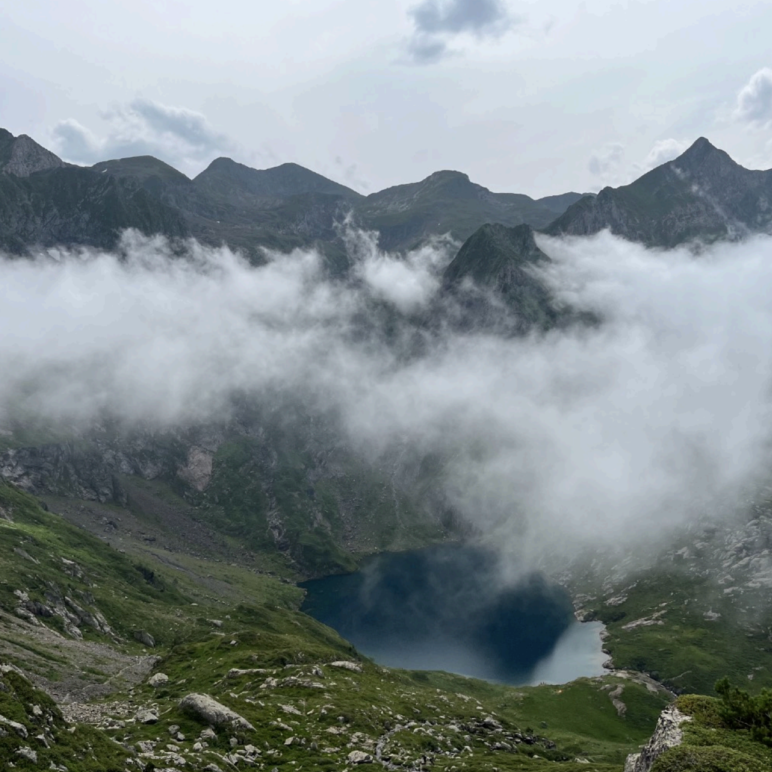
The devastating floods of 2023 brought the river firmly and forcefully back into consciousness, reminding the whole valley that people live with, and alongside, this river. Every creek and tributary, from Smrekovec through the Kramarica, flows into the Meža, and what happens upstream is felt downstream. The government response was concrete flood defences and concrete barriers - a river imprisoned, and connection between people and river lost.
Together with the Mirn Grabn Initiative, DemocracyNext, and colleagues from the University of Sydney were privileged to host a design workshop that started to imagine a citizens’ assembly - or perhaps more accurately, a ‘river assembly’, that will consider the future of the river and its tributaries.
The assembly will invite 30 residents from the five municipalities the river and her tributaries flow through to be part of this process. By designing the assembly with a more-than-human inclusion lens, the design process included questions such as:
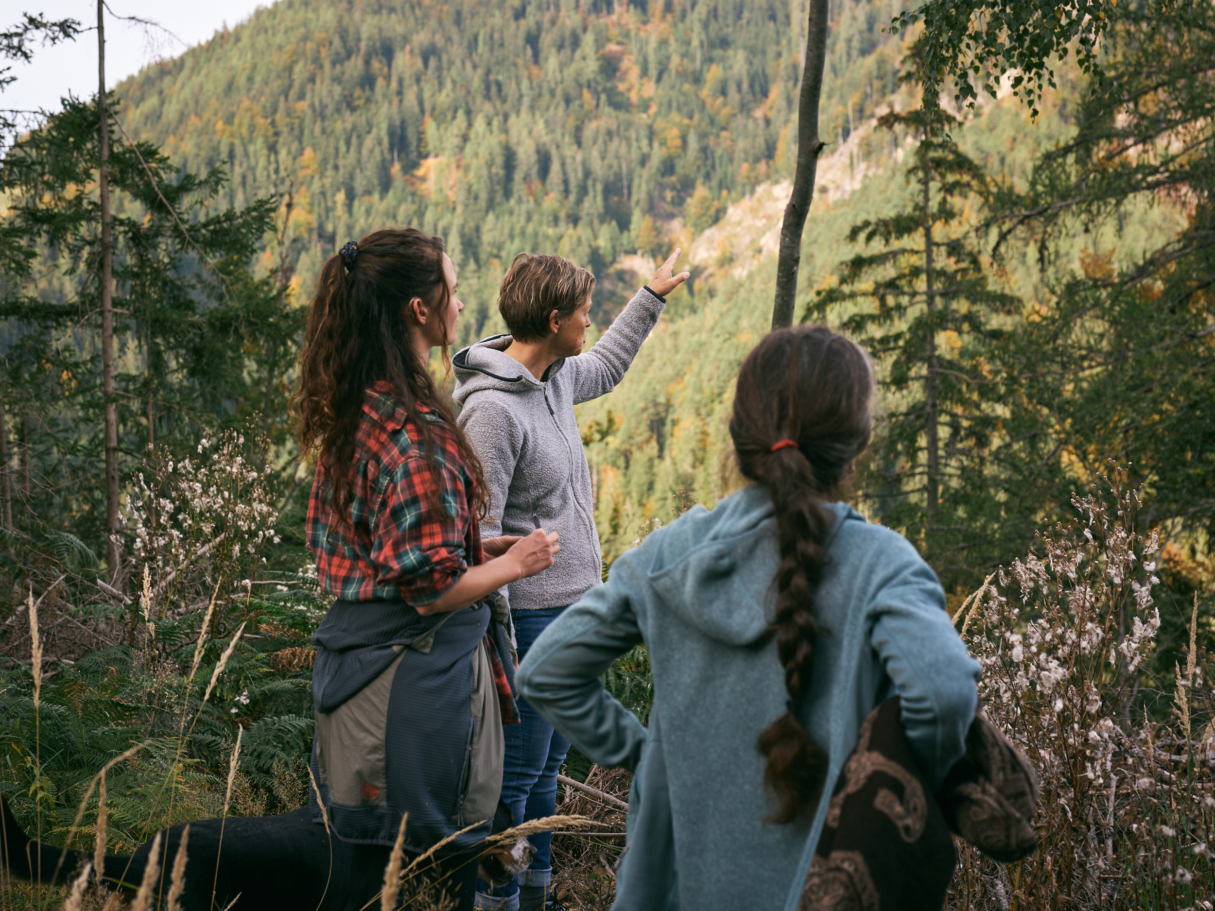
Over the course of a few days, in the wilderness, we came together to map out how this citizens’ assembly could come to fruition. The Yurt team comprised:
Together, we worked out the size, scale, and scope of the assembly, including how sortition will work, where the assembly will take place, and who will receive its recommendations.
We also drafted a first version of the assembly question, shared ideas for a communications plan, and agreed on next steps for the design team. On more-than-human inclusion, we explored different methods for bringing the river’s perspective into the process and sketched out what this could look like in practice.
Stay in the loop by following us on LinkedIn or subscribing to our newsletters, where we’ll share updates about the river assembly, which will take place in 2027.